

Stop New Car Smell Headaches in 2–3 Minutes: Ventilate Now, Sensitive Drivers
Yes, new car smell can trigger real headaches, and the cause is chemical, not psychological. That fresh-plastic scent comes from volatile organic compounds, VOCs, off-gassing from adhesives, foam, and vinyl, with formaldehyde and related aldehydes among the worst offenders even at low concentrations. Ventilate immediately: crack the windows, switch off recirculate, and park in shade whenever you can.
TL;DR:
- Formaldehyde and acetaldehyde levels can exceed safety limits during hot days, especially after long parking in direct sun, increasing off-gassing.
- Ventilation with fresh air and parking in shade significantly reduces VOC concentrations, which decay slowly over several months.
- Aerosol air fresheners worsen VOC levels and should be avoided, while low-VOC, slow-release scent products are safer options for sensitive drivers.
- Headache and allergy symptoms develop more quickly and intensely in migraine sufferers, children, pregnant people, or those with chemical sensitivities due to lower tolerances.
- Regularly checking and replacing the cabin air filter and wiping surfaces can mitigate chemical exposure, but the primary focus should always be consistent airflow and shade parking.
Table of Contents
- What Causes New Car Smell Headaches?
- How Do VOCs Actually Trigger Headaches?
- How Long Does New Car Smell Last, and What Makes It Worse?
- How to Reduce New Car Smell Exposure and Stop Headaches
- What the Research Actually Shows About Risk
- A Practical Routine for Sensitive Drivers
- A Lower-VOC Way to Scent Your Car
- Sources
What Causes New Car Smell Headaches?
That “new” scent is a chemical soup, not a single fragrance. It comes from volatile organic compounds and semi-volatile organic compounds (VOCs and SVOCs), gases released as plastics, adhesives, and foam cure and slowly break down inside a sealed cabin. Some evaporate fast in the first weeks; others linger for months at lower concentrations.
A few compounds do most of the damage to how you feel:
- Formaldehyde: a preservative and adhesive byproduct linked to headaches and throat irritation even at low exposure.
- Acetaldehyde: chemically similar to formaldehyde, often rising alongside it on hot days.
- Toluene: found in paints and coatings, associated with dizziness and fatigue.
- Styrene: common in foam padding and plastics, tied to headaches and nausea.
These come from adhesives bonding trim panels, foam padding under upholstery, vinyl and plastic dashboards, fresh carpet backing, and interior paint finishes. Explainers estimate anywhere from 50 to 150 different VOCs contribute to a single new car’s odor profile.
Here’s the part that trips people up: odor intensity and toxicity aren’t the same thing. A car can smell mild while still releasing concerning aldehyde levels, and a strong “chemical” smell doesn’t automatically mean higher risk. Your nose is a poor lab instrument.
How Do VOCs Actually Trigger Headaches?
VOCs irritate the mucous membranes in your nose, throat, and eyes, which can set off inflammatory responses that manifest as headache, sinus pressure, or a tight feeling across the forehead. For some people, the mechanism is more direct: strong odors are a known migraine trigger, independent of any measurable toxicity.
Common symptoms include:
- Headache, often dull and frontal
- Nausea or a queasy stomach
- Eye, nose, or throat irritation
- Dizziness or lightheadedness
- Unusual fatigue after a short drive
A specific group reacts faster and harder. Migraine sufferers, people with diagnosed multiple chemical sensitivity (MCS), asthma patients, children, and pregnant people tend to notice symptoms at exposure levels that wouldn’t bother most drivers. The Washington Post documented one severe case of chronic headaches that began with a new car purchase and persisted long after, a reminder that sensitivity varies wildly between individuals.
How Long Does New Car Smell Last, and What Makes It Worse?
Off-gassing follows a predictable arc: emissions peak in the first days and weeks of ownership, then decay gradually over months. As a rough guide, VOC concentrations in many vehicles drop by roughly 20% per week during that early decay phase, which is why a six-month-old car usually smells far milder than one fresh off the lot.
Heat disrupts that timeline. A 2024 in-cabin study found formaldehyde levels sometimes exceeding 200 micrograms per cubic meter on hot days, well above the 100 µg/m³ reference limit the researchers cited, with acetaldehyde spiking above recommended safety levels. The researchers identified material surface temperature, not outside air temperature, as the primary driver: a dashboard baking in direct sun can run far hotter than the surrounding air, and that heat pulls VOCs out of plastic and foam faster.

Practical takeaway: treat the first few weeks after delivery and every hot, sun-exposed parking session as higher-risk windows.
How to Reduce New Car Smell Exposure and Stop Headaches
If a headache is already starting, act in this order:
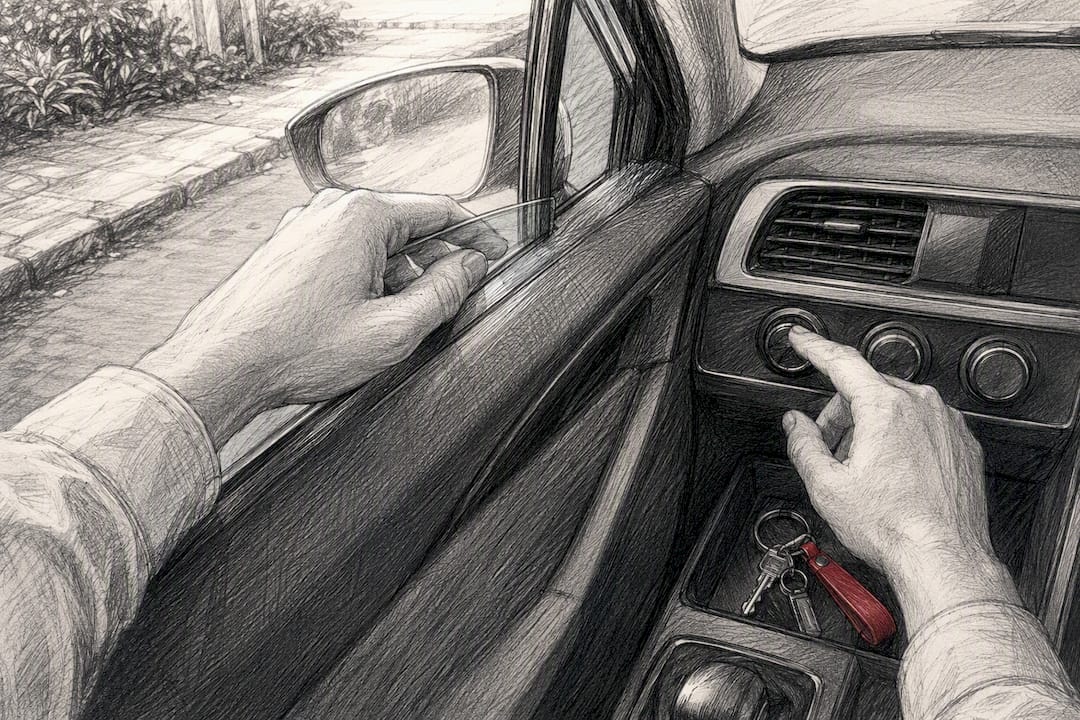
- Crack the windows immediately and switch the ventilation to fresh air instead of recirculate.
- Pull over if symptoms worsen rather than pushing through dizziness or nausea behind the wheel.
- Air the cabin out before driving, ideally for several minutes with doors open, especially after the car has sat in the sun.
- Remove factory packaging, plastic seat covers, and floor mat wrapping the same day you take delivery. These trap emissions against upholstery.
- Wipe hard surfaces (dashboard, door panels, console) with a mild detergent solution to remove surface residue from manufacturing.
- Replace or check the cabin air filter, since a saturated filter recirculates trapped particles and odors.
- Park in shade or use a windshield sun shade to reduce the surface heating that drives emission spikes.
- Consider activated carbon or charcoal-based cabin filters, which adsorb VOCs rather than masking them.
- Schedule a professional interior clean if heavy off-gassing symptoms persist past the first month or two.
One warning matters more than the rest: don’t reach for an aerosol air freshener to cover the smell. Spraying a VOC-heavy product into a cabin that’s already off-gassing adds to the chemical load instead of reducing it, which is the opposite of what a sensitive driver needs. A scent that irritates rather than helps is worse than no scent at all. If you want fragrance in the cabin, it needs to be low-VOC and paired with ventilation, never used as a substitute for it.
Pro Tip: Run the fan on fresh-air mode for two to three minutes with a window cracked before you even sit down. Most of the trapped surface heat and VOC concentration clears in that short window, and you avoid breathing the worst of it during the first minute of the drive.
For faster daily fixes beyond a one-time deep clean, airing and cleaning routines built for other strong-odor situations work just as well here.
What the Research Actually Shows About Risk
The strongest evidence comes from a 2024 study published through PNAS Nexus, which measured in-cabin formaldehyde and acetaldehyde levels directly rather than relying on estimates.
The practical mitigation the researchers and subsequent science reporting converge on isn’t a special filter or a chemical treatment. It’s ventilation: open windows, fresh-air mode, and shade parking, applied consistently, especially in warm weather.
BBC Science Focus reached a similar conclusion from a different angle, tracing headaches and nausea back to fabrics, plastics, and adhesives and recommending the same airflow-first approach. That convergence across a peer-reviewed study and independent science journalism is worth paying attention to.
Where fragrance fits into that picture matters too. A slow-release botanical formula, applied with care, doesn’t require the repeated aerosol bursts that add fresh VOC load every few days. It’s not a substitute for ventilation, but it removes one common source of extra chemical exposure from the cabin.
A Practical Routine for Sensitive Drivers
If odors trigger headaches for you, the fix isn’t complicated, it’s consistent habit. Every drive starts with a few minutes of fresh-air ventilation before you settle in, especially if the car has been sitting in the sun. Shade parking isn’t optional in summer. And I’d skip aerosol fresheners entirely if you’re prone to migraines or chemical sensitivity; they solve a smell problem while creating an exposure problem.
A short checklist covers most of it:
- Ventilate for two to three minutes before driving, windows cracked, fan on fresh air
- Park in shade or use a sun shade during warm months
- Check the cabin air filter monthly during the first year of ownership
- Skip aerosol sprays; choose low-VOC, slow-release scent options instead
For more on keeping a cabin fresh without leaning on synthetic sprays, year-round maintenance habits are worth building into your routine early.
— Azanone
A Lower-VOC Way to Scent Your Car
Some air fresheners add fragrance without addressing the VOC load already sitting in your cabin. Some products use a slow-release botanical oil formula designed to last several weeks, so you’re not repeatedly spraying aerosol bursts into an already off-gassing interior.
Heavens leans into a lighter, airy profile for drivers who want subtlety over intensity. Nebula offers a deeper, more complex scent that evolves as the oil releases over its lifespan. Descent sits between the two, a grounded, warm profile built for daily driving.
None of these replace ventilation. Use them alongside open windows and shade parking, not instead of them, and never as a way to cover a strong chemical smell you should actually be airing out. If a cabin still smells sharply chemical after weeks of ventilation, that’s a signal to address the source, not spray over it. When you’re ready to add scent the right way, start with Voidescent’s product lineup and pick the profile that fits your drive.
Sources
- PMCID: PMC11264407 (PNAS Nexus study on in-cabin VOCs)
- Phys
- What Is ‘New Car Smell’—And Is It Dangerous? — Reader’s Digest