

Car Smell After Gym: Fix It Fast Without Masking It
Do this now: pull the gym bag and any wet gear out of the car, crack all four windows, and run the fan on fresh air (not recirculate) for five minutes. That gets moving air through the cabin while you figure out what you’re actually dealing with.
Then diagnose before you touch a single air freshener:
- Musty smell that hits hardest the second the AC kicks on? That’s HVAC mildew, not your gym bag.
- A specific, localized funk near the seat, mat, or trunk that doesn’t change with the fan? That’s fabric or foam holding onto sweat.
Once you know which one you’ve got, the fix order is always the same: eliminate the source, then freshen. HVAC signals mean a new cabin air filter and an HVAC sanitizing pass. Fabric signals mean shampoo, steam, and real drying time. Skip straight to scent and you’re just perfuming a problem that’s still growing underneath.
Key Takeaways
Fixing car smell after gym workouts requires diagnosing the source first, eliminating it with the right method, and only then adding an eco-friendly scent.
| Point | Details |
|---|---|
| Diagnose before treating | Test vents with the fan off, then on, to separate HVAC mildew from fabric or trunk odor. |
| Remove gear immediately | Take gym bags and wet clothing out of the car right after every session. |
| Replace the cabin filter | A dirty filter re-seeds mold spores into the cabin every time the fan runs. |
| Match chemistry to the smell | Use enzyme cleaners for fresh sweat, oxidizers for embedded odor, charcoal for maintenance. |
| Freshen only after cleaning | Botanical, slow-release hangers like Voidescent’s Heavens, Descent, and Nebula finish a clean car without masking a dirty one. |
Table of Contents
- Is the Car Smell After Gym Coming From the Vents or the Seats?
- How Do You Actually Get Rid of the Smell?
- What’s the Best Eco-Friendly Way to Keep It Fresh?
- Sources
Is the Car Smell After Gym Coming From the Vents or the Seats?
Don’t guess. A five-minute check tells you exactly where to spend your effort.
- Start the car with windows closed and the fan off. Sniff near the dashboard vents before any air moves. If it’s musty right away, the smell is living in the HVAC system, not your seats.
- Turn the fan to its lowest setting and smell again at the vent, then at seat level. A blast of locker-room funk on that first gust is a classic sign of moisture sitting on the evaporator coil, where mold and bacteria build up between drives, according to StayKool’s explanation of musty AC smells.
- Lift the floor mats, check under the seats, and open the trunk and spare tire well. Gym bags leak more sweat than people expect, and a damp mat or a forgotten sock in the spare well can outlast a dozen air fresheners.
- Press a dry paper towel into any suspect spot on the seat or carpet. If it comes away damp or discolored, you’ve found a fabric source that needs actual cleaning, not spray.
Pro Tip: You’ve likely gone nose-blind to your own car. Ask a passenger to smell it, or step outside, close the doors, and walk back to it with a clear nose. You’ll notice things you’ve been ignoring for weeks.
If the AC test comes back musty, you’re dealing with trapped moisture around the evaporator, one of the most common causes of recurring car odor according to Consumer Reports. If it’s fabric, skip the HVAC work and go straight to deep cleaning.
How Do You Actually Get Rid of the Smell?
Work in this order. Skipping ahead to the fun part (scent) before finishing the boring part (removal) is the single biggest reason odor keeps coming back.
1. Remove and isolate. Take out the gym bag, shoes, and any damp clothing immediately after every session. Don’t let wet gear sit in a closed trunk overnight. This alone solves the problem for a lot of people.
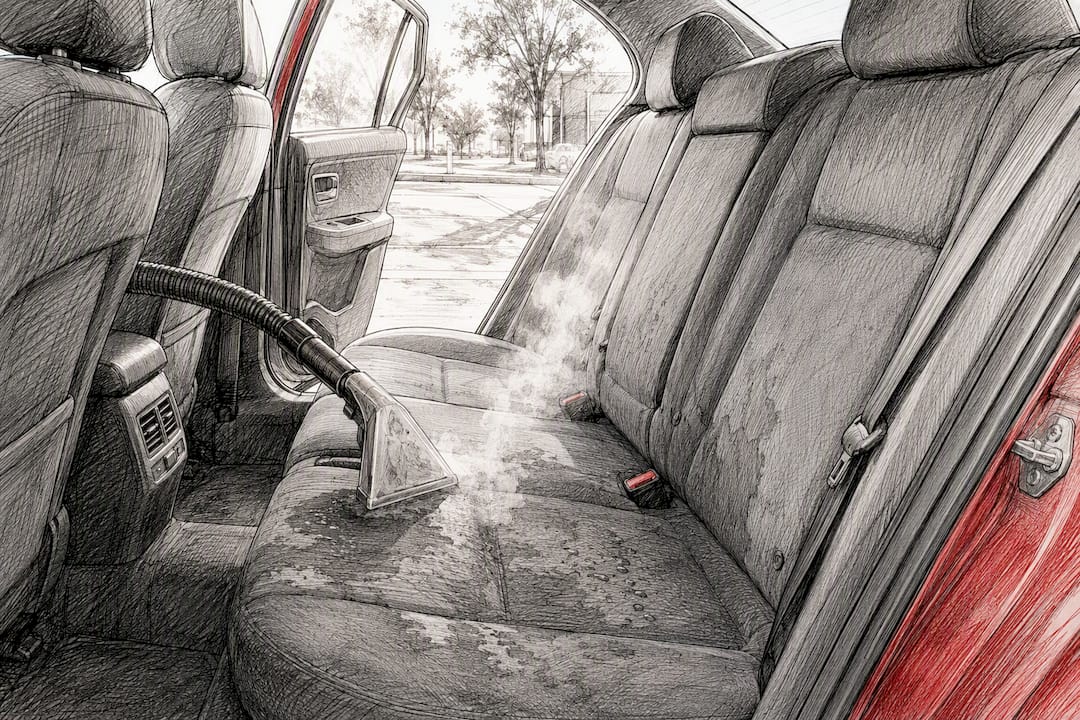
2. Vacuum, then spot-treat, then deep clean. Vacuum seats, mats, and carpet first to pull out loose debris and dried sweat salt. Spot-treat visible stains, then shampoo or steam the fabric. Steam is genuinely one of the more effective options at the consumer level for killing bacteria and lifting sweat that’s worked its way below the surface, per ShunAuto’s cleaning guide. Dry everything completely with windows down or a fan. Damp fabric left to sit just grows a new problem.
3. Replace the cabin air filter. A dirty filter traps mold spores and blows them back into the cabin every time the fan runs, quietly re-seeding the exact smell you’re trying to eliminate. It’s a cheap part and an easy DIY swap most owners skip for years.
4. Sanitize the HVAC system. An intake-side sanitizing spray, used with the fan on recirculation and the engine running in a ventilated space, treats the evaporator where moisture and bacteria collect. Moisture trapped in that system is the direct cause of the funky AC smell most drivers complain about, according to Motor1’s breakdown of car AC odor.
5. Match the eliminator to the smell, not the other way around:
- Enzyme cleaners for fresh sweat and organic residue on fabric.
- Oxidizers for odors that have already worked into padding or carpet fibers.
- Activated charcoal for ongoing, passive absorption once the active source is gone.
The right approach here are two distinct steps, kill the actual source with the correct chemistry, then freshen, because masking a live odor source almost always fails within a day or two, per CarCareTruth’s odor elimination framework.
When to call a pro: if the smell returns within days of correct cleaning, if you see visible mold, or if carpet stays wet more than 24 hours, the moisture or organic material may have soaked into seat foam or padding. Consumer products can’t reach that. At that point, replacement or professional extraction is the only real fix, not a stronger spray.
What’s the Best Eco-Friendly Way to Keep It Fresh?
Scent only goes in after the source is gone. Adding fragrance to a car that still has a live odor problem doesn’t cover it up so much as create a worse, muddled smell that’s harder to diagnose later.
Once the cabin is genuinely clean, your eco-friendly options break down like this:
- Activated charcoal bags absorb odor passively and work well for ongoing trunk maintenance, though they do nothing for an active mildew source.
- Botanical slow-release scent hangers deliver a consistent, evolving fragrance over weeks rather than fading in days like most spray fresheners.
- Mild odor-neutralizing gels handle light residual funk but won’t touch anything embedded in fabric or foam.
A simple maintenance routine keeps you from repeating this whole process regularly. Replace your cabin air filter on schedule, or sooner if you frequently use the gym. Vacuum weekly. Air out gym gear before it ever goes back in the bag. Keep a charcoal sachet in the trunk as a passive backstop, and consider a seat towel or cover if you’re driving straight from the gym in wet workout clothes.
Why Elimination Comes Before Scent
The instinct after a bad gym session is to grab whatever air freshener is nearest and spray it into the vents. That instinct is backward, and it’s the reason so many people cycle through fresheners without ever fixing anything.
Once a car is properly cleaned, botanical, slow-release fragrance does something a spray can’t: it holds a consistent, evolving scent for weeks instead of a sharp burst that fades by lunch. That’s the entire premise behind Voidescent, botanical ingredients, a four to six week release curve, and a design language built for people who care what their car smells like and looks like. It’s backed by a money-back guarantee, which only makes sense if the product performs as claimed.
— Azanone
Which Voidescent Scent Fits Your Car
Once the odor source is gone, picking a finishing scent comes down to your space and how often you’re back at the gym.
For a compact hatchback or smaller sedan trunk, Heavens offers a lighter, slow-release presence that won’t overwhelm a tight cabin. If you’re working with a larger SUV or a cabin that needs a bit more presence to feel finished, Descent is built for that scale. And if you want a fragrance that makes more of a statement and holds up across the full four to six week cycle without fading into the background, Nebula is the boldest option in the lineup.
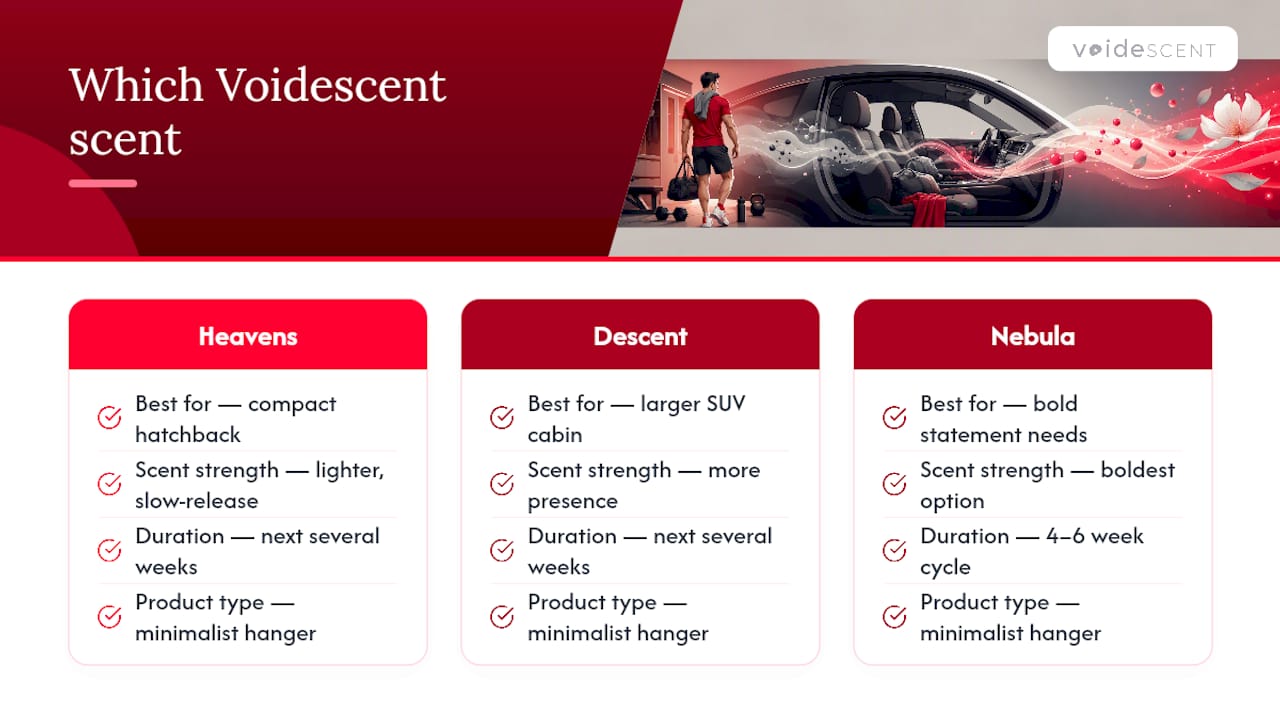
All three are minimalist scent hangers, not sprays, designed to be the finishing step after cleaning, never a substitute for it. Pick one based on your cabin size and how strong a presence you actually want, then let it do its job for the next several weeks while you keep up the vacuum-and-air-out routine. If you’re not satisfied with how it performs, the money-back guarantee means trying it costs you nothing but the time it takes to place the order.
Sources
- How to Rid Your Car of Odors and Smells — Consumer Reports
- Your car’s AC stinks when you turn it on. Here’s why — Motor1
- Best Car Odor Eliminator: Kill the Smell, Then Freshen — CarCareTruth