

Multiple Car Air Fresheners: 9 to 13 Units a Year with 4 to 6 Week Hangers
Buy one slow-release premium hanger as your everyday base, then add a small mixed-scent sample pack only if you’re testing new fragrances or restocking several vehicles. This beats loading your car with three or four cheap synthetic tags, which clash, fade fast, and cost more per week than a single quality product. A slow-release option like Voidescent’s hanger fragrances covers four to six weeks per unit, so buyers stocking multiple cars still need fewer total items than they’d expect.
TL;DR:
- Using slow-release hangers lasts four to six weeks, reducing the need for frequent replacements and minimizing scent clash with multiple units.
- Mixed-scent sample packs are ideal for testing preferences or gifting, while bulk single-scent packs suit resale or fleet consistency.
- Passive formats like hangers provide steady fragrance, whereas active formats like vent clips depend on airflow, potentially causing uneven scent distribution.
- When buying in bulk, focus on longer-lasting products to decrease waste and improve overall scent performance, especially in environmentally conscious choices.
- Proper placement and rotation of multiple units ensure consistency, prevent visibility obstruction, and maintain a pleasant cabin environment.
Table of Contents
- Which Type of Multipack Should You Buy?
- How Do Different Air Freshener Formats Work Together?
- How to Choose Scents and Quantities When Buying in Bulk
- How Do You Use Multiple Air Fresheners Safely?
- Where Can You Buy Bulk or Multipack Car Air Fresheners?
- Why Slow-Release Botanical Hangers Change the Bulk-Buying Math
- What Do Customer Reviews Say About Multiple Air Fresheners?
- What Happens to All Those Used Air Fresheners?
- Author Perspective: Balancing Cost, Scent, and Practicality
- Get Your Multi-Car Fragrance Bundle Sorted
- Sources
- FAQ
Which Type of Multipack Should You Buy?
The right pack depends entirely on why you’re buying more than one air freshener in the first place. Someone stocking a single family car needs a different setup than someone prepping ten vehicles for resale.
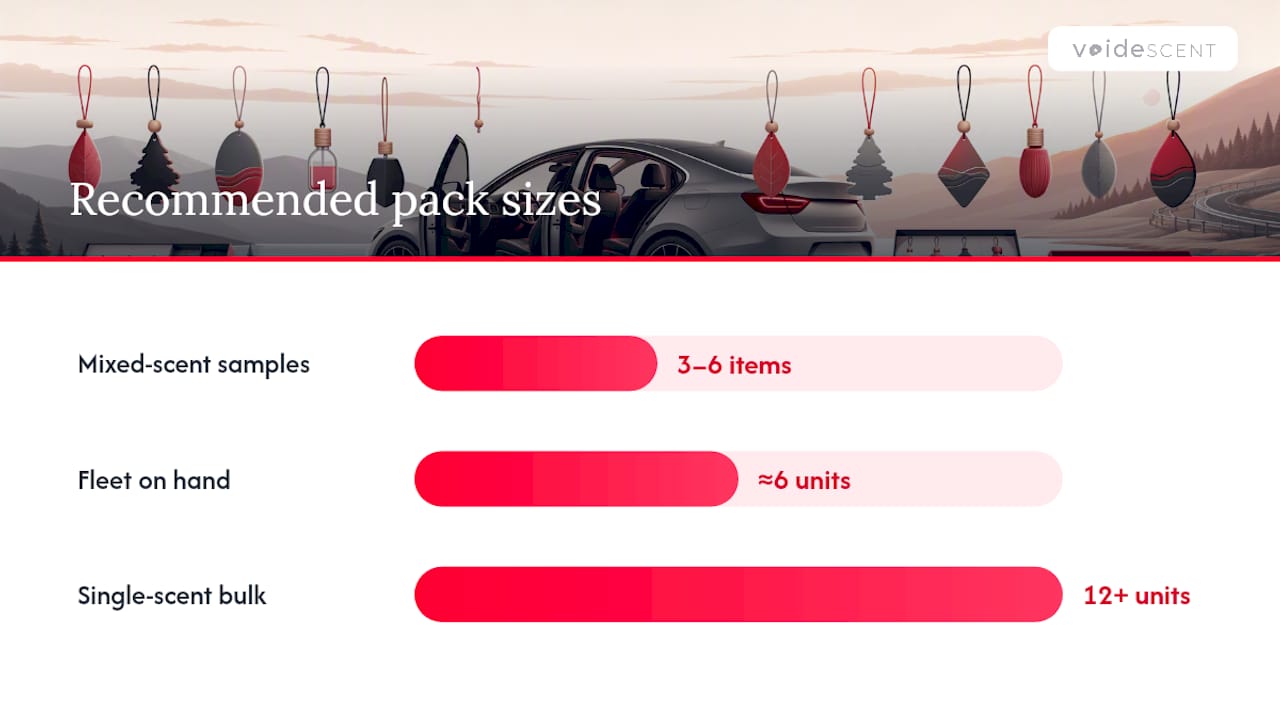
Mixed-scent sample packs work best when you’re still figuring out what you like, or buying a gift set for someone else. These packs usually include four to six different fragrance families in smaller formats, letting you test before committing to a bulk order of one scent.
Single-scent bulk packs make more sense for resale sellers or fleet operators who want consistency across units. Buying twenty of the same hanging tag is cheaper per item than twenty different ones, and it simplifies inventory if you’re reselling.
Mixed-format bundles combine a hanging or diffuser style with a vent clip or spray, giving you both a constant background scent and an on-demand burst option. This suits drivers who want flexibility without buying five separate products.
To figure out how many units you actually need, use a simple formula: number of cars times your desired replacement cadence in months. A fleet of six cars replacing fresheners every six weeks needs roughly six units on hand at any given time, with a small buffer for delays.
- Testing new scents or gifting: mixed-scent sample packs, 3 to 6 items
- Resale or fleet consistency: single-scent bulk packs, 12+ units per scent
- Personal variety: mixed-format bundles pairing one slow-release hanger with an occasional vent clip
- Quick estimate rule: cars × replacement cycle (in months) = units to stock
How Do Different Air Freshener Formats Work Together?
Car air fresheners fall into two broad camps: passive and active. Passive formats, like hanging tags, gels, and sachets, release scent continuously at a low level. They don’t need airflow or effort, but longevity varies wildly by brand and material. Active formats, including vent clips, wraps, diffusers, and sprays, deliver scent on demand and depend heavily on your HVAC system running to push fragrance around the cabin.
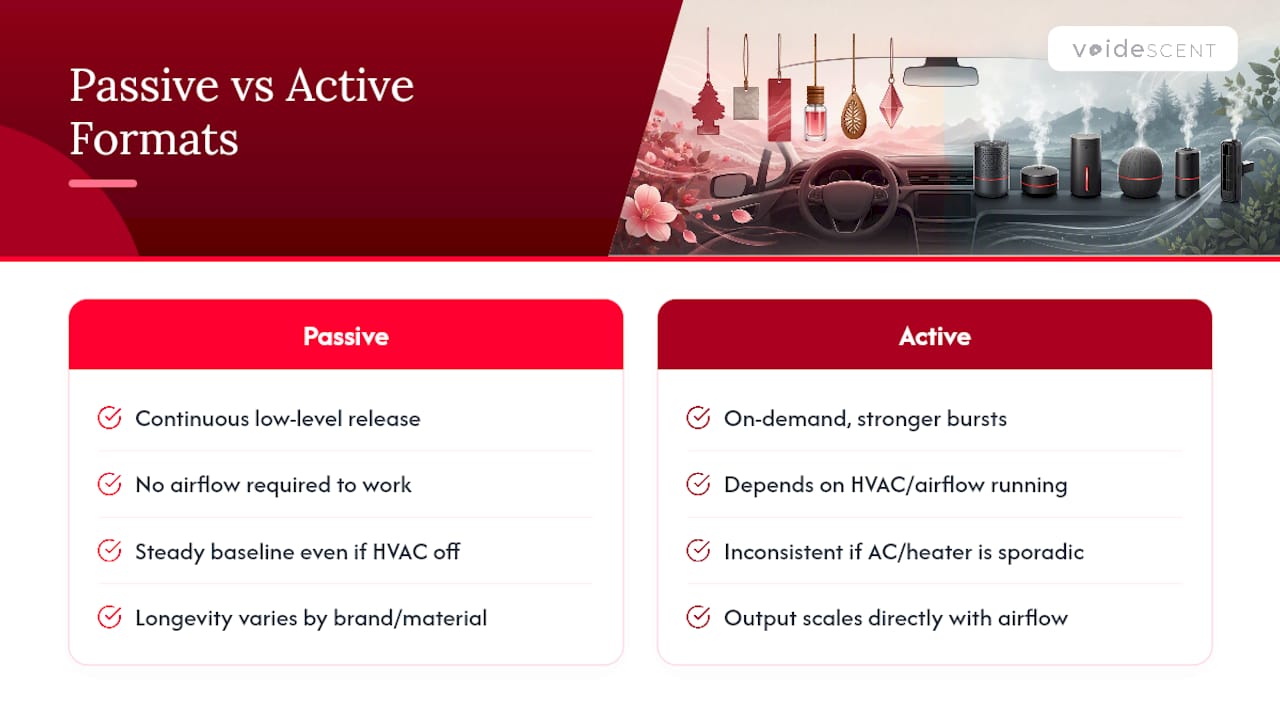
This distinction matters more once you’re running multiple units at once. A vent clip only performs when air is moving through it, so a car with sporadic air conditioning use will get inconsistent results from that format alone. Reviewers testing vent-mounted products found that output scales directly with airflow, which is why passive hangers work better as a steady baseline for drivers who don’t run their HVAC constantly.
The bigger risk with multiples is stacking too much at once. Testing by Car and Driver found that clustering several strong synthetic products tends to create an overwhelming, chemically harsh cabin environment rather than a pleasant one. Your nose also adapts to constant exposure, a phenomenon called olfactory fatigue, which makes a strong scent feel weaker over time even as it becomes more noticeable to passengers.
The formats that stack best are one slow-release hanger as a constant base, paired occasionally with a vent clip or spray for a temporary boost before a meeting or a passenger pickup. That combination gives you steady background fragrance without the cabin turning into a fragrance showroom.
How to Choose Scents and Quantities When Buying in Bulk
Buying multiples well comes down to three decisions: which scents, how many units, and what you’re actually paying per item.
- Pick complementary scent families first. Avoid pairing two high-intensity scents (think two competing citrus or musk profiles) in the same car. Choose one dominant fragrance and one lighter accent if you want variety without clash.
- Calculate quantity with real numbers. Multiply the number of cars you’re covering by how many weeks you want between replacements, then divide by the expected lifespan of the product. A slow-release hanger rated for four to six weeks needs roughly nine to thirteen units per car per year.
- Compare price per unit, not pack price. A twelve-pack priced at £24 works out to £2 per unit; a premium single hanger at £8 that lasts six weeks might actually cost less per week of use once you account for how fast cheap tags fade.
- If reselling, label batches clearly. Note the scent name, any allergen-relevant ingredients (citrus oils, tree nut derived extracts), and the approximate release window so buyers know what they’re getting.
Pro Tip: When comparing bulk packs, always calculate cost per week of actual scent performance, not cost per unit. A slower-fading product that costs more up front usually wins on a true weekly basis.
Experts generally recommend pairing any fragrance product with a clean starting point rather than layering scent on top of existing odor, which is worth doing before you install any new multipack.
How Do You Use Multiple Air Fresheners Safely?
Rotation matters as much as placement once you’re running more than one product. Swapping your base scent every few weeks resets your sense of smell and keeps the fragrance noticeable to you, not just to passengers who haven’t adapted to it.
- Stagger installation dates so units don’t all fade out simultaneously, leaving you with an odorless week.
- Keep one slow-release item as your constant baseline, and treat vent clips or sprays as occasional top-ups rather than permanent fixtures.
- Never hang anything from the rearview mirror in a spot that blocks forward or peripheral vision.
- Place vent clips low on the dash vent, not across sightlines, and keep hanging tags short enough to avoid mirror obstruction.
In the UK, there’s no specific law naming air fresheners, but the Highway Code and general road-safety guidance require a clear view of the road at all times. An item obstructing your view could contribute to a careless-driving citation if it’s judged to affect visibility, so placement is a genuine safety question, not just an aesthetic one.
Rotating scents also protects against the harsh, clashing environment reviewers describe when too many strong products compete in one cabin. For placement specifics by format, detailed hanging guidance covers spots that balance visibility and scent throw.
Where Can You Buy Bulk or Multipack Car Air Fresheners?
Three channels cover most buyers: general marketplaces, trade wholesalers, and direct-from-brand stores.
Marketplaces offer the widest selection and are the easiest place to find sample packs if you’re still deciding on scents. Trade wholesalers sell in case sizes, usually 24 to 100+ units, and often require a trade account with a minimum order, but the per-unit cost drops sharply at that volume. Buying direct from a brand’s own store, like Voidescent’s hanger fragrances, gets you the freshest stock and the specific slow-release formulas you can’t always find on general marketplaces.
Expect economy synthetic packs to run in the £1 to £3 per unit range for basic hanging tags, while premium slow-release hangers typically land between £6 and £12 per unit, reflecting the longer four to six week lifespan versus a week or two for the cheapest options.
If you’re planning a resale run or fleet order, ask suppliers for a sample pack before committing to a case size. Most wholesalers will send a small assortment for a nominal fee, which lets you test scent strength and longevity before locking into a minimum order that might run into the hundreds of units.
Why Slow-Release Botanical Hangers Change the Bulk-Buying Math
A single Voidescent hanger lasts four to six weeks on botanical oils, which means covering a year of one car needs roughly nine units instead of the dozens of cheap tags most people cycle through. That math shifts the entire bulk-buying decision: fewer units, less scent clash between products, and no olfactory fatigue from stacking synthetic fragrances on top of each other.
The minimalist design also matters for resale and gifting packs, since a clean-looking hanger photographs and presents better than a plastic novelty shape. Rotate your base scent every cycle and keep one unit as a steady baseline, following the same placement guidance that applies to any hanging format.
What Do Customer Reviews Say About Multiple Air Fresheners?
Review patterns across car accessory categories show a consistent split: budget synthetic packs get praise for price but frequent complaints about fading within a week or two, while premium slow-release products draw fewer reviews overall but higher satisfaction on longevity specifically.
Buyers reselling multipacks report that customers rarely complain about scent choice, they complain about performance not matching expectations. A pack advertised as lasting a month that fades in ten days generates far more negative feedback than a slightly more expensive product that delivers on its stated lifespan. Product testing across categories consistently weighs longevity and value alongside scent strength, and that combination tends to predict star ratings better than fragrance alone.
A recurring theme in comparison reviews is that clustering several inexpensive fresheners rarely earns better ratings than using fewer, stronger performers. Buyers who load up on multiple cheap tags at once tend to rate the overall experience lower, even when they liked each individual scent, because the combined effect reads as overwhelming rather than pleasant.
For resale sellers, this means your review scores will likely track more closely with how well you set expectations about lifespan than with how many scent options you offer. A tighter, well-labeled range of long-lasting products tends to outperform a sprawling catalog of short-lived ones.
What Happens to All Those Used Air Fresheners?
Buying in bulk means disposing of more product over time, and most car air fresheners aren’t designed with end-of-life in mind. Cardboard hanging tags are generally recyclable once the fragrance has fully faded, but many gel and sachet formats use plastic housings that go straight to landfill.
Vent clips and diffuser cartridges are the biggest offenders here, since they combine plastic housings with synthetic fragrance oils that can’t be separated for recycling in most household systems. If you’re buying dozens of units a year for resale or fleet use, that adds up to a meaningful amount of plastic waste that a slower-fading, simpler product avoids.
Botanical oil formulas in card or natural-fiber hangers tend to be the easiest to dispose of responsibly, since the base material breaks down or recycles without needing to separate out a plastic reservoir. If you’re choosing between formats specifically to reduce your environmental footprint, favor products using natural-fiber hangers over plastic vent-clip cartridges, and buy fewer, longer-lasting units rather than replacing cheap ones weekly. Cleaning the source of an odor first, rather than masking it repeatedly with more product, also cuts down on total consumption across a year of driving.
Author Perspective: Balancing Cost, Scent, and Practicality
Personal stock buyers should pay for longevity every time. Resale sellers can justify economy packs if margins depend on volume, but fleet operators almost always save money on slow-release products once you account for labor spent swapping tags weekly. Paying more upfront for a four to six week hanger cuts complaint rates and restocking trips in half compared to short-lived synthetic packs.
— Azanone
Get Your Multi-Car Fragrance Bundle Sorted
This brand offers a set of slow-release hanger fragrances built to last four to six weeks each, so a household covering multiple cars needs far fewer units than a basket of synthetic tags. Heavens offers a lighter, everyday profile suited to daily drivers. Nebula brings a deeper, more layered scent for a second car or evening use. Descent rounds out a bundle with a contrasting profile that pairs well in mixed-scent gift sets or small resale batches.
For personal stock across two or three cars, try one of each. For gifting, a three-pack covers a full seasonal rotation without repeats. Head to the full hanger fragrance range to build a bundle sized to how many cars you’re covering, backed by Voidescent’s money-back guarantee if the scent or longevity doesn’t hold up.
Sources
For independent testing on longevity and format performance, see BHG’s tested comparison and The Drive’s vent-mounted breakdown. For odor elimination before scenting, Phenomenal Auto Care’s treatments and Voidescent’s odor-removal guide both cover the cleaning-first approach.
- Cheap vs. Expensive Car Air Freshener: Comparison — Car and Driver
- Best car air fresheners — Automoblog
FAQ
Where Can I Buy Bulk Car Air Fresheners?
Marketplaces offer the widest variety and are best for sample packs, while trade wholesalers sell in case sizes with better per-unit pricing if you set up a trade account. Buying direct from a brand’s own store, such as Voidescent, gets you the freshest stock of slow-release formulas.
What Is the Most Effective Car Air Freshener?
Premium diffusers and slow-release hangers generally test as more consistent and longer-lasting than budget synthetic tags, which fade quickly and often clash when several are used together. A single slow-release hanger lasting four to six weeks typically outperforms multiple cheap tags on both scent quality and cost per week.
Is It Illegal to Hang an Air Freshener in a Car in the UK?
There’s no law specifically banning hanging air fresheners in UK vehicles, but general road-safety guidance requires drivers to maintain a clear view of the road at all times. An item hung low enough to obstruct your view could factor into a careless-driving assessment, so placement away from sightlines matters.
How Do I Keep My Car Smelling Good All the Time?
Clean the source of any odor first, then add a single slow-release fragrance product rather than layering several short-lived ones on top of existing smells. Experts recommend pairing regular interior cleaning with a high-quality slow-release product that lasts four to six weeks, rotating the scent occasionally to avoid olfactory fatigue.