

4–6 Weeks? Do Car Air Fresheners Really Expire for UK Drivers
Yes, car air fresheners expire, but not the way milk does. There’s no bacterial spoilage, just a slow fade as the scent compounds evaporate or break down. A paper hanger might fade within a couple of weeks. A quality oil diffuser can hold its scent for a couple of months. Either way, once the scent is gone, toss it and unwrap a new one instead of waiting for a hard “off” date that doesn’t exist.
TL;DR:
- A typical paper air freshener lasts only a few weeks, especially in a hot car, due to rapid evaporation from increased surface area exposure.
- Heat, airflow, and oxidation accelerate scent loss, with alcohol-based products fading fastest and oil diffusers lasting several months under normal conditions.
- Signs of a degraded freshener include sour odors, oil separation, discoloration, or leaks, and symptoms like headaches may indicate harmful breakdown products.
- Proper placement away from direct sunlight and limiting airflow can significantly extend a freshener’s scent life, with gradual unwrapping also helping.
- Unopened fresheners stored in cool, dark places can retain potency for one to two years, but exposure to heat or sunlight shortens their shelf life.
Table of Contents
- How Long Do Car Air Fresheners Actually Last?
- What Causes Air Fresheners to Lose Scent Over Time?
- How to Tell If a Car Air Freshener Has Gone Bad
- How to Make a Car Air Freshener Last Longer
- Do Unopened Air Fresheners Expire in Storage?
- What Voidescent’s Slow-Release Design Changes in the Timeline
- Our Take on Realistic Expectations for Everyday Use
- Choosing Between Heavens and Descent for Longer-Lasting Scent
- Sources
How Long Do Car Air Fresheners Actually Last?
Manufacturer claims and real-world results rarely match. A hanging tree rated for a month might lose its scent much sooner under hot conditions like baking on your dashboard in summer. That gap isn’t false advertising exactly. Lab testing happens in stable, cool conditions with no airflow. Your car interior swings from freezing to over 120°F and gets blasted by the HVAC system every time you drive.
Here’s what to actually expect from each format under normal driving conditions:
- Paper and cardboard hangers: typically last a few weeks. The scent oil sits on a porous surface with huge exposure area, so it evaporates fast.
- Vent clips: usually last several weeks, largely because they get direct airflow that speeds up evaporation even though the carrier holds slightly more oil.
- Gel cans: often last multiple weeks. The gel matrix slows release compared to raw paper, though heat still degrades it quickly.
- Oil diffusers with wicks or membranes: can last several months, the longest realistic range for a passive product.
- Aerosol sprays: Minutes to a few hours per application, since they’re designed for instant, temporary coverage rather than sustained scent.
These ranges track closely with what independent lifespan testing on car air fresheners has found across paper, gel, and diffuser formats. The pattern is consistent: the more surface area exposed to open air, the faster the scent disappears. Oil diffusers win on longevity because the release is metered through a wick or membrane rather than an open surface baking in the sun.
What Causes Air Fresheners to Lose Scent Over Time?
Scent loss comes down to evaporation, chemical breakdown, and sometimes just your nose adapting. Fragrance oils are made of volatile organic compounds, or VOCs, engineered to vaporize into the air. That’s the whole mechanism. The problem is once the volatile molecules are gone, the smell goes with them, and heat speeds that process dramatically.
A few forces work against your air freshener at once:
- Heat acceleration: direct sunlight can turn a car interior into a small oven, and elevated cabin temperatures push both faster evaporation and oxidation of carrier oils in what’s sometimes called thermal decay.
- Airflow: constant HVAC circulation strips scent molecules off a surface faster than still air ever would.
- Carrier type: alcohol-based sprays flash off almost immediately, oils degrade more gradually, and gels sit somewhere in between depending on their formulation.
- Oxidation: exposure to air slowly changes the chemical structure of some fragrance oils, which is why an old freshener can smell “off” rather than just faint.
There’s also a psychological factor worth knowing about: olfactory fatigue. Your nose adapts to a constant smell within minutes and essentially tunes it out, even when the product still has plenty of scent left. The test is simple. Step out of the car for ten minutes, then get back in. If the scent hits you again, the freshener is fine and your nose was just adapting. If there’s nothing there, it’s genuinely depleted.
How to Tell If a Car Air Freshener Has Gone Bad
Most fresheners just fade quietly, but a few signs mean it’s time to pull it out rather than let it ride.
- A sour, metallic, or soapy smell replacing the original fragrance usually signals oxidized oils.
- Visible oil separation, discoloration, or a sticky residue on gel or vent-clip products.
- Any leaking liquid, especially near vents or upholstery.
If you notice any of these, remove the freshener and crack the windows to ventilate the cabin for a few minutes. Degraded fragrance oils aren’t typically dangerous in small amounts, but if anyone in the car reports headaches, throat irritation, or dizziness that clears up once the item is removed, treat that as your answer and skip trying it again. Persistent symptoms warrant a call to a doctor.
How to Make a Car Air Freshener Last Longer
The biggest lever you have isn’t a stronger scent. It’s exposure control. Every tactic below is about limiting how much surface area and heat the fragrance oil deals with at once.
Start with placement. Keep hanging fresheners and vent clips out of direct sunlight, since a sun-baked dashboard or windshield area can cut a rated lifespan dramatically. Position clips so they catch ambient cabin air rather than sitting right in the strongest AC blast, which strips scent faster than gentler airflow. Choosing a delivery format matters too: oil diffusers with a wick or membrane hold up better than open paper precisely because a controlled-release design that works with cabin airflow rather than against it.
Here’s a routine that stretches a new hanging freshener across several weeks instead of a few days:
- Unwrap only half the packaging when you first hang it, exposing a small surface rather than the whole card.
- Peel back a little more plastic each week as the scent noticeably fades.
- Keep it away from direct sun during parking, even if that means clipping it to a lower vent instead of the mirror.
- Run your HVAC on a lower fan setting when possible, since high airflow settings accelerate evaporation.
- Give your nose a break every few days by opening the windows for a minute. This resets olfactory fatigue and helps you judge honestly whether the scent is actually gone.
- Rotate between two scent types if you own more than one freshener, since switching fragrances also helps you notice fading sooner.
Pro Tip: If a hanging freshener smells overpowering the first day but seems to vanish within a week, you’re probably unwrapping too much plastic too fast. Slow, partial unwrapping isn’t just about looking careful. It’s the single easiest way to double a paper freshener’s usable life.
Do Unopened Air Fresheners Expire in Storage?
Unopened fresheners hold up far better than ones already in use. Sealed correctly and kept away from heat, most car air fresheners stay potent for one to two years on the shelf, though that window shrinks fast if they’re stored somewhere hot or bright.
A few storage habits keep spares at full strength until you actually need them:
- Store spares in a cool, dark spot, like a closet shelf, never a hot garage or the glovebox.
- Keep the original packaging sealed until you’re ready to use the product, since exposure to air starts the clock early.
- Check any printed batch code or “best before” date on the packaging, and use older stock first if you’re rotating through several.
What Voidescent’s Slow-Release Design Changes in the Timeline
Everything explained above, heat spikes, evaporation, oxidation, points to the same conclusion: the products that last are the ones that meter their release instead of dumping scent all at once. That’s the design problem Voidescent built around.
Voidescent’s scent hangers use botanical fragrance oils in a slow-release format rated for four to six weeks of evolving scent, well beyond what a typical paper hanger delivers. A few specifics worth knowing:
- The controlled-release carrier reduces the thermal spikes that hit exposed paper and gel products hardest, since less surface area is open to cabin heat at any given time.
- Botanical oil formulations are chosen for how they age. Rather than one flat note that suddenly disappears, the scent shifts subtly over its lifespan.
- Deeper comparisons of fragrance oil versus essential oil formulations for car use, along with safety notes on using fragrance oils in a car, are covered on the Voidescent blog if you want to go deeper on the chemistry.
Our Take on Realistic Expectations for Everyday Use
Most advice about air freshener longevity treats the problem like a shopping decision. Buy the “long-lasting” one and move on. That misses the actual variable that determines whether any product hits its rated lifespan: what you do with it after purchase.
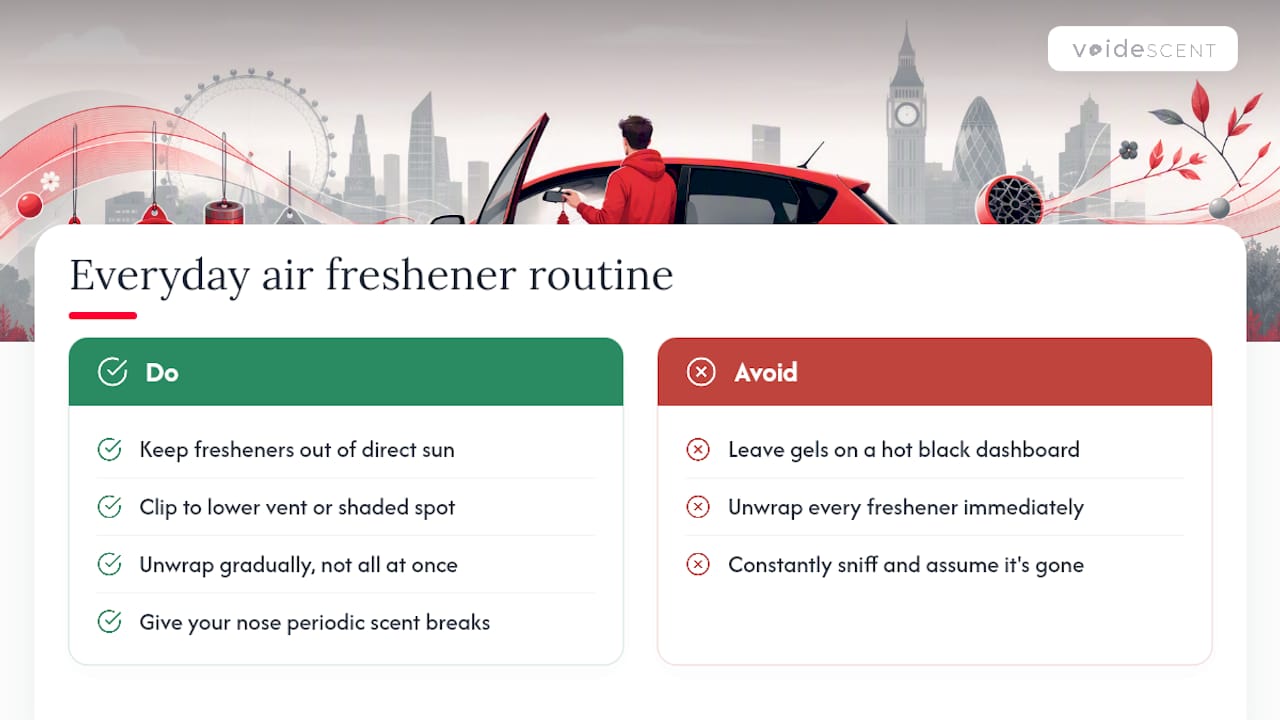
A gel can rated for six weeks and left on a black dashboard in August will not make it to week three. The same product clipped to a lower vent, out of direct light, might outperform its own rating. Placement and exposure control matter more than the label on the box, and that’s true whether you’re using a two-dollar hanger or a premium diffuser.
Our recommended routine is simple: keep new fresheners out of direct sun, unwrap gradually rather than all at once, and give your nose periodic breaks so you’re judging remaining scent accurately instead of assuming it’s gone. If you want more detail on setup, our guide to layering scents in a car and our notes on keeping a car smelling fresh year round walk through the specifics.
— Azanone
Choosing Between Heavens and Descent for Longer-Lasting Scent
If you’re tired of replacing a paper hanger every two weeks, Voidescent’s slow-release scent hangers solve the exposure problem directly rather than just packing in more fragrance oil. Both Heavens and Descent use the same controlled-release design rated for four to six weeks, so the choice comes down to scent profile rather than performance.
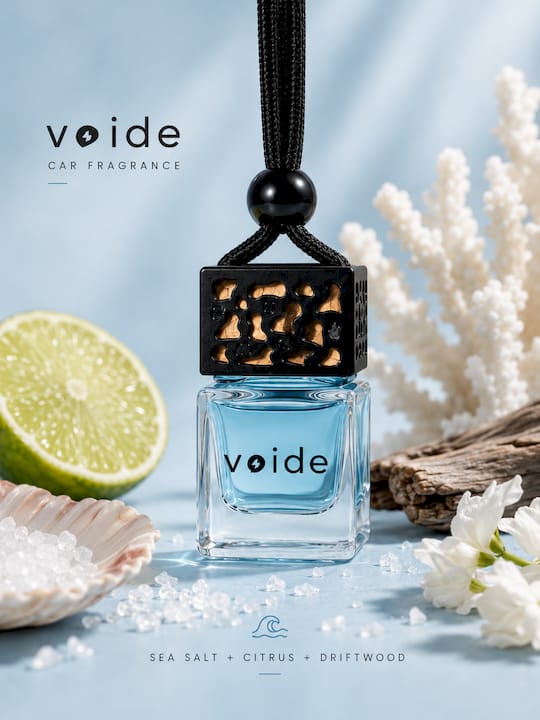
Heavens leans into brighter, airier botanical notes, a good fit if you want something that feels fresh and light on longer commutes. Descent carries a deeper, more grounded profile for drivers who prefer a scent that feels present without being sharp. Both formats reduce the thermal spikes that kill paper and gel products early, since the slow-release carrier limits how much oil is exposed to cabin heat at once.
Every order comes with a money-back guarantee, so there’s no real risk in testing which profile suits your car. Check out Heavens or Descent and pick the one that matches how you actually want your drive to smell.
Sources
- Engineerskill
- Car air freshener lifespan types factors & expert tips - CarXplorer
- How Long Do Plug-In Air Fresheners Last? The Real Answer