

Where to Hang a Car Air Freshener for Best Results
The two best spots to hang a car air freshener are the passenger-side headrest post and a high-flow dashboard vent using a vent clip. Both keep the scent moving through the cabin, stay out of your direct sightline, and avoid the legal gray zone that comes with hanging things from your rearview mirror.
The passenger headrest post sits in natural cabin airflow, gets minimal direct sun, and won’t cause olfactory fatigue the way a freshener dangling right in front of your face does. Vent clips push scent immediately through the HVAC system the moment you turn on the fan.
Safety first: Many U.S. states prohibit any object that obstructs the driver’s forward view. A large freshener swinging from the rearview mirror can trigger a traffic stop. AAA and NHTSA both flag windshield obstruction as a distraction risk. Keep fresheners small, lightweight, and out of your sightlines.
Quick alternatives when you need something right now:
- Under-seat gel can — slow, subtle, long-lasting; no mounting needed
- Cupholder pouch — sits upright, easy to remove, works with any cabin airflow
- Sun visor clip — low profile, stays put, minimal distraction risk
Key Takeaways
The passenger-side headrest post and a high-flow vent clip are the two placements that consistently deliver the best balance of scent distribution, safety, and longevity for most drivers.
| Point | Details |
|---|---|
| Best all-around spot | Passenger-side headrest post: low UV, good airflow, zero obstruction risk. |
| Top safety rule | Never hang anything that enters your forward sightline; mirror-hanging can result in a citation in multiple U.S. states. |
| Extend freshener life | Keep it out of direct sun and partially unwrap paper hangers to slow the release rate. |
| Vent clip tradeoff | Vent clips give immediate strong scent but burn through fragrance faster due to HVAC heat. |
| Voidescent option | Voidescent hangers are designed for headrest and vent placements, lasting four to six weeks with a slow-release botanical formula. |
Table of Contents
- Where to hang a car air freshener: every spot compared
- How airflow and fan settings change what you smell
- Is it legal and safe to hang things from your mirror?
- How to mount a freshener so it stays put
- How long does a car air freshener last, and how do you extend it?
- The placement tradeoff most drivers get wrong
- Voidescent: a premium option built for these placements
- Sources
Where to hang a car air freshener: every spot compared
Not every location works the same way. Here’s what each spot actually delivers.
Passenger-side headrest post
This is the safest and most effective general-purpose placement. The freshener hangs freely, catches natural cabin air circulation, and stays completely out of your line of sight. Sun exposure is low compared to dashboard spots, which means the scent lasts longer. Works best with hanging-loop fresheners and Voidescent-style scent hangers.
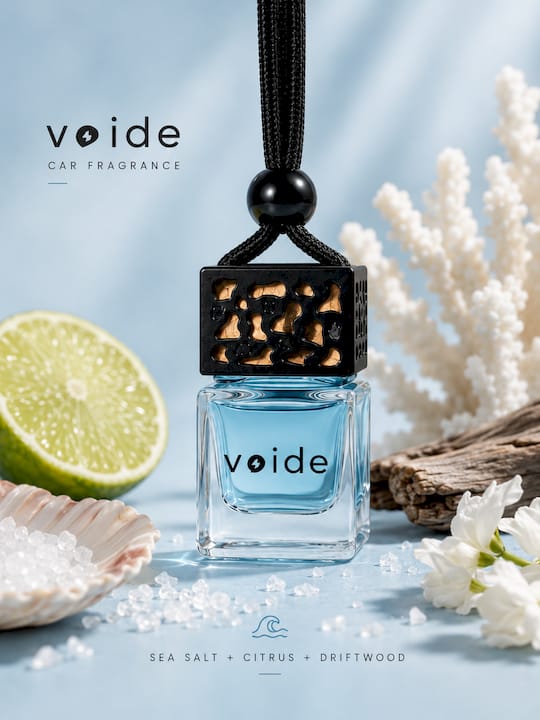
Pros: Low UV exposure, no obstruction risk, good passive airflow Cons: Scent takes a few minutes to spread on cold starts; can swing and tap the seat on sharp turns
Driver-side headrest post
Same logic as the passenger side, but slightly more noticeable to the driver. Fine for small, lightweight hangers. Avoid anything that swings wide enough to brush your shoulder or distract peripheral vision.
Rearview mirror
The classic spot, and the riskiest. Manufacturers commonly recommend the rearview mirror as the default, but it’s also the placement most likely to earn you a ticket. Several U.S. states, including California and Minnesota, explicitly prohibit objects hanging from the mirror if they obstruct the driver’s view. Small, flat fresheners may be fine; large cardboard trees are not.
Pros: Easy to hang, strong scent throw near the driver Cons: Legal risk, distraction risk, direct sun exposure accelerates scent loss
Air vents (vent clips)
Vent clips on high-flow dashboard vents deliver the fastest, strongest scent distribution. The moment the fan runs, fragrance moves through the entire cabin. The tradeoff: heat from the HVAC system burns through the scent faster than passive placements.
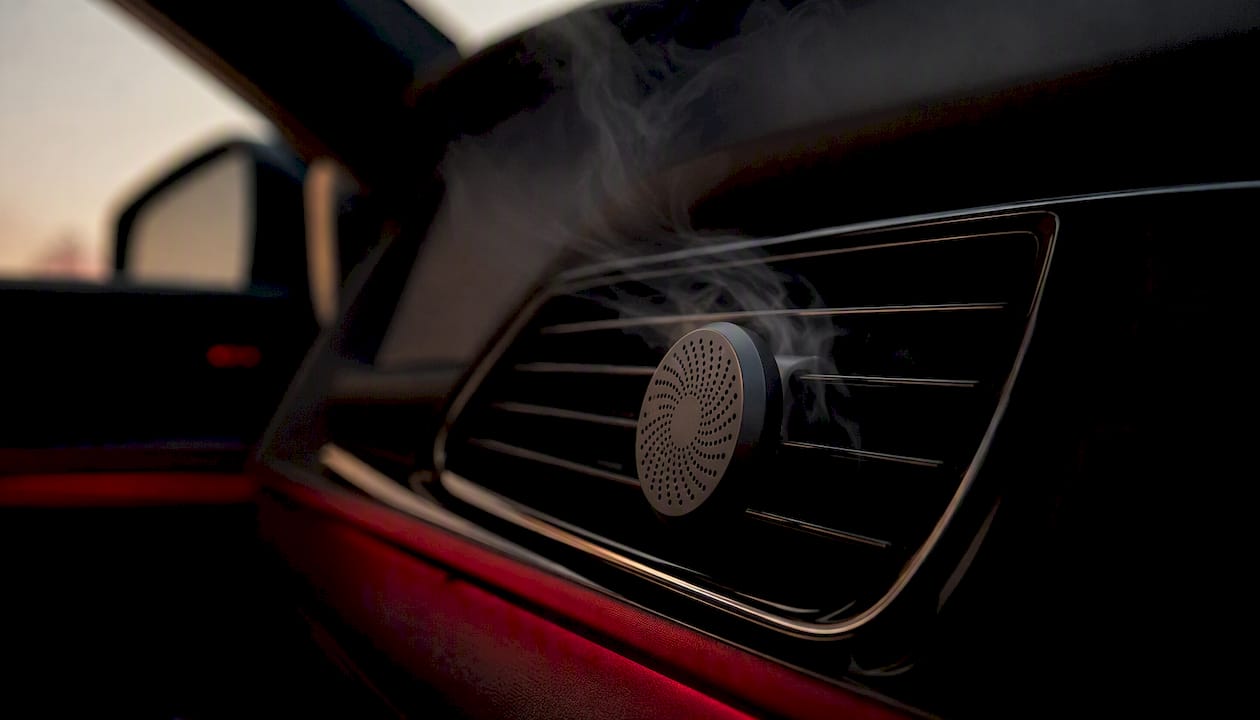
Pros: Immediate, even distribution; no hanging required Cons: Shorter lifespan; heat degrades fragrance faster
Under-seat
Gel cans and bead containers thrive here. They release slowly, last longer, and handle the lower airflow without losing effectiveness. Good for odor control rather than a strong fragrance hit. Not ideal for hanging-loop fresheners since there’s nothing to attach to.
Cupholder or center console
Works well for pouch-style or jar fresheners. Easy to swap out, no mounting, and the scent drifts upward naturally. The downside: it occupies a cupholder and can tip if you brake hard.
Dashboard (direct contact)
Avoid placing oil-based fresheners directly on the dashboard. Heat and UV light accelerate oil release, which sounds good until the oil seeps into the plastic and stains it permanently. If you want dashboard placement, use an adhesive pad as a barrier.
Glovebox or trunk
These are odor-removal spots, not fragrance spots. A baking-soda pouch or activated charcoal bag in the glovebox neutralizes musty smells. A gel can in the trunk handles cargo odors. Neither will scent the main cabin effectively.
Pro Tip: For windows-down driving, move your freshener from the vent to the headrest post. Open windows create turbulence that pulls vent-clipped scent straight out of the car before it reaches you.
How airflow and fan settings change what you smell
Placement alone doesn’t determine scent strength. Airflow does most of the work.
A vent clip on a high-flow center vent with the fan on medium pushes fragrance through the cabin in under a minute. The same freshener on a low-flow side vent with the fan off barely registers. Here’s how the variables stack up:
- Vent clip + medium fan speed: Fast, strong, even distribution throughout the cabin
- Vent clip + recirculate mode: Scent builds up quickly but can become overpowering on long drives
- Headrest hanger + low fan: Subtle, slow-building scent that lasts noticeably longer
- Under-seat gel + windows down: Minimal scent reach; works best as an odor absorber in this configuration
- Any placement + direct sun on the freshener: Accelerated release, shorter lifespan, risk of oil drip
Recirculate mode keeps cabin air cycling through the HVAC without pulling in outside air, which concentrates fragrance faster. Fresh-air mode dilutes scent but prevents buildup that can cause headaches on longer trips. For commuters who drive 20–30 minutes each way, recirculate plus a headrest hanger tends to hit the right balance.
One practical rule: if you’re sensitive to strong scents, or if you have passengers who are, use passive placements (headrest, under-seat) with fresh-air mode. The scent stays present without becoming overwhelming.
Is it legal and safe to hang things from your mirror?
The short answer: it depends on your state, and the risk is real.
State traffic laws in multiple U.S. jurisdictions allow officers to cite drivers for objects that obstruct the driver’s forward view. Hanging items from the rearview mirror have resulted in traffic stops across states including California, Minnesota, Pennsylvania, and Texas. The specific statute varies, but the enforcement pattern is consistent.
A quick safety checklist before you mount anything:
- Never block your forward sightline. If you can see the freshener while looking straight ahead, it’s in the wrong spot.
- Avoid airbag deployment zones. The dashboard, steering column area, and sun visors near the A-pillar can interfere with airbag deployment in a crash.
- Don’t let oils contact plastic surfaces. Heat causes oil-based fresheners to seep into dashboard and door trim, leaving permanent stains.
- Secure against flapping. A freshener swinging freely at highway speed is a distraction. Use a short zip-tie or loop it snugly so it hangs with minimal swing.
- Keep out of reach of children and pets. Fragrance oils and gel beads are toxic if ingested.
- Check for chemical sensitivities. Strong synthetic fragrances can trigger migraines or asthma symptoms in sensitive passengers.
If mirror-hanging is restricted in your state, the headrest post, vent clip, or under-seat placement all give you good scent distribution with zero legal exposure.
How to mount a freshener so it stays put
The goal is a freshener that hangs freely, doesn’t swing into your controls, and doesn’t drip on anything.
For vent clips:
- Select a high-flow center vent, not a side vent.
- Clip the freshener onto a horizontal vent slat, not a vertical one — it sits more securely.
- Angle the vent slightly downward so airflow carries scent toward the cabin floor and seats, not straight at your face.
For hanging-loop fresheners (headrest post, grab handle, indicator stalk):
- Thread the loop over the post or handle before tightening.
- Shorten the loop with a small zip-tie if the freshener swings more than an inch in either direction.
- Partially unwrap the freshener rather than removing the full packaging — this controls release rate and prevents an overpowering first hit.
For gel cans or pouches under the seat:
- Place the can on its base, not on its side.
- Slide it toward the front of the seat rail so cabin airflow from the footwell vent reaches it.
- Check it monthly — gel cans can dry out faster in summer heat.
For adhesive or Velcro console placement:
- Clean the surface with isopropyl alcohol and let it dry fully before applying the pad.
- Press the pad firmly for 30 seconds.
- Place a small non-absorbent barrier between any oil-based freshener and the plastic surface to prevent staining.
Pro Tip: Avoid looping a freshener around the turn-signal or wiper stalk. It looks convenient but the weight can cause accidental activation, and it puts the freshener directly in your hand’s path.
How long does a car air freshener last, and how do you extend it?
Lifespan varies a lot by format. Paper and cardboard hanging trees typically last two to four weeks under normal conditions. Vent clips burn through faster because heat accelerates fragrance release. Gel cans and slow-release oil hangers last considerably longer, especially in cooler, lower-airflow placements.
Voidescent’s botanical scent hangers are designed for a four to six week lifespan, using a slow-release oil formulation that delivers a consistent, evolving scent rather than a sharp initial burst that fades within days.
Practical steps to get the most out of any freshener:
- Partially unwrap paper or felt hangers instead of exposing the full surface at once.
- Rotate placement every week or two. Moving the freshener a few inches changes which scent molecules reach your nose first, which slows olfactory habituation.
- Keep it out of direct sunlight. UV and heat are the fastest ways to burn through fragrance. A headrest or under-seat spot outlasts a dashboard spot by weeks.
- Store spares in a sealed bag in a cool, dry place. Heat degrades fragrance even before you open the packaging.
- Clean oil spills immediately with a damp cloth. Dried fragrance oil on plastic is very difficult to remove.
- Use a barrier pad under any oil-based hanger that contacts a surface. A trimmed adhesive pad between the freshener and the plastic prevents staining without reducing scent output.
The placement tradeoff most drivers get wrong
Most people hang their freshener from the rearview mirror because that’s where they’ve always seen it done. It’s also the worst spot for longevity, legal safety, and olfactory comfort combined.
The mirror puts the freshener in direct sun for hours, burns through the scent in days, and puts a swinging object right in the center of your forward vision. The only thing it has going for it is convenience.
My recommendation: passenger-side headrest post for a slow-release hanger, center vent clip for days when you want immediate, strong scent. Commuters who drive daily in stop-and-go traffic tend to prefer the vent clip because the fan is always running. Drivers who park for long stretches get more value from a passive headrest or under-seat placement that keeps releasing scent even when the car is off.
The one situational exception: if you drive with the windows down regularly, skip the vent clip entirely. Open windows pull vent-distributed scent out of the cabin before it settles. A headrest hanger stays in the cabin’s protected airspace and actually reaches you.
Voidescent: a premium option built for these placements
If you’ve been relying on paper trees that fade in two weeks, there’s a better option. Voidescent makes botanical scent hangers and fragrance oils designed specifically for the placements this guide recommends: small enough to hang from a headrest post without obstructing anything, slow-release enough to last four to six weeks without burning out on a hot vent.
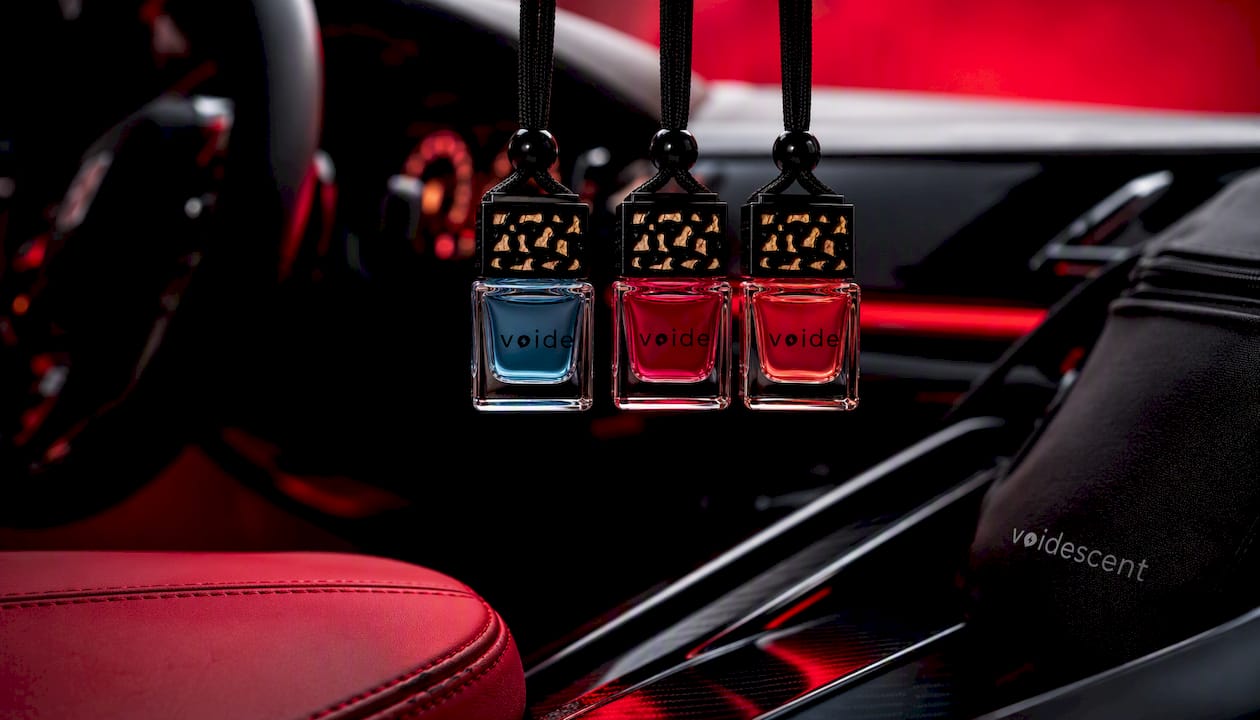
Three things that matter for placement decisions: the hangers are compact and lightweight, so they don’t swing or distract; the oil formulation releases gradually rather than front-loading all the scent in the first 48 hours; and the fragrance profiles are designed for enclosed cabin spaces, not open rooms. Heavens, Descent, and Nebula each offer a distinct scent character, from clean and airy to deep and grounding, so you can match the profile to how you drive and how long you’re in the car.
Voidescent backs every order with a satisfaction guarantee. Browse the full range and pick your placement at Voidescent.
Sources
- Hanging Car Air Freshener: Best Places to Hang Air Freshener in Your Car - Ruian Showkar Car Appliance Co.,ltd.
- How To Use Air Freshener In Car? (Best Placement & Lifespan) - ImprintNow.Com
- Where to Place a Car Scent Hanger for Best Results
- How To Use Little Tree Car Freshener: A Complete Guide