

5 Minute Fix for Car Smell After Food: UK Drivers, Find the Source
Ventilate the car and pull out every scrap of trash or leftovers first. That single step solves a surprising number of cases. If the smell is fresh, baking soda or coffee grounds plus open windows for a few hours usually clears it. If it lingers after that, you’re likely dealing with residue soaked into fabric or padding, which means enzymatic cleaning, steam extraction, or a look at the HVAC system.
TL;DR:
- Removing accessible trash, airing out the car, and using baking soda or coffee grounds can eliminate surface food odors temporarily.
- Deep residues require enzymatic cleaners, hot-water extraction, or targeted cleaning of hidden spots like seat seams and under mats.
- Persistent or sour smells often indicate mold growth, requiring mold removal, thorough drying, or replacing affected padding.
- Odors worsening with the fan on suggest issues in the HVAC system, commonly due to mold, debris, or a contaminated cabin filter.
- Applying a slow-release botanical scent after cleaning ensures long-lasting freshness, never before thoroughly removing the smell source.
Table of Contents
- Car Smell After Food: A 5-Minute Checklist
- How Do You Find Where the Food Smell Is Coming From?
- What Actually Removes Food Smell From a Car’s Interior?
- Could the Smell Be Coming From Your Vents Instead?
- When Should You Call a Professional Car Detailer?
- How Do You Stop Food Smells From Coming Back?
- Expert Guidance on Getting the Order of Operations Right
- What Are the Warning Signs of Mold Growth From Old Food Spills?
- A Real Case: The Takeaway Smell That Wouldn’t Quit
- Why a Finishing Scent Belongs at the End, Not the Beginning
- Sources
Car Smell After Food: A 5-Minute Checklist
Before you commit to a full cleaning session, run through this fast sequence. It won’t solve set-in odors, but it stops the smell from getting worse while you plan the next step.
- Open every door and window. Cross-ventilation moves odor molecules out faster than a single cracked window ever will. If you can, park in shade rather than direct sun, since heat accelerates the breakdown of food particles and makes the smell more intense.
- Pull out all visible trash. Wrappers, napkins, spilled fries, that half-eaten sandwich under the passenger seat. Check the glovebox and door pockets too. Food odor in a car often traces back to something small and forgotten, not something dramatic.
- Remove floor mats and shake them out. Crumbs trapped in mat ridges keep feeding the smell long after the main mess is gone.
- Set out a shallow tray of baking soda or used coffee grounds. Leave it on the seat or floor overnight. Both act as passive odor absorbers, pulling smell out of the air rather than masking it.
- Vacuum loose crumbs from seams and cracks before they work their way deeper into the upholstery.
This checklist buys you time and comfort. It’s not a substitute for finding where the odor actually lives, which is the part most people skip.
How Do You Find Where the Food Smell Is Coming From?
A car that smells like food almost always has a specific point of origin, not a general “food smell in the air” problem. According to Cardetox’s guide to car odor removal, a single forgotten french fry or a splash of dropped sauce is the most common cause of a smell that won’t quit, and tracking it down matters more than any product you buy.
Start by following your nose to where the smell peaks. Get on your hands and knees if you have to.
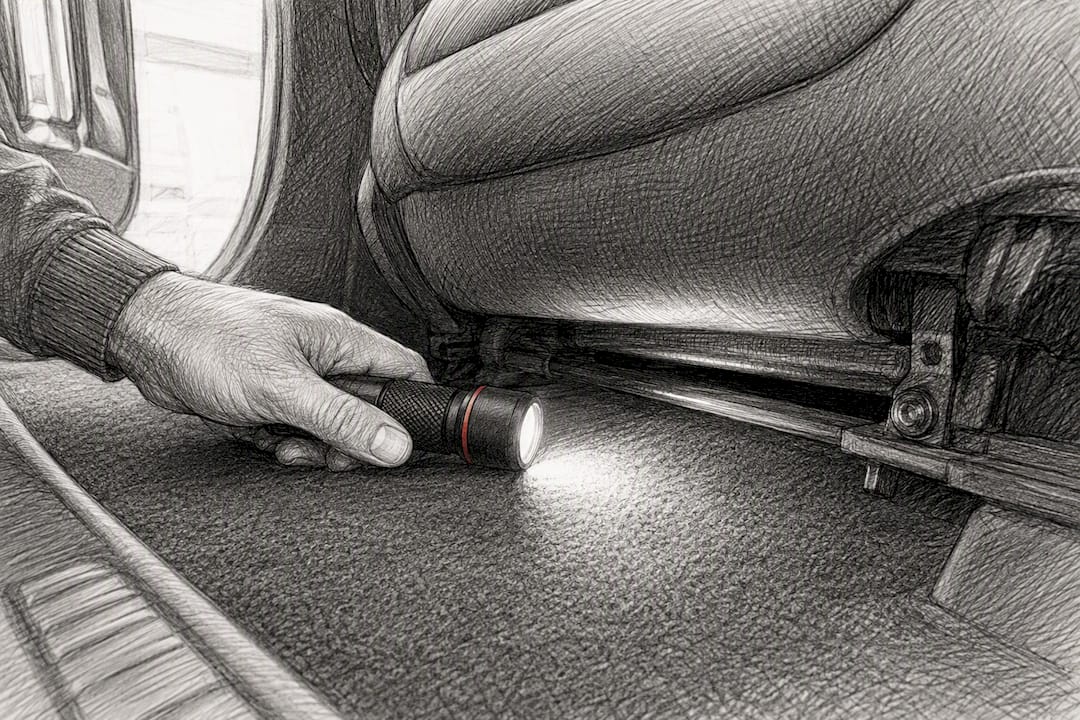
- Check under the seats, including the tracks and rails where they slide forward and back.
- Run your hand along the seat seams, where crumbs and grease work into the stitching.
- Lift the floor mats completely, not just the edges.
- Check cup holders, especially the removable inserts, which trap spilled soda and syrup.
- Open every door pocket and center console compartment.
- Check the trunk if you’ve ever carried groceries or takeout back there.
A quick diagnostic trick: close all the doors and windows, run the fan on low, and see whether the smell gets stronger. If it does, the odor may be sitting in or near the HVAC intake at the base of the windshield rather than in the seats themselves.
The type of smell tells you something too. A sour or spoiled odor usually means decomposing food matter, something wet that’s been sitting for days. A greasy smell points to oil or fat residue from fast food, which soaks into fabric differently than liquids. A musty smell suggests dampness or early mold growth, often from a spilled drink that never fully dried.
Pro Tip: Use a flashlight and check the underside of the front seats where they hinge. Food rolls there, gets pinned by the frame, and rots in a spot nobody thinks to look.
What Actually Removes Food Smell From a Car’s Interior?
The right method depends entirely on how deep the residue has gone, and using the wrong one wastes time. Masking sprays are the biggest waste of all. They cover the smell for an hour and then let it come right back, because they never touch the actual source. Fragrance and odor are two different problems, and spraying perfume over spoiled food doesn’t solve either one.
Light, fresh odors respond well to baking soda and coffee grounds. Sprinkle a generous layer of baking soda directly onto fabric seats or carpet, let it sit for at least four hours (overnight is better), then vacuum it up thoroughly. Coffee grounds work as a passive air absorber rather than a fabric treatment. Place a bowl of dry, used grounds in the cabin overnight. Both approaches are genuinely effective for smells that haven’t had time to soak in, but neither one lifts a residue that’s already bonded to upholstery fibers.
Moderate treatments step things up. A light vinegar mist, diluted roughly 50/50 with water in a spray bottle, breaks down odor-causing bacteria on hard surfaces and can be misted lightly onto fabric before wiping dry. Manual shampooing of mats and seats with a mild upholstery cleaner works well for surface grease, but drying time matters as much as the cleaning itself. Damp fabric left to sit for two days is how a food smell turns into a mildew smell.
Heavy-duty jobs need enzymatic cleaners. Enzymes are the only household-available treatment that actually digests organic residue rather than just masking or diluting it, according to AutoDetailPedia’s breakdown of odor removal methods. Apply the enzyme solution directly to the affected area, let it sit for the dwell time listed on the bottle (usually 10 to 15 minutes, sometimes longer for deep stains), agitate gently with a soft brush, then extract the moisture with a wet-dry vacuum or clean towels. Skipping extraction is the most common mistake. The enzymes break the residue down, but if you don’t pull the liquid back out, the dissolved material just re-settles into the padding underneath.
Professional-grade approaches, including hot-water extraction, can reach roughly 95% odor removal when the source has genuinely been eliminated first.
Hot-water extraction, whether rented or done by a professional, forces hot water and cleaning solution into the fibers and immediately vacuums it back out. It reaches deeper than manual shampooing but takes longer to dry, so plan for good airflow afterward.
One caution on materials: leather doesn’t tolerate saturation the way fabric does. Use a leather-specific cleaner, work in small sections, and never let water pool on stitched seams. Always test any cleaner on a hidden patch first, and never mix cleaning products, especially anything containing bleach or ammonia, since combining them can produce dangerous fumes in an enclosed cabin.
Could the Smell Be Coming From Your Vents Instead?
If the odor gets noticeably worse the moment you turn on the fan, the seats might not be the problem at all. A blocked AC drain or a contaminated cabin air filter is a common driver of persistent, musty smells that seem to come from nowhere, according to RAC Drive’s car smells guide. Food particles and spilled liquids can also work their way toward the base of the windshield, where the HVAC intake pulls in outside air.
Here’s how to work through it:
- Replace the cabin air filter. It’s usually behind the glovebox and takes ten minutes with no tools beyond a screwdriver on most models. A filter that’s caked with debris will keep circulating a stale smell every time the fan runs.
- Disinfect the vents and plenum area. A specialty vent-and-AC foam cleaner, sprayed according to the label directions with the fan running, reaches into the ductwork where mold and bacteria collect. Avoid using compressed air to blow debris around inside the dash. It scatters particles rather than removing them and can push moisture further into the system.
- Clear the AC and sunroof drains. These small tubes can clog with leaves and debris, trapping moisture that breeds bacteria. If you’re not confident locating them, a garage visit is worth the modest cost.
Pro Tip: A sweet or fishy smell from the vents is not a food problem. That usually points to a coolant leak and needs a mechanic’s attention right away, not a cleaning product.
When Should You Call a Professional Car Detailer?
If you’ve cleaned, extracted, and aired out the cabin and the smell keeps coming back within a day or two, the residue has likely worked into padding or foam that a DIY approach can’t reach. That’s the point to call in a professional.
A typical professional visit for a food odor problem includes a smell inspection, hot-water extraction of the affected areas, and industrial-strength enzymatic treatment for anything DIY products couldn’t fully break down. According to Consumer Reports, some detailers also offer ozone treatment for stubborn cases. Ozone genuinely works, but it carries real health risk if used incorrectly. The vehicle must be completely empty of people and pets during treatment, and it needs a proper airing-out period afterward before anyone gets back in.
Before booking, ask a detailer these questions:
- Will you locate and remove the actual source, or just treat the smell generally?
- What method are you using: extraction, enzymes, ozone, or a combination?
- How long will the vehicle need to dry, and can I pick it up the same day?
- Is ozone treatment included, and what’s the safety protocol for airing out afterward?
How Do You Stop Food Smells From Coming Back?
Prevention here is mostly about breaking habits that let residue sit for hours instead of minutes.
- Get food wrappers and containers out of the car the same day, not the next time you happen to clean it out.
- Use sealable containers for anything liquid or saucy, especially on longer drives.
- If you regularly transport takeout, empty any in-car trash bag or bin every single night rather than letting it accumulate.
- Vacuum the cabin weekly if you eat in the car often. Crumbs you can’t see are still feeding bacteria.
- Pull mats out and let them air occasionally, particularly after wet weather.
- Replace the cabin air filter on the schedule your manufacturer recommends, typically every 12,000 to 15,000 miles.
- Keep a small stash of wipes and a compact vacuum in the trunk for immediate cleanup after any spill.
A passive absorber like an activated charcoal bag helps maintain a neutral baseline between cleanings. Once the cabin is genuinely clean, that’s also the right moment to add a slow-release botanical scent rather than a synthetic spray, since it works with a clean baseline instead of trying to cover up a lingering problem.
Expert Guidance on Getting the Order of Operations Right
Most failed attempts at removing food smell from a car share the same mistake: skipping straight to a spray or clip-on freshener before the source is gone. Azanone’s editorial position on this is blunt: treat the smell in strict order, source removal first, absorption or enzyme treatment second, ventilation and drying third, and only then a finishing scent.
For enzyme products specifically, patience matters more than force. Rushing the dwell time (scrubbing before the enzymes have had 10 to 15 minutes to work) is the single most common way people undercut their own cleaning effort. Once the source is gone and the cabin has dried fully, a slow-release botanical option like Heavens can maintain a pleasant, evolving scent for four to six weeks. It’s meant to finish the job, never to cover up a mess that’s still there.
— Azanone
What Are the Warning Signs of Mold Growth From Old Food Spills?
A food smell that shifts from sour or greasy to musty or earthy over a week or two is often a sign that bacteria or mold has taken hold, not just leftover residue. Damp conditions from a spilled drink, condensation, or high humidity give mold exactly what it needs to establish itself in carpet padding and seat foam within 24 to 48 hours.
Look for these signs specifically:
- Discoloration on carpet or seat fabric, especially dark spots that weren’t there before.
- A smell that gets noticeably worse in humid or rainy weather and eases up when the air is dry.
- Visible fuzzy or powdery growth in seams, under mats, or around the edges of the trunk liner.
- A smell that returns within a day of cleaning even after you’ve removed all visible food debris.
If any of these show up, standard baking soda or vinegar won’t fully solve it. Mold requires targeted removal and thorough drying, and in cases where it’s spread into padding rather than just the surface fabric, replacing that section of carpet or foam may be the only permanent fix. A car that regularly sits in damp conditions, like being parked outside through wet winters, is more prone to this than one kept in a dry garage, which is worth factoring into how aggressively you dry the cabin after any cleaning session.
A Real Case: The Takeaway Smell That Wouldn’t Quit
A friend once spent two weeks fighting a smell that would not go away no matter how many times she vacuumed. It turned out three fries had rolled under the passenger seat rail and sat there through a heatwave. Once located, an enzyme cleaner broke down the grease over a 15 minute dwell, followed by a wet vacuum extraction to pull the moisture back out.
The cabin aired out overnight with the windows cracked, and only after everything was dry did a Heavens hanger go on the mirror. If you’re stuck on a smell you can’t place, check the seat rails before anything else. It’s the single most overlooked spot in the entire car.

Why a Finishing Scent Belongs at the End, Not the Beginning
Once the source is gone, the cabin is dry, and the vents are clean, there’s still one thing missing: a scent that actually holds up over weeks instead of fading after a single drive. That’s the gap Voidescent built Heavens to close. It’s a botanical scent hanger designed as a finishing layer, not a cover-up, using eco-friendly ingredients in a minimalist design that releases scent slowly for four to six weeks instead of the two or three days you get from most synthetic clip-ons.
Place it on the rearview mirror or a vent clip after your cabin has fully dried from any cleaning treatment, never before. Layering it on top of an unresolved food smell just means you’ll be smelling two things at once. Voidescent backs the product with a money-back promise, which reflects real confidence that once your car is clean, Heavens will actually hold up. If your last freshener faded within a week, check out Heavens and give your finally-clean car a scent that matches the effort you put in.
Sources
- How to Rid Your Car of Odors and Smells - Consumer Reports
- How to Get Food Smell Out of Your Car (Effective Solutions)
- What’s That Smell? How to Identify and Eliminate Bad Odors from Your Car - AutoDetailPedia
- Car smells guide – causes and solutions | RAC Drive