

4–6 Week Consistent Car Fragrance With Slow Release Botanical Oils
For a car scent that stays steady week after week, skip the spray and reach for an oil-based slow-release diffuser or a botanical oil hanger. Controlled evaporation and adjustable intensity beat paper and spray formats because the fragrance releases at a fixed rate instead of dumping scent all at once and fading fast. Done right, a slow-release oil system can hold a stable, evolving scent for several weeks before it needs attention.
TL;DR:
- Oil-based diffusers and hangers provide the most consistent scent release, lasting four to six weeks, unlike sprays or paper products that fade quickly.
- Proper placement away from direct airflow and using intermittent diffusion extends the scent’s stability over several weeks.
- Light citrus, subtle woods, and soft leather scents maintain a pleasant aroma longer during long drives, while heavy, sweet fragrances tend to become overwhelming fast.
- Cost-effective options depend on lifespan, with diffusers offering better long-term value than weekly-replaced sprays or short-lived paper hangers.
- Voidescent’s botanical formulations and minimalist designs focus on steady, evolving scents, emphasizing patience and natural aroma layering for long-term satisfaction.
Table of Contents
- Which Product Types Actually Deliver Consistent, Long-Lasting Scent?
- How Do You Set Up a Car Scent That Stays Steady for Weeks?
- Which Scents Hold Up Best on Long Drives?
- What Does Consistent Car Scent Actually Cost You?
- What Makes Voidescent’s Approach Different?
- Why Design-First, Natural Scenting Wins Long Term
- Which Voidescent Scent Fits Your Drive?
- Sources
- FAQ
Which Product Types Actually Deliver Consistent, Long-Lasting Scent?
Not all car fresheners age the same way, and the format matters more than the brand printed on the box. Paper strips and cardboard hangers rely on raw evaporation from an absorbent surface, so they hit hard initially and taper off quickly because there’s no barrier controlling the release rate. Sprays are worse for consistency: they deliver an instant burst that’s gone within hours, which is why so many drivers spray daily and still feel like their car never smells “finished.”
Oil and gel-based products behave differently. A gel block traps fragrance oil in a semi-solid matrix that releases slowly and predictably. Vent clips with an oil reservoir use airflow from the HVAC system to carry scent, and the better ones let you dial intensity up or down. Diffusers go a step further, atomizing oil into a fine, dry mist rather than relying on passive evaporation, which testing by Aroma360 found tends to produce steadier, more residue-free scent over time than a traditional freshener.
Hands-on testing from Better Homes & Gardens backs this up: oil-based diffusers and adjustable vent clips consistently outlasted paper and water-based options across a three-month trial. Here’s how the main formats stack up:
- Sprays: cheapest option, but scent disappears within hours and needs reapplying constantly.
- Paper/cardboard hangers: low cost, moderate lifespan, but scent fades unevenly and drops off hard after the first week or two.
- Gel/solid blocks: steadier release than paper, minimal mess, decent for budget-conscious drivers who don’t mind occasional replacement.
- Vent clips: good intensity control since airflow drives the scent, though performance shifts with your fan speed and HVAC setting.
- Oil-based diffusers or hangers: the steadiest, most adjustable option, ideal for anyone who wants a consistent car fragrance without daily fussing.
Commuters who want a “set it and forget it” solution tend to do best with a diffuser or hanger. Rideshare drivers, who need scent that stays neutral and pleasant for a rotating cast of strangers, usually do better with mellow oil blends at lower intensity rather than anything that spikes.
How Do You Set Up a Car Scent That Stays Steady for Weeks?
Getting weeks of stable scent isn’t about buying the right product. It’s about how you install and manage it.
- Place it away from direct airflow chaos. Hang oil-based products from the rearview mirror or a lower vent, not directly in the strongest airflow path, so the scent disperses evenly instead of blasting out in one direction and vanishing.
- Use intensity or schedule controls if your device has them. Devices with adjustable settings, like the Pura Car Pro, let you run shorter or intermittent cycles instead of constant diffusion, which stretches cartridge life and reduces the “nose fatigue” that makes strong scents seem to disappear.
- Rotate scent families every few weeks. Smelling the same fragrance daily dulls your ability to notice it, even when it’s still working. Switching between two or three complementary scents keeps your nose engaged and helps you catch when a refill is actually needed.
- Check for spills and residue monthly. Oil hangers and vent clips can leave faint residue on fabric or plastic trim if a wick saturates unevenly. A quick wipe with a microfiber cloth prevents buildup.
- Clean vents and fabric surfaces before refilling. Odor sources like old spills or ground-in dust compete with your fragrance, and cleaning is often the real fix when a scent seems to fade fast.
Pro Tip: If you’re running a diffuser, set it to an intermittent schedule rather than continuous. Short, spaced bursts of scent are perceived as fresher over a longer stretch than one long, unbroken release, and it makes your refill last noticeably longer.
Vent placement interacts directly with your HVAC settings, so a clip that performs well on low fan speed might feel weak on high. Adjust position and intensity together rather than assuming one setup works in every condition.
Which Scents Hold Up Best on Long Drives?
Mellow families win over time. Light citrus, subtle woods, soft leather, and clean “new car” notes tend to stay pleasant for hours, while heavy sweet, fruity, or musk-forward fragrances often turn overpowering in a small, enclosed cabin. What smells nice for the first ten minutes can become a headache by hour three.
Top notes are what you smell immediately, and they fade fastest. Base notes, like sandalwood or amber, emerge later and are what actually carries a scent’s longevity. A fragrance built mostly on top notes will smell strong at first and then go flat within days, even in a slow-release system.
- Best for long cabin exposure: citrus, light woods, subtle leather, soft musk in small doses.
- Riskier for enclosed spaces: heavy vanilla, sugary dessert notes, strong floral bouquets.
- Best for sensitive passengers: botanical or single-note blends over complex synthetic mixes.
If you’re sensitive to strong scents or drive with passengers who are, botanical oil blends generally perform better than heavily synthetic formulas, according to BHG’s testing. Sweet coffee and dessert-adjacent scents, similar to the rich flavor profiles found in specialty gift coffee, can turn cloying fast in a sealed cabin even though they’re pleasant in small doses elsewhere. Before committing to a full-size product, try a sample or small hanger for a week and imagine sitting through a three-hour drive with it. If you can’t picture tolerating it that long, skip it.
What Does Consistent Car Scent Actually Cost You?
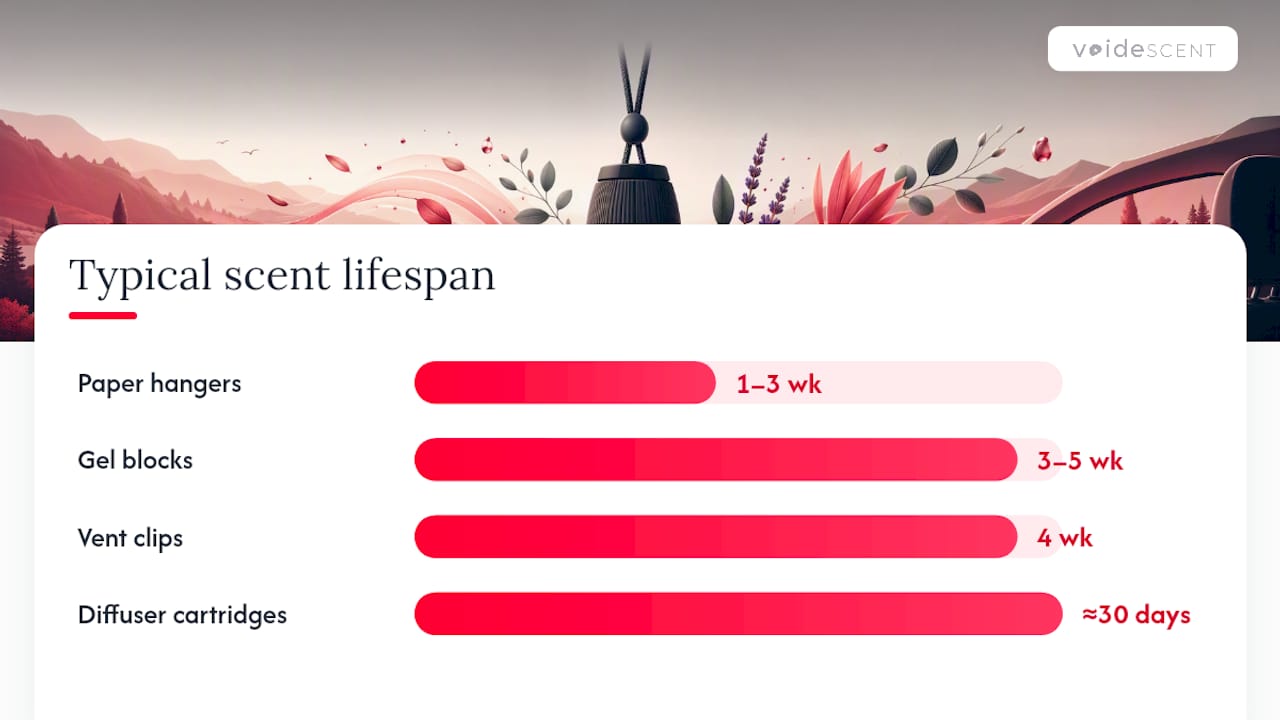
Lifespan varies a lot by format, and knowing the real numbers helps you avoid buying the wrong thing twice. Paper hangers typically last one to three weeks before fading noticeably. Gel blocks run three to five weeks. Vent clips with oil reservoirs often last four weeks. Diffuser cartridges, per Pura’s own product guidance, run around 30 days at typical usage, though intermittent schedules can stretch that further.
Cost math matters more than sticker price. A £3 spray you replace weekly costs more over a year than a £15 refillable diffuser system replenished monthly. Car and Driver’s comparison found that pricier diffusers get closer to a genuine “new car” feel, but also stressed that a proper cabin clean often solves fading-scent complaints faster than switching products.
- If scent fades faster than expected, check for underlying odor sources first: spilled food, damp carpet, or pet residue will compete with and mask any fragrance.
- Extreme heat speeds up evaporation, so a diffuser or hanger will run out faster in summer than winter.
- A deep clean or odor neutralizer should come before scenting, not alongside it. Covering a bad smell rarely works for long.
What Makes Voidescent’s Approach Different?
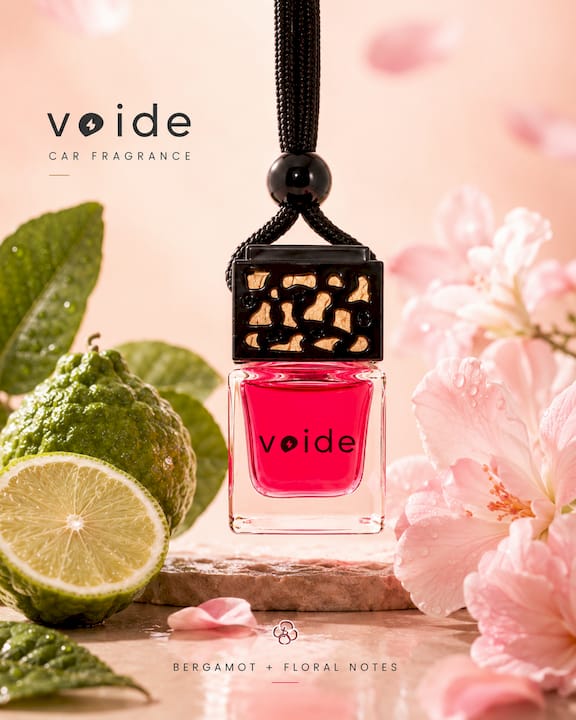
Voidescent builds its scent hangers and fragrance oils around one job: keep the cabin smelling good, steadily, for weeks rather than days. Each hanger uses botanical oils in a slow-release format designed to hold a consistent, gradually evolving scent for four to six weeks, avoiding the sharp spike-then-fade pattern common with paper or spray products.
A few things define the approach:
- Minimalist, design-forward hangers that look intentional hanging from a mirror, not like an afterthought air freshener.
- Botanical fragrance oils formulated for gradual evaporation instead of fast top-note burnout.
- A four to six week performance window, aligning with the oil-based longevity patterns BHG’s testing found in top-performing products.
- A satisfaction guarantee reflects confidence that the slow-release format holds up under normal daily driving.
For readers who want the mechanics behind safe usage, Voidescent’s guide on using fragrance oils safely in a car covers placement and handling in more detail, and the piece on layering scents for lasting aroma explains how rotation extends perceived freshness without needing more product.
Why Design-First, Natural Scenting Wins Long Term
Most car fresheners are built to smell strong on day one and get forgotten after that. That’s backwards. A scent you barely notice because it’s steady, week after week, is doing its job better than one that announces itself and then quits. Slow-release botanical systems reward patience over instant gratification, and that’s the trade worth making for a cabin you sit in every day.
If you want to go deeper on setup, Voidescent’s placement guide for hangers and diffusers and product pages are a natural next stop.
— Azanone
Which Voidescent Scent Fits Your Drive?
Heavens, Descent, and Nebula each solve the same problem differently. Heavens suits design-conscious commuters who want a light, everyday scent that doesn’t overwhelm a small cabin. Descent is built for drivers who prioritize a subtler, longer-arc aroma with fully natural ingredients over anything synthetic-forward. Nebula is the pick for anyone who wants the most gradual, evolving scent profile in the catalog, ideal if you like noticing subtle shifts over the full four to six week cycle rather than one flat note throughout.
All three run on the same slow-release botanical oil format, with a customer satisfaction promise if the performance doesn’t hold up in your car. If you’re unsure which strength or size fits your commute, start with a single hanger before committing to a bundle, and check the product pages for current refill options.
Sources
- The 5 Best Car Air Fresheners, Tested — BHG
- Cheap vs. expensive car air freshener: Which one should you buy? — Car and Driver
- Car diffusers vs. air fresheners: Which is better? — Aroma360
FAQ
How do I keep my car smelling good all the time?
Use an oil-based diffuser or hanger with adjustable intensity, rotate scent families every few weeks, and clean fabric and vents regularly since odor sources will compete with any fragrance you add.
What is the best smelling car fragrance?
Mellow, balanced scents like citrus, light woods, or subtle leather tend to perform best in small cabins, while heavy sweet or musky fragrances often turn overpowering during long drives.
Which car fragrance has the longest lasting scent?
Oil-based slow-release diffusers and hangers last longest, with formats like Voidescent’s botanical hangers rated for four to six weeks compared to one to three weeks for paper hangers.
Which is the best fragrance perfume for cars?
There’s no single best fragrance since tolerance varies by driver, but botanical oil blends in light, non-cloying families generally hold up better over multi-hour drives than heavy synthetic scents.