

Two Step Chemical Free Fix to Remove Car Odor Naturally
Remove car odor naturally with a two-step order: find and eliminate the physical source, then neutralize the residue with baking soda or activated charcoal instead of spraying a scent over it. Mild smells clear in a few hours; embedded ones like old spills or smoke may need two or three treatment cycles over several days. Once the cabin tests neutral, a light natural fragrance can take over as maintenance, not disguise.
TL;DR:
- Removing the physical source of odor, such as spills or biological stains, is essential before using neutralizers; blacklights help identify hidden biological stains.
- Proper deep cleaning involves purging debris, vacuuming with attachments, treating stains with enzyme cleaners, shampooing upholstery, and ensuring thorough drying to prevent mold growth.
- Natural neutralizers work best when matched to the odor type: baking soda for acids, charcoal for ongoing absorption, and vinegar for hard surfaces, with enzyme cleaners for biological stains.
- Odors originating from the HVAC system require inspecting or replacing the cabin air filter and disinfecting the evaporator rather than surface cleaning.
- Once the car tests neutral and free of odor, passive scent options like botanical hangers provide a consistent, long-lasting fragrance without layering over unresolved smells.
Table of Contents
- How Do You Find What’s Causing the Smell?
- Deep Cleaning: Purge, Vacuum, Shampoo, Dry
- Natural Neutralizers: Baking Soda, Charcoal, Vinegar, and Coffee
- Don’t Ignore the Vents and Cabin Air Filter
- When DIY Isn’t Enough
- Keep It Smelling Fresh Once It’s Clean
- Other Natural Odor Absorbers Worth Trying
- Why Source-First Beats Masking, Every Time
- A Natural Way to Maintain a Clean Cabin
- Sources
- FAQ
How Do You Find What’s Causing the Smell?
Masking a smell without finding it just delays the problem, and most odors hide in the same handful of spots. Start with the obvious: pull the floor mats, check under the seats, and dig through the glovebox and cup holders for old food wrappers or spilled drinks. The trunk well and the seams where seats meet the floor trap crumbs and moisture that a quick glance misses.
A few diagnostic tricks separate the cause fast:
- If the smell gets stronger only when the fan kicks on, suspect the HVAC system or a moldy evaporator, not the upholstery.
- A sour, organic smell that lingers regardless of airflow usually points to a spill or biological stain in the fabric.
- Smoke odor clings to headliners and seat foam, areas that plain vacuuming rarely reaches.
- A blacklight can expose urine or other biological stains invisible under normal light, which matters because you cannot treat what you cannot see.
A flashlight for tight corners and a blacklight for suspected biological stains turn guesswork into a targeted plan, which saves you from scrubbing the wrong spot for an hour.
Deep Cleaning: Purge, Vacuum, Shampoo, Dry
Cleaning out of order is the single biggest reason DIY odor removal fails. Do it in this sequence and you avoid re-trapping smells under a clean-looking surface.
- Purge everything loose. Remove trash, food containers, and anything not bolted down. Pull the floor mats and wash them separately with soap and water, then let them dry completely before they go back in.
- Vacuum with the right attachments. Use the crevice tool along seat seams, under the seat tracks, and in the trunk well. A stiff brush attachment lifts embedded debris from carpet fibers that a standard nozzle skips over.
- Treat biological stains with an enzyme cleaner. Saturate the area, don’t just mist it, since enzyme cleaners need to stay wet to digest organic compounds like urine, vomit, or food residue. Let it sit for 12 to 24 hours before blotting dry. A enzymatic approach to pet stains works the same way in carpet as it does in car upholstery: dwell time matters more than scrubbing pressure.
- Shampoo or steam clean the upholstery and carpet. Work in small sections so you’re not soaking the entire cabin at once.
- Dry it thoroughly. Crack the windows, run the fan on a low, non-recirculating setting, and if possible park in the sun with the doors open for an hour or two.
Pro Tip: Skipping the drying step is the number one reason a “cleaned” car smells musty again within a week. Damp carpet padding grows mold fast, and once that happens, no amount of surface neutralizing fixes it.
Cutting corners on drying undoes everything the cleaning step accomplished.
Natural Neutralizers: Baking Soda, Charcoal, Vinegar, and Coffee
Each natural neutralizer works through a different mechanism, so matching the tool to the smell matters more than picking whichever one is in your pantry.
Baking soda neutralizes acidic odor compounds on contact. Sprinkle it generously over fabric seats, carpet, or mats and leave it for several hours, ideally overnight, before vacuuming it back up. The longer dwell time gives it more contact with trapped acids from food and body odor.
Activated charcoal works differently. It doesn’t neutralize chemically; it adsorbs odor molecules onto its porous surface, which makes it a passive, ongoing tool rather than a one-time treatment. Bamboo charcoal bags tucked under seats or in the trunk can last up to two years if you recharge them monthly by setting them in direct sunlight for about an hour, which resets their absorption capacity.
For hard surfaces, a 50/50 white vinegar and water mix applied with a microfiber cloth lifts odor molecules from dashboards, door panels, and cup holders, and the vinegar smell fades as it dries. Keep it off touchscreens and electronic vents.
Coffee grounds in a small open container offer a short-term, pleasant-smelling deodorizer, useful for a day trip or when you need a quick fix before a passenger climbs in, though they don’t match charcoal’s staying power.
- Use baking soda for fabric and carpet odor tied to spills or general funk.
- Use charcoal for ongoing, passive maintenance rather than acute problems.
- Use vinegar for hard, non-porous surfaces only.
- Use enzymes, not baking soda, for biological stains like urine or vomit.
Don’t Ignore the Vents and Cabin Air Filter
If the smell gets worse the second you turn on the fan, the problem almost certainly lives in your HVAC system, not the seats. A fouled cabin air filter or a moldy evaporator core are two of the most common causes of a musty vent smell, and no amount of upholstery cleaning fixes either one.
- Check your cabin air filter first. Most sit behind the glovebox and are simple to inspect without tools.
- Swap in a fresh filter, ideally an activated-charcoal type, which adds a layer of odor adsorption on top of basic filtration.
- Run an automotive AC disinfectant through the recirculation system per the product’s directions if the vent smell persists after a filter change.
- If you smell mildew even with a new filter, the evaporator itself may have mold growth, and that calls for a mechanic’s inspection rather than another spray treatment.
When DIY Isn’t Enough
Some odors sit deeper than a filter change or an overnight charcoal treatment can reach. Deeply embedded smoke, water-soaked padding from a flood or leak, and persistent mold that keeps returning after cleaning usually mean the odor reservoir is in the seat foam or carpet padding itself, not the surface.
Professionals use ozone or hydroxyl generators for these cases, and ozone treatments carry real risks: they’re hazardous to breathe and can degrade rubber and plastic trim, so no people or pets should be in the vehicle during treatment, and the cabin needs thorough airing out afterward. If a shop suggests full carpet or padding replacement instead, that’s usually a sign the smell has gone past what any surface treatment can solve.
Keep It Smelling Fresh Once It’s Clean
The cheapest odor fix is never letting one start. Removing trash the same day, avoiding eating in the car, and a quick weekly vacuum prevent most odors before they take hold, which beats any after-the-fact treatment.
- Wipe down and dry floor mats after wet or snowy trips.
- Recharge charcoal bags monthly and replace the cabin air filter on schedule.
- Air the car out for a few minutes after it’s been sealed up in heat or humidity.
Pro Tip: Only add a natural fragrance after the cabin tests neutral. Layering scent over an unresolved odor just creates a new, muddier smell instead of a clean one. Once you’re at that stage, passive scent options that don’t rely on synthetic sprays are the better long-term move than reaching for another aerosol can.
Other Natural Odor Absorbers Worth Trying
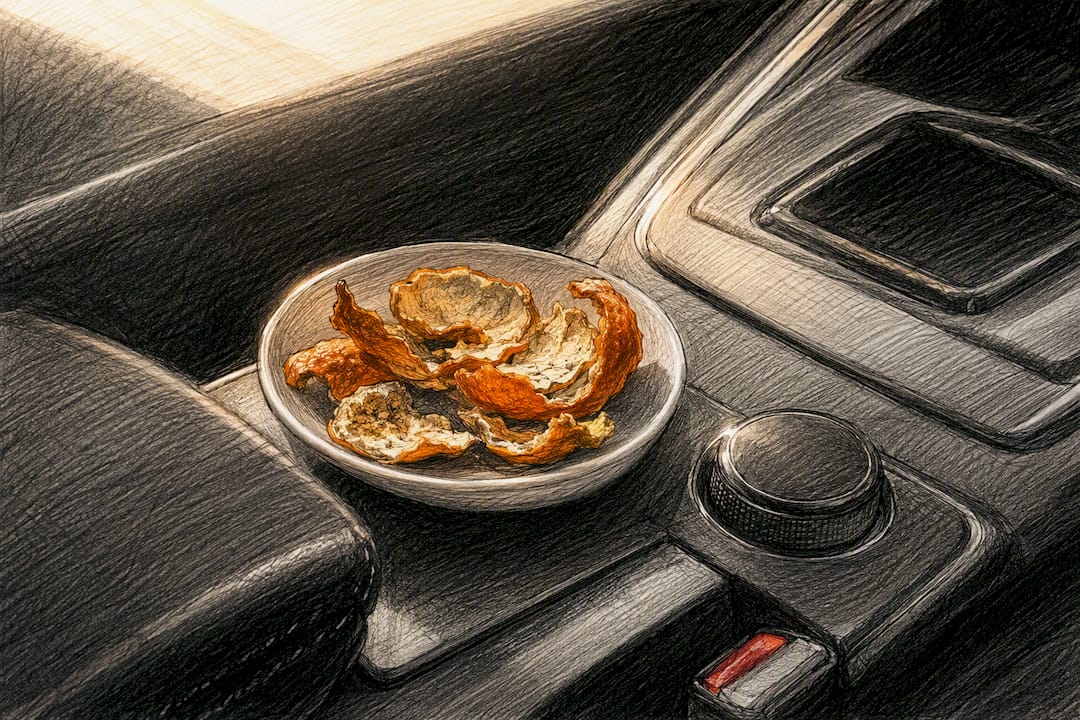
Beyond baking soda, charcoal, vinegar, and coffee, a few household options round out a natural odor removal kit. Dried citrus peels, left loose in a small dish on the dashboard or center console, release light citrus oils as they dry out over a few days, which works well as a short-term freshener while you’re mid-cleaning process. They don’t have the adsorption power of charcoal, so treat them as a finishing touch rather than a fix.
Essential oils on a wood clip or cotton pad give you control over strength and scent without the propellants and synthetic fragrance compounds found in most aerosol car fresheners. A drop or two goes further than people expect. Oversaturating a pad just means the scent fades unevenly and can leave an oily residue on fabric or plastic.
Silica gel packets, the kind that come in shoe boxes or electronics packaging, absorb excess moisture in a cabin, which matters because damp air is what lets mildew smells develop in the first place. Toss a few in the glovebox or under seats during humid months.
Baking soda sachets made from an old sock or thin cloth pouch let you tuck a neutralizer into door pockets or seatback pouches for slow, ongoing absorption between full baking soda treatments, without loose powder getting into upholstery seams.
None of these replace the source removal and deep clean covered earlier. They’re maintenance tools for a cabin that’s already been treated, not a shortcut around it.
Why Source-First Beats Masking, Every Time
Most people reach for a spray because it’s instant. But an odor molecule doesn’t disappear because it’s outnumbered by a stronger scent; it’s just harder to smell for a while. Real removal means eliminating what’s producing the molecule in the first place, and I think that distinction gets lost in most car care advice. Azanone has spent years studying how synthetic fragrances interact with cabin air and why passive, source-first methods hold up better over weeks, not just minutes.
— Azanone
A Natural Way to Maintain a Clean Cabin
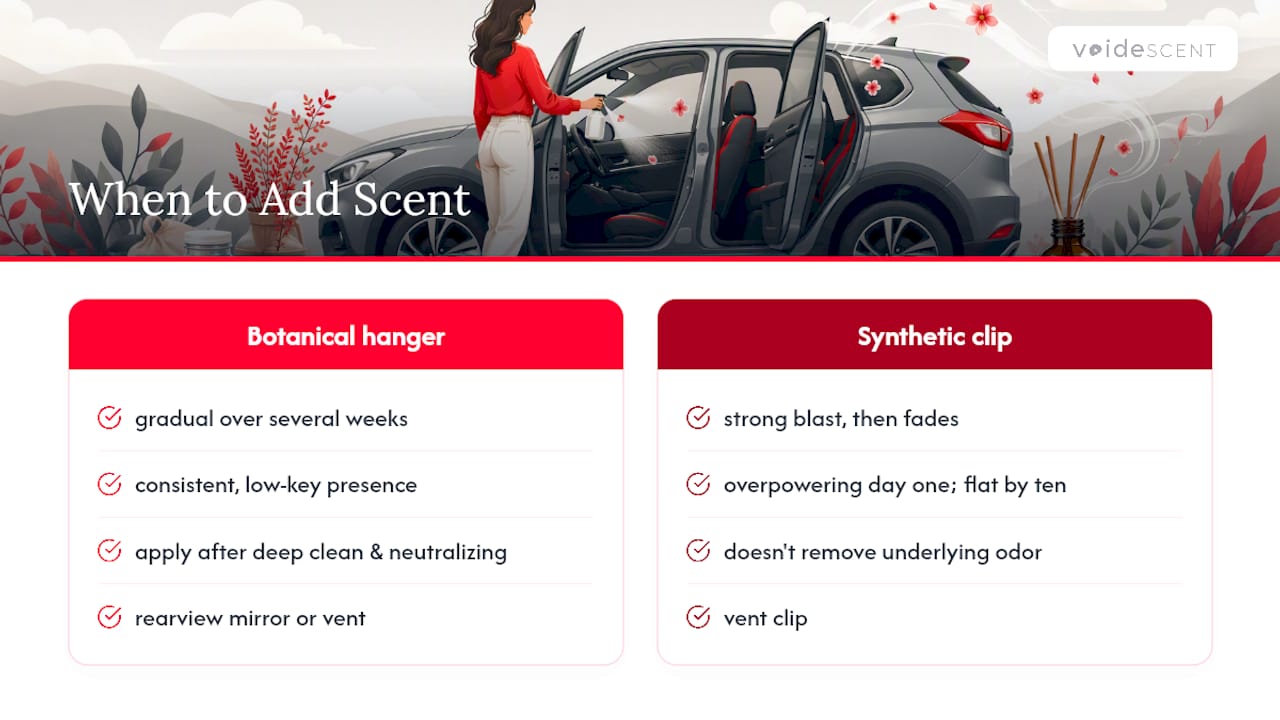
Once the cabin actually smells neutral, that’s the moment to introduce scent, not before. Slow-release botanical hangers are designed for exactly that stage: unlike a synthetic vent clip that blasts a strong scent for a week and fades to nothing, these use botanical fragrance oils that release gradually over several weeks, so the cabin smells consistent instead of overpowering on day one and flat by day ten.
Hang Descent from the rearview mirror or a vent for an even, low-key presence throughout your commute. Heavens and Nebula offer different scent profiles from the same slow-release system, so you can pick the one that fits your cabin rather than settling for whatever’s on the gas station shelf. Apply any of them only after the deep clean and neutralizing steps above; if you skip source removal, you’re just adding a nicer smell on top of the same underlying problem.
Ready to finish the job properly? Browse the current lineup and pick the scent that fits your drive at Voidescent.
Sources
- How to Rid Your Car of Odors and Smells | Consumer Reports
- How to Get Rid of Car Odor — CarCareTruth
FAQ
How can I get a horrible smell out of my car?
Find and remove the physical source first (spill, trash, biological stain), then treat the area with baking soda or an enzyme cleaner depending on whether the odor is acidic or organic, and finish by checking the cabin air filter if the smell lingers near the vents.
How can I neutralize the smell of my car?
Baking soda neutralizes acidic odors on fabric and carpet when left for several hours to overnight, while activated charcoal bags passively adsorb odor molecules on an ongoing basis; use vinegar diluted 50/50 with water for hard, non-porous surfaces.
How long should I leave baking soda in a car for the smell?
Leave baking soda on fabric seats, mats, or carpet for several hours—preferably overnight—before vacuuming it up; stronger or older odors may need a second application.
What is the best odor eliminator for my car?
There’s no single best option since it depends on the smell: enzyme cleaners work best for biological stains like urine or vomit, baking soda handles general acidic odors, and activated charcoal bags, such as Voidescent’s slow-release hangers used after cleaning, maintain a neutral cabin over time.