

15–30 Minute Fix for Drivers: Remove Air Freshener Residue Safely
Vacuum first, then wipe hard plastics and trim with a mild soap solution and a soft cloth. For fabric seats and carpets, sprinkle bicarbonate of soda, let it sit, vacuum, then follow with an upholstery shampoo if needed. Skip strong solvents on plastics, always test a hidden spot first, and if you want to stop this problem from coming back, switch to a low-residue hanger like the ones Voidescent makes.
TL;DR:
- Use a low-residue hanger like Voidescent’s to prevent fragrance and oil buildup on plastics and fabrics.
- Vacuum thoroughly before wiping hard surfaces and spot-treat oily marks with mild soap before considering specialized cleaners.
- Sprinkle bicarbonate of soda on fabric seats and carpets for odor removal, then vacuum and ensure thorough drying to prevent mold.
- Clean vents with barely damp cotton buds or soft brushes, avoiding direct spray into openings to prevent trapped liquid and residue.
- Test all cleaners on hidden spots first, and replace harsh chemicals with gentle automotive plastic cleaners to avoid damaging interior coatings.
Table of Contents
- Fast Checklist: What To Do First (15 to 30 Minutes)
- How To Clean Hard Plastics, Vinyl, And Leather Safely
- Removing Residue From Fabric Seats, Carpets, And Headlinings
- Cleaning Vents And The Crevices Where Residue Hides
- Treating Oily Fragrance Film Without Damaging Trim
- Deodorizing, Drying, And Confirming The Residue Is Gone
- Preventing Buildup And Choosing Low-Residue Scent Options
- Author Perspective And Why This Guide Exists
- A Low-Residue Alternative Worth Trying Once You’ve Cleaned Up
- Sources
- FAQ
Fast Checklist: What To Do First (15 to 30 Minutes)
Before you reach for any cleaner, get the basics done. This order matters because vacuuming loose powder before you wipe stops you from smearing dry residue into a paste.
- Remove any air freshener hangers, gel pots, or vent clips still in the car.
- Roll down the windows or open the doors to ventilate the cabin for a few minutes.
- Vacuum loose dust, powder, and grit from seats, carpets, door pockets, and cupholders.
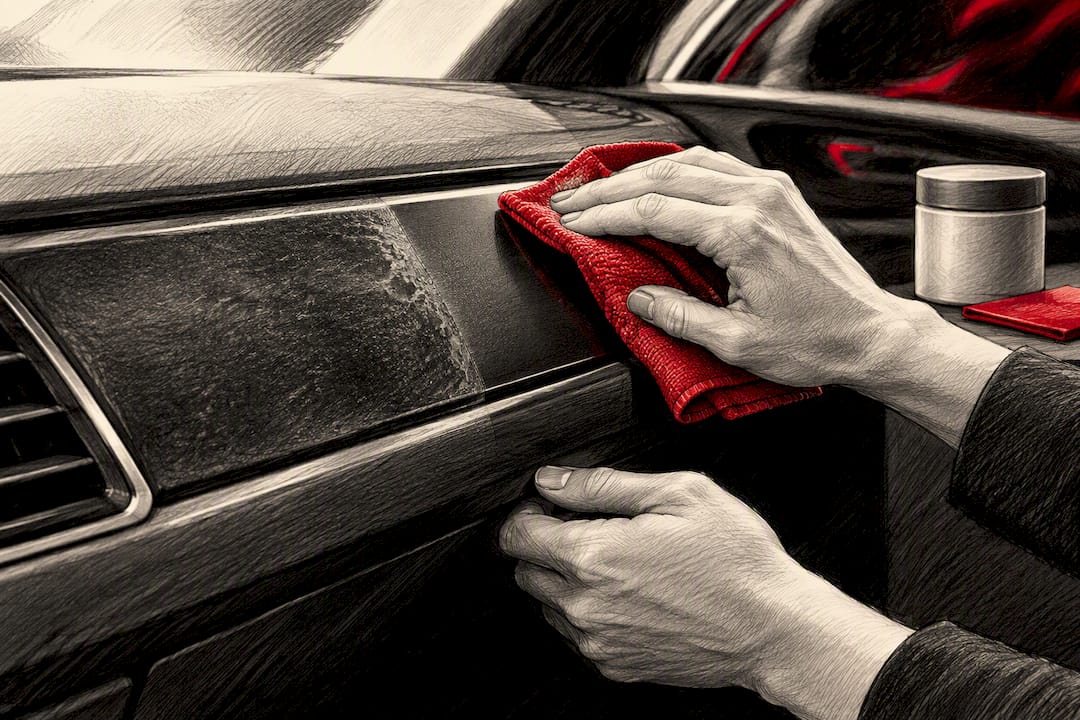
- Wipe visible film on hard trim (dash, door panels, center console) with a soft cloth and a mild soap solution.
- Spot-treat any oily marks by blotting gently. Never rub, since rubbing spreads oil into a wider patch.
- Leave the windows cracked and let the interior air-dry before you judge whether deeper cleaning is needed.
This first pass handles a significant portion of what people call “residue.” The rest is either baked-on oily film or fragrance that soaked into fabric, and that needs the surface-specific steps below.
How To Clean Hard Plastics, Vinyl, And Leather Safely
Mild soap and warm water is the correct starting point, not a fallback. Manufacturer guidance for vehicles like the Nissan LEAF specifically recommends a soft cloth dampened with mild soap solution for cleaning plastics, vinyl, and leather trim, then drying with a second soft cloth. That two-cloth method (one wet, one dry) is the whole trick. It lifts the film without leaving streaks or new residue behind.
Here’s the actual sequence:
- Mix a few drops of dish soap into warm water. Don’t go stronger than that.
- Dampen a microfiber cloth, wring it out well, and wipe in one direction rather than scrubbing in circles.
- Test on a small concealed spot first, such as inside the glove box or under a seat rail, and wait a few minutes to check for discoloration.
- Dry immediately with a clean, dry cloth so no moisture sits on the surface.
If soap and water don’t shift a stubborn patch after two attempts, a dedicated plastic trim cleaner made for automotive interiors is the next step up, not a household glass cleaner or a degreaser from under the kitchen sink. And if the residue has clearly gotten behind trim panels rather than sitting on top, stop and book a dealer visit instead of prying panels loose yourself.
Pro Tip: Kia’s owner guidance specifically calls out air fresheners, perfumes, and sun cream as substances that can discolor interior parts if left sitting, and recommends wiping them off right away rather than letting them dry into the surface.
Never spray an aerosol cleaner directly at a vent or into a seam near trim. Overspray finds its way into gaps you can’t see, and it stays there.
Removing Residue From Fabric Seats, Carpets, And Headlinings
Fabric holds fragrance oil differently than plastic does. It doesn’t just sit on top, it absorbs, which is why fabric residue usually smells stronger even when it looks less visible.
- Sprinkle bicarbonate of soda generously over the affected area and let it rest for at least a few hours, ideally overnight.
- Vacuum it up thoroughly, going over the spot twice to catch what’s worked into the fibers.
- If a smell or mark remains, apply a fabric or upholstery shampoo, working it in gently with a soft brush rather than soaking the area.
- Blot or extract the shampoo rather than leaving it to dry on its own. Overwetting fabric is the single most common mistake here.
- Air the car out fully afterward, doors and windows open, until the fabric is completely dry to the touch.
Bicarbonate of soda works because it’s genuinely one of the simplest, lowest-cost deodorizing methods for fabric, and it’s the same principle behind box-of-soda-in-the-fridge tricks. It doesn’t mask a smell, it pulls odor molecules out of the material.
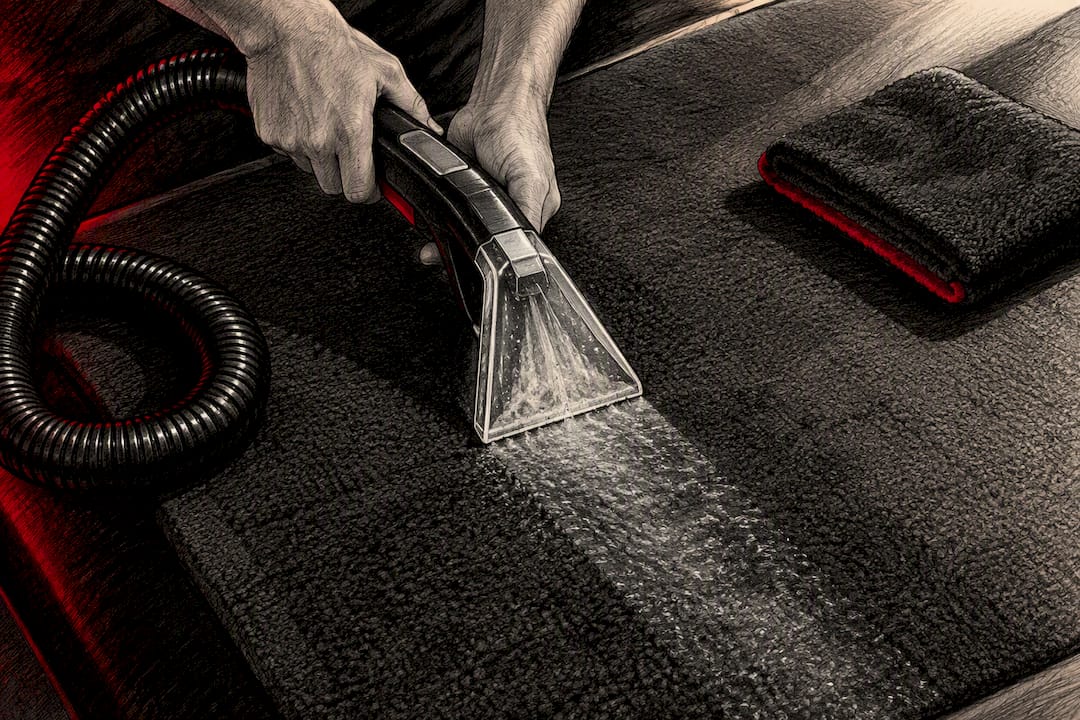
For carpets or headlinings with deeper staining, steam cleaning or a professional upholstery clean is worth the cost. A detailer’s steam extractor pulls moisture (and grime) back out immediately, which a spray bottle and a towel simply can’t match. And drying matters more than people think here: guidance on cleaning your car’s interior stresses thorough drying after any shampoo treatment specifically to avoid unpleasant smells developing later.
If you’ve shampooed a carpet and the smell of damp fabric lingers more than a day later, get a moisture trap in the car or park it somewhere with airflow. Left unaddressed, trapped damp fabric is exactly the environment mold needs.
Cleaning Vents And The Crevices Where Residue Hides
Vent-clip air fresheners are the worst offenders for hidden buildup, because the fragrance oil sits directly on the plastic blades every time you adjust airflow.
- Unclip and remove any hanger or vent clip before you touch the vent itself.
- Clean the individual vent blades with a barely damp cotton bud or a soft, dry brush, working along each slat rather than across all of them at once.
- Never spray cleaner directly into a vent opening. Liquid travels behind the trim where you can’t see it or wipe it out, and it can sit there for weeks.
- Once you’ve wiped a blade, check it’s fully dry before you close the vent or start the engine’s fan.
If a hanger left an oily ring on the vent surround itself, treat that spot the same way you would dashboard plastic: mild soap, soft cloth, dry immediately.
Pro Tip: If residue has visibly worked its way past the vent blades, don’t chase it with more liquid. Removing a vent surround for a proper clean is a job for a professional detailer or your dealer, not a DIY project with a screwdriver.
Treating Oily Fragrance Film Without Damaging Trim
Oily film is the residue people reach for the wrong fix on most often. Rubbing alcohol, nail polish remover, or a garage degreaser might cut through grease fast, but they can also strip factory coatings off interior plastics, leaving a dull or blotchy patch that’s worse than the stain you started with.
- Try a mild automotive plastic cleaner before anything stronger. Most oily fragrance film comes off with patience, not chemical strength.
- Diluted isopropyl alcohol is only appropriate if your vehicle’s own manual doesn’t warn against solvents on that surface. Kia’s owner guidance is explicit that oils and fragrances can damage interior parts, and the same caution applies to what you clean them with.
- Always test any new cleaner on a hidden patch first and check back after ten minutes, not thirty seconds, since some discoloration takes a little time to show.
- If a film has been sitting for weeks and won’t lift with mild products, a professional detailer has extraction tools that go further without solvent risk. That’s a smarter call than escalating to something harsher yourself.
Deodorizing, Drying, And Confirming The Residue Is Gone
Getting rid of the visible mark is only half the job. The smell often outlasts the stain, especially in fabric.
- Do a final bicarbonate of soda pass on fabric seats and carpets, leave it a few hours, then vacuum thoroughly.
- Open every door and window and let the car air out fully, ideally for an hour or more in dry weather.
- Use a moisture trap or desiccant pack if the interior still feels damp, since trapped condensation is a common trigger for mold in a car’s seals and carpets, and mold is worth treating fast once it starts.
- If you want a light scent while the interior fully airs out, a fabric-safe mist used sparingly is fine. A slow-release hanger is a better long-term choice once the cabin is completely dry.
Pro Tip: Run your hand flat across the treated seat or carpet before you call the job done. If it feels even slightly cool or damp compared to an untreated area, it’s not dry yet, keep the windows open.
Confirm you’re actually finished by checking three things: no visible film under good light, no oily smell when you lean in close, and dry fabric to the touch. All three and you’re done.
Preventing Buildup And Choosing Low-Residue Scent Options
The easiest residue to remove is the residue that never forms. Where you place a scent product matters as much as what it’s made of.
- Keep any hanging fragrance away from direct contact with vents, plastic trim, or fabric seats, air movement carries scent without contact spreading oil.
- Choose slow-release formats over gel pots or spray fresheners, since a controlled release means less liquid ever touches a surface at all.
- Test any new scent product on a low-visibility spot first, the same rule that applies to cleaners applies here too.
- Wipe up any spill immediately, never spray a fragrance product directly at upholstery or trim, and crack a window after using any scented product to let vapor disperse.
Some fragrance hangers are designed around the idea of botanical oils released slowly over several weeks, rather than a burst of liquid or gel sitting against your dash. Less direct contact means less film to clean up later.
Author Perspective And Why This Guide Exists
Most cleaning advice online treats air freshener residue as a one-time problem you scrub away and forget. It isn’t. The buildup keeps coming back because the products causing it keep sitting in direct contact with plastic and fabric between cleanings. That’s the part conventional wisdom skips.
For readers dealing with related smells, Voidescent’s own guidance on neutralizing car odor versus masking it with fresheners covers the distinction in more depth, and the piece on removing car odor naturally walks through chemical-free techniques that pair well with the steps above.
Some brands back their hangers with a money-back satisfaction guarantee, indicating confidence that slow-release botanical oils do not leave the kind of mess this article explains how to clean.
— Azanone
A Low-Residue Alternative Worth Trying Once You’ve Cleaned Up
Once you’ve done the work of stripping film off your dash and pulling oil out of your carpets, the smartest move is not repeating the mistake that caused it. Voidescent makes three car hanger fragrances built specifically to avoid the sticky, oily buildup that gel pots and aerosol sprays leave behind. Heavens offers a lighter, airy scent profile for drivers who want subtlety over intensity. Descent leans into a deeper, warmer fragrance that holds up over longer drives. Nebula rounds out the range with a more complex, evolving scent that shifts subtly over its lifespan rather than fading flat after a week.
Each one uses slow-release botanical oil instead of a saturated pad or liquid gel, so the hanger itself does the work without ever pressing wet product against your trim or fabric. Browse the Heavens hanger, the Descent fragrance, or the Nebula scent directly, or start at the full hanger collection to compare all three side by side.
Sources
For the original wording behind the steps in this guide, check Nissan’s interior cleaning guidance, Kia’s owner care warnings, the RAC’s interior cleaning advice, and the AA’s quick car cleaning tips. Always check your own vehicle’s manual before applying any solvent-based cleaner, since interior materials vary between makes and even between trim levels of the same model. If you’re dealing with a mix of grease and fragrance residue from food spills, this food smell removal guide covers that combination directly, and readers protecting fresh carpets after a clean might also want all-weather floor mats as a barrier against future spills.
- Owner guidance: interior care cautions | Kia
- How to clean your car interior | RAC Drive
- 5-minute car cleaning hacks | AA
FAQ
What Removes Air Freshener Residue From Car Plastic?
A mild soap solution applied with a soft, damp cloth removes most air freshener film from plastic and vinyl trim, following the same method Nissan recommends for interior cleaning. Dry the surface immediately with a separate clean cloth, and always test a hidden spot first since some fragrance oils can discolor plastic if left too long.
Can Baking Soda Remove Air Freshener Residue From Fabric?
Yes. Sprinkling bicarbonate of soda over affected fabric, letting it sit for several hours, then vacuuming it up is a low-cost method that pulls odor out of upholstery fibers rather than masking it. Follow up with an upholstery shampoo only if the smell or mark persists after vacuuming.
Is Rubbing Alcohol Safe For Cleaning Air Freshener Marks?
Rubbing alcohol can strip factory coatings off some interior plastics, so it’s only safe to use if your vehicle’s own manual doesn’t warn against solvents on that surface. Test it on a concealed area first and stop immediately if you see any dulling or color change, since manufacturer guidance flags fragrance oils and cleaning agents as common causes of interior discoloration.
How Do I Stop Air Freshener Residue From Coming Back?
Switch to a slow-release format that never sits in direct contact with trim or fabric, and keep any hanger away from vents and direct surface contact. Voidescent’s botanical hangers are built around this exact approach, releasing scent gradually over four to six weeks instead of leaving oily film behind, and current pricing is available on the Voidescent site.
Should I Worry About Mold After Cleaning Fabric Residue?
Yes, if the fabric stays damp for more than a day after cleaning. Trapped moisture in seals and carpets is a common trigger for mold growth, so ventilate the car fully, use a moisture trap if needed, and get any persistent damp smell checked by a garage before it becomes a bigger repair.