

Phthalates in Air Fresheners: What You Need to Know
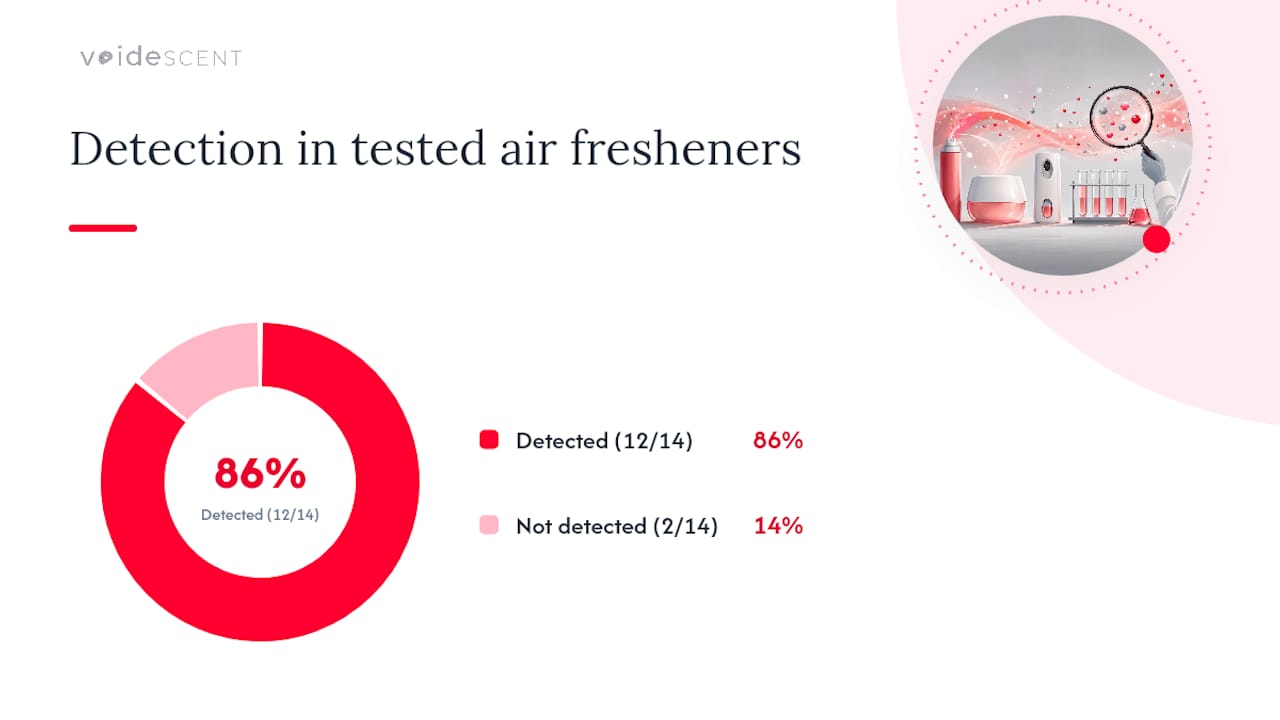
Yes, many conventional air fresheners contain phthalates. NRDC’s independent lab testing found detectable phthalates in 86% of air freshener products tested, including some labeled “all-natural” or “unscented.” That number alone should change how you shop.
Three things to do right now:
- Stop using aerosol sprays and open liquid refills in rooms where children or pregnant people spend time.
- Open windows and increase airflow in any space where plug-in or spray fresheners have been running.
- Move any liquid refill containers, reed diffuser bottles, and gel bead products out of reach of children.
Key Takeaways
Phthalates have been detected in the majority of tested air fresheners, including products marketed as natural, making ingredient transparency and format selection the most practical tools consumers have.
| Point | Details |
|---|---|
| Phthalates detected widely | NRDC testing found phthalates in 86% of air fresheners tested, including some labeled “all-natural.” |
| Vulnerable groups face highest risk | Pregnant people, infants, and those with asthma should have spray and plug-in fresheners removed from their spaces first. |
| Delivery format drives exposure | Open liquids and aerosols carry the highest risk; sealed slow-release formats reduce inhalation peaks and eliminate ingestion hazard. |
| Labels are unreliable alone | “Fragrance” can legally hide phthalates; use SmartLabel, SDS documents, and EWG ratings to verify claims. |
| Voidescent as a vehicle option | Voidescent’s sealed slow-release car scent hangers avoid open-liquid formats and offer botanical ingredient transparency for car use. |
Table of Contents
- What phthalates are and why they end up in fragranced products
- How phthalates get into different air-freshener formats
- What the science shows about health effects linked to phthalate exposure
- How exposure actually happens: inhalation, skin contact, and ingestion
- How to tell if an air freshener may contain phthalates
- Safer options: what to buy and what to avoid
- Immediate steps to cut your exposure at home and in your car
- What most explainers miss about air freshener chemistry
- Why ingredient transparency is the only standard worth trusting
- Voidescent’s slow-release car scent as a lower-risk vehicle option
- Sources
What phthalates are and why they end up in fragranced products
Phthalates are a class of synthetic chemicals used primarily as plasticizers and solvents. In fragrance formulations, specific phthalates, most commonly diethyl phthalate (DEP), dibutyl phthalate (DBP), diisobutyl phthalate (DIBP), dimethyl phthalate (DMP), and diisoheptyl phthalate (DIHP), serve as carriers that help scent molecules dissolve into oil or alcohol bases and extend how long a fragrance lingers.
Manufacturers use them because they work. DEP in particular is cheap, miscible with most fragrance oils, and slows evaporation so a scent releases gradually rather than all at once. That functional benefit is why phthalates appear in everything from perfumes to plug-in refills.
The disclosure problem is significant. Under U.S. law, fragrance formulas can be protected as trade secrets, meaning a product label listing “fragrance” may conceal dozens of individual chemicals, including phthalates. The CDC’s phthalates biomonitoring data shows measurable phthalate metabolites in the urine of most Americans tested, which reflects how widespread exposure already is across consumer products, not just air fresheners.
The EPA and NRDC have both flagged this trade-secret loophole as a barrier to consumer safety. Without mandatory full disclosure, independent lab testing remains the most reliable way to know what’s actually in a product.
How phthalates get into different air-freshener formats
Phthalates enter air freshener formulations through three main routes: as intentional solvents in the fragrance concentrate, as contaminants carried in from raw fragrance ingredients, and as components of the oil or alcohol matrix used to dilute the scent.
The delivery format matters enormously for how much exposure you actually get.
Ranked from higher to lower typical risk:
- Concentrated liquid refills and reed diffusers: Open liquid surfaces allow continuous evaporation and direct child-ingestion risk. Poison Control flags liquid-based air fresheners and reed diffusers as acute ingestion hazards because the concentrated solvents and VOCs in these products can cause serious harm if swallowed.
- Aerosol sprays: Produce immediate inhalation peaks by dispersing fine droplets deep into the respiratory tract. Short exposure windows, but high concentration bursts.
- Plug-in electric diffusers: Heat accelerates VOC release continuously over hours or days, creating chronic low-level inhalation exposure in enclosed spaces.
- Gel and solid wax products: Lower surface-area evaporation rates generally mean lower airborne concentrations, though phthalates can still be present.
- Fragranced candles: Combustion chemistry adds its own concerns, but phthalate volatilization from candles tends to be lower than from liquid-based formats.
NRDC’s testing found phthalate concentrations ranging from trace levels to hundreds and even thousands of parts per million in certain products, with the highest concentrations appearing in products that use large liquid fragrance reservoirs. Some of those high-concentration products were marketed as natural or unscented, which underscores why format and independent testing matter more than label claims.
What the science shows about health effects linked to phthalate exposure
The evidence connecting phthalates to health harm comes from multiple directions: NRDC’s lab detection data, peer-reviewed population surveys, and agency toxicology reviews.
Detection and exposure potential
NRDC’s independent testing found phthalates in 12 of 14 air fresheners tested, with DEP concentrations in some products reaching into the thousands of ppm range. At those concentrations, regular inhalation in a small, poorly ventilated space, like a car or bathroom, represents meaningful cumulative exposure.
Endocrine disruption and reproductive effects
Phthalates are classified as endocrine disruptors. Animal studies and human epidemiological data link phthalate exposure to altered hormone levels, reduced sperm quality, and developmental effects in offspring when exposure occurs during pregnancy. The CDC’s biomonitoring work confirms that phthalate metabolites are detectable in most Americans, making source reduction a practical priority rather than a theoretical one.
Respiratory and neurological symptoms
A peer-reviewed U.S. survey of 1,136 respondents found that 34.7% reported health problems when exposed to fragranced products, including headaches, respiratory difficulties, and neurological symptoms. That’s more than one in three people experiencing measurable effects, which puts fragranced products squarely in public-health territory.
| Health concern | Evidence type | Vulnerable groups |
|---|---|---|
| Endocrine disruption | Animal studies, human epidemiology | Pregnant people, fetuses, infants |
| Reproductive/developmental effects | Epidemiological data | Pregnant people, young children |
| Respiratory irritation | Population surveys, clinical reports | People with asthma, chemical sensitivities |
| Neurological symptoms (headaches) | Survey data (Steinemann) | General population, sensitive individuals |
Who faces the highest risk
Pregnant people, infants, and young children are the most vulnerable groups because phthalates can interfere with hormonal development during critical windows. People with asthma or chemical sensitivities face heightened respiratory risk from any fragranced-product exposure.
Pro Tip: If a pregnant person, infant, or someone with asthma regularly occupies a room, remove spray and plug-in fresheners from that space first, before addressing other rooms.
How exposure actually happens: inhalation, skin contact, and ingestion
Most people think of air fresheners as an inhalation issue only. The reality is more complicated, and the ingestion route is the one that causes acute emergencies.
Primary exposure routes:
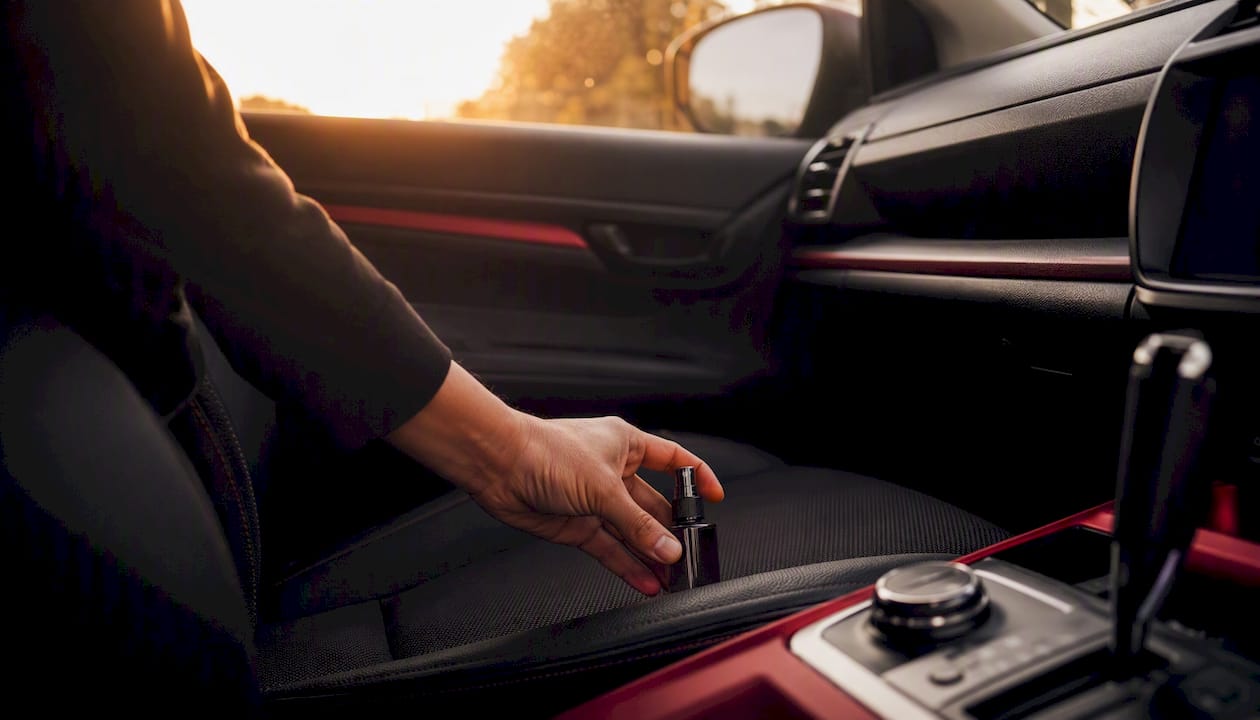
- Inhalation: The main chronic exposure pathway. Sprays and plug-ins release VOCs and phthalates into breathing air continuously. In a car with windows closed, concentrations can build quickly.
- Dermal contact: Fragrance residue deposits on skin, furniture, and fabrics. Phthalates can absorb through skin, though this route contributes less to total exposure than inhalation for most adults.
- Ingestion: The acute risk route, especially for children. Reed diffuser solutions and gel bead products are particularly dangerous if swallowed. Poison Control treats these as a distinct hazard from long-term inhalation.
Chronic vs. acute exposure
Chronic low-level inhalation from plug-ins and sprays is the most common exposure scenario for adults and is associated with the endocrine and respiratory effects described above. Acute ingestion, a child swallowing reed diffuser liquid or gel beads, is a medical emergency requiring immediate contact with Poison Control at 1-800-222-1222.
A peer-reviewed survey found that 34.7% of U.S. respondents reported adverse health effects from fragranced products, suggesting that population-level inhalation exposure is already producing measurable symptom burden.
How to tell if an air freshener may contain phthalates
The honest answer: you often can’t tell from the label alone. “Fragrance” is a legally protected trade-secret term that can conceal any number of individual chemicals, including every phthalate on the concern list.
Practical checklist for evaluating a product:
- Look for “phthalate-free” with specifics. A claim is only meaningful when paired with a full ingredient list or third-party test results. A bare “phthalate-free” marketing claim without documentation is unverifiable.
- Check SmartLabel. Some manufacturers participate in the SmartLabel program, which provides more detailed ingredient disclosure than the physical label. Search the product on smartlabel.org before buying.
- Request the Safety Data Sheet (SDS). For any product you use regularly, you can request the SDS from the manufacturer. Section 3 lists chemical composition, though trade-secret protections may still limit what’s disclosed.
- Search the EWG Skin Deep database. The Environmental Working Group rates products by ingredient transparency and hazard level. A product with a low EWG score and full ingredient disclosure is a better starting point than one with a high score and vague labeling.
- Contact the manufacturer directly. Ask specifically: “Does this product contain DEP, DBP, DIBP, DMP, or DIHP?” A company confident in its formulation will answer directly.
UMass Amherst Environmental Health & Safety notes that marketing terms like “all-natural,” “organic,” and “unscented” are not tightly regulated for air fresheners and carry no guarantee of hazardous-chemical absence.
Pro Tip: When contacting a manufacturer, ask for “full fragrance ingredient disclosure including any phthalate solvents.” Vague reassurances like “our products are safe” are not the same as a documented phthalate-free formulation.
Safer options: what to buy and what to avoid
Reducing exposure doesn’t require giving up scent entirely. It requires choosing formats and products where the ingredient picture is clear.
Ranked from lower to higher risk:
- Fragrance-free strategies first. Baking soda, activated charcoal odor absorbers, and regular ventilation address odors without adding any chemical load. These are the lowest-risk options by definition.
- Ingredient-transparent slow-release botanical oils. Products that publish full ingredient lists, including every fragrance component, give you the information needed to make an informed choice. Slow-release formats reduce peak airborne concentrations compared to sprays or heated diffusers.
- Sealed slow-release car scent hangers. For vehicles specifically, a sealed slow-release format keeps fragrance oil contained, eliminates open-liquid ingestion risk, and delivers a consistent, lower-concentration scent over weeks rather than a burst-and-fade aerosol cycle.
- Avoid aerosols, plug-ins, and open liquid refills in spaces where children or pregnant people spend time. These formats combine the highest inhalation peaks with the greatest ingestion risk.
Important tradeoffs to understand:
- Essential oils are not automatically safe. At high airborne concentrations, they can produce respiratory irritation comparable to synthetic fragrance chemicals. “Natural” is not a safety certification.
- Slow-release formats reduce peak concentrations and limit secondary pollutant formation, but they don’t eliminate exposure. Ventilation still matters.
- A product claiming to be “natural” or “botanical” without a full ingredient list offers no real safety advantage over a conventional product.
Pro Tip: When shopping for a car freshener specifically, prioritize sealed formats over open-top liquid or gel products. A sealed slow-release hanger keeps fragrance oil away from children’s hands and eliminates the spill-and-ingest scenario entirely.
Immediate steps to cut your exposure at home and in your car
These steps are sequenced by impact. Do the first two today.
Right now:
- Remove aerosol spray cans and plug-in units from bedrooms, nurseries, and any room where a pregnant person, infant, or asthmatic spends significant time.
- Open windows in rooms where plug-ins or sprays have been running. Ten minutes of cross-ventilation drops VOC concentrations measurably.
This week:
- Move all liquid refill bottles, reed diffuser solutions, and gel bead containers to a locked cabinet or high shelf completely out of children’s reach.
- Replace open-liquid formats with sealed slow-release alternatives or fragrance-free odor absorbers.
For non-emergency respiratory symptoms (persistent headaches, coughing, throat irritation) that correlate with freshener use, stop using the product and ventilate the space. If symptoms persist after removal, see a clinician and mention the specific product.
Pro Tip: Store all liquid air freshener refills the same way you’d store cleaning chemicals: locked away, out of sight, and never on a low shelf. Children are drawn to colorful bottles, and the liquids are concentrated enough to cause serious harm.
What most explainers miss about air freshener chemistry
The phthalate conversation tends to stop at “phthalates are bad, avoid them.” The actual chemistry of indoor air freshener exposure is more layered than that.
Secondary pollutant formation
Fragrance chemicals, particularly terpenes like limonene and linalool, react with indoor ozone to produce formaldehyde and ultrafine particles. The EPA’s guidance on VOCs and indoor air quality explains that these secondary reaction products can be as irritating as the primary emissions, sometimes more so. A “fresh citrus” air freshener in a home with an ozone-generating air purifier is a formaldehyde generator.
Delivery method changes the risk profile entirely
Aerosol sprays produce immediate, high-concentration inhalation peaks that clear relatively quickly. Plug-ins and reed diffusers produce lower peaks but sustain exposure continuously. Open liquids add the ingestion dimension. Slow-release sealed formats reduce all three risk vectors simultaneously, which is why format selection matters more than fragrance chemistry alone for most households.
Where the evidence is weakest
Most phthalate toxicology research is built on oral exposure data, not inhalation. Translating oral dose-response findings to inhalation exposure scenarios requires assumptions that introduce real uncertainty. That doesn’t mean inhalation risk is negligible, but it does mean risk estimates should be interpreted cautiously.
Pro Tip: If you use an ozone-generating air purifier, run it in a room without fragranced products present. The terpene-plus-ozone reaction that produces formaldehyde happens faster than most people expect, and the resulting irritants are invisible.
Why ingredient transparency is the only standard worth trusting
The conventional wisdom on air freshener safety tends to land in one of two places: either “it’s just a scent, don’t worry” or “everything synthetic is toxic.” Both miss the actual problem, which is opacity.
The NRDC found phthalates in products marketed as natural and unscented. The Steinemann survey found that more than a third of Americans report symptoms from fragranced products. The CDC’s biomonitoring data shows phthalate metabolites in most Americans’ urine. None of this means every air freshener is equally dangerous. What it means is that without full ingredient disclosure, you cannot make an informed choice, and the current labeling system is not designed to give you one.
Slow-release formats with published ingredient lists are not a perfect solution. They are a better-informed one. The practical consumer standard should be: if a manufacturer won’t tell you what’s in the fragrance, treat the product as a potential phthalate source and choose accordingly. Trusted resources like the NRDC, EWG, CDC, and EPA exist precisely to help you evaluate what manufacturers won’t disclose.
Voidescent’s slow-release car scent as a lower-risk vehicle option
If you’ve spent time removing conventional car fresheners from your vehicle, you already know the problem: most replacements are either aerosol sprays, open-liquid refills, or gel products that sit exposed in a cup holder. None of those formats solve the open-liquid or inhalation-peak problems this article describes.

Voidescent’s slow-release car scent hangers are built around a sealed, slow-release format using botanical fragrance oils, which keeps the liquid contained, eliminates the open-surface evaporation that drives peak concentrations, and removes the ingestion risk that comes with open-top refills. Each hanger delivers a consistent scent for four to six weeks without the burst-and-fade cycle of aerosol products. You can browse the available scent oils and ingredient information directly on the Voidescent site before purchasing.
Voidescent is not a medical product, and no air freshener, including this one, can be guaranteed phthalate-free without independent lab verification of each specific formulation. What Voidescent offers is a sealed, slow-release format with botanical ingredients and full transparency about what’s in the product. For readers who want a premium car scent that avoids open liquids and aerosol peaks, that’s a meaningful starting point.
Sources
The following primary sources informed this article. Each is worth reading directly if you want to go deeper.
- NRDC — Protect Your Family from the Hidden Hazards in Air Fresheners
- Fragranced consumer products: exposures and effects from emissions (PMC article)
- EPA — Volatile Organic Compounds and indoor air quality
This article is general information, not a substitute for advice from a qualified doctor. Consult a qualified healthcare professional about your own circumstances before acting on anything here.