

25% Ratio for 4–6 Week Scent: Design Focused Oil Based Car Fresheners
An oil-based car freshener is a slow-release scent product that uses a liquid fragrance or essential oil soaked into a wick, wood, felt, or clay medium instead of a spray, gel, or paper card. The fix for a car that smells stale within days: pick a quality oil blend with a proper carrier and a diffuser that controls airflow, not a disposable cardboard tree. Look for a 4 to 6 week lifespan and clean, IFRA-compliant ingredients. Some brands offer products that are built around exactly that formula.
TL;DR:
- Oil-based fresheners last approximately 3 to 6 weeks, with heat and direct sun accelerating evaporation and fragrance fading.
- Different diffuser types vary in scent strength and aesthetic, from understated hanging wood diffusers to strong vent clips and passive clay disks.
- For homemade versions, a fragrance load of around 25 percent with DPG as a carrier ensures optimal scent lifespan and stability.
- Ingredient transparency and IFRA compliance are crucial to avoid synthetic chemicals and skin hazards, especially for sensitive users.
- Matching the diffuser style and scent profile to your driving habits and vehicle size improves longevity and overall satisfaction.
Table of Contents
- What Makes Oil-Based Car Fresheners Different From Sprays and Gels?
- Which Diffuser Type Actually Fits Your Car?
- How Do You Make a Long-Lasting Oil-Based Car Freshener at Home?
- How Long Does an Oil-Based Car Freshener Actually Last?
- What Should You Check on the Label Before You Buy or Mix?
- How Do You Choose Between a Shop Product and a DIY Mix?
- Why Slow-Release Botanical Blends Beat Everything Else on the Market
- Heavens, Descent, or Nebula: Which One Fits Your Car?
- Sources
What Makes Oil-Based Car Fresheners Different From Sprays and Gels?
Oil-based systems work by wicking, not blasting. The fragrance oil sits in a porous material, wood, felt, clay bead, or vent diffuser, and evaporates gradually as air moves across it. That slow release is why oil-based products smell more like a scent and less like a chemical cloud that hits you the second you open the door.
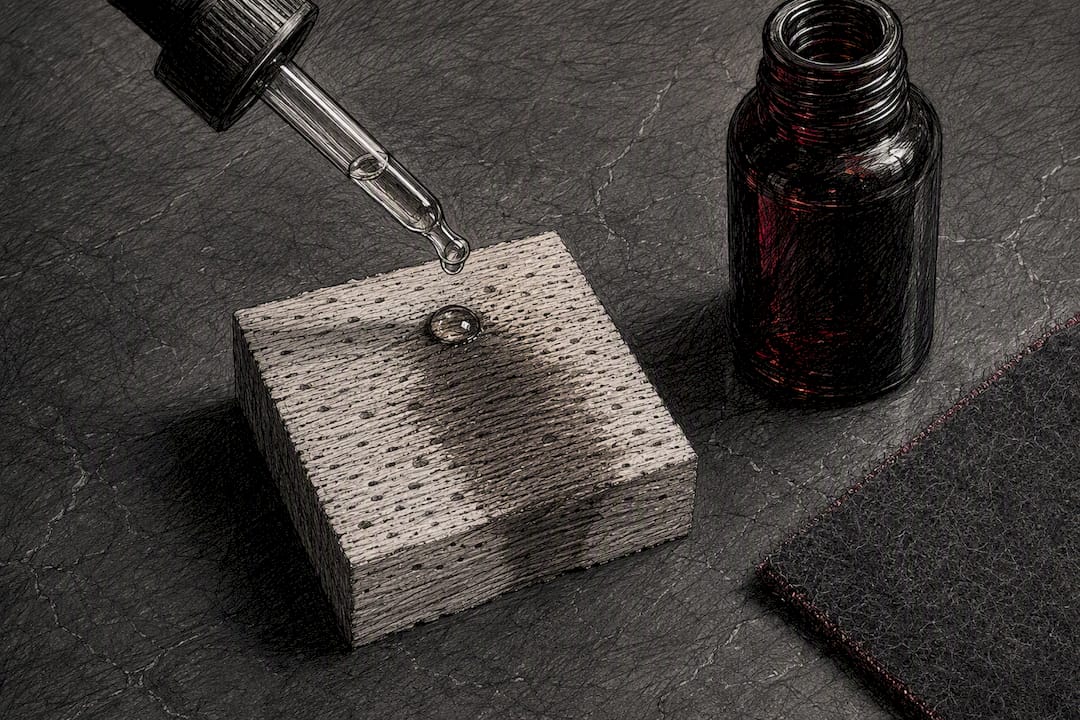
Compared to paper cards or aerosol sprays, oil-based fresheners hold up better over time. Well-designed diffusers and refillable systems give you more control over intensity and last considerably longer than disposable cardboard, according to Better Homes & Gardens testing. The trade-off is upfront cost and a bit more attention to placement.
Oil-based fresheners make sense for most drivers, but not everyone:
- Best for people who want a subtle, evolving scent rather than an overpowering blast
- Good fit for anyone tired of replacing a paper tree every two weeks
- Worth reconsidering if you have severe fragrance sensitivity or a very small cabin with poor airflow, where even a mild oil can feel concentrated
Which Diffuser Type Actually Fits Your Car?
Not every delivery method behaves the same way, and the format you pick changes both how strong the scent gets and how it looks hanging from your mirror or tucked into a vent.
Hanging wood diffusers rely on porous wood (often basswood or cedar-style blanks) that absorbs oil and releases it as the car heats up during the day. They look understated and work well for drivers who want a design object, not a plastic gadget, on the rearview mirror.
Vent clips attach directly to an air vent and use airflow to push scent through the cabin faster than a static hanger. They’re intense by design, which suits bigger cabins or drivers who want scent the moment the fan kicks on.
Vent diffusers are similar but usually house a small reservoir or cartridge, giving more control over how much oil is exposed to airflow at once.
Porous beads and clay disks sit in a cupholder or console tray and release scent passively, a good option if you don’t want anything visible or swinging near your line of sight.
Refillable bottle systems let you top up oil without replacing the whole unit, which cuts long-term cost if you’ve found a scent you actually like.
A quick way to match format to habit:
- Daily short commutes: hanging wood or a mild vent clip
- Long highway drives or larger SUVs: vent diffuser or a stronger clip
- Minimal aesthetic preference: porous clay or hidden console diffuser
How Do You Make a Long-Lasting Oil-Based Car Freshener at Home?
Making your own oil-based freshener is straightforward once you get the ratios right, and getting the ratios wrong is exactly why most homemade versions fade in a week.
The industry standard for a durable freshener is a 20 to 30 percent fragrance load, with 25 percent used as the practical sweet spot between scent strength and long-term stability. Go much lower and the scent disappears fast. Go much higher and you risk an overwhelming, faster-burning result that doesn’t actually last longer.
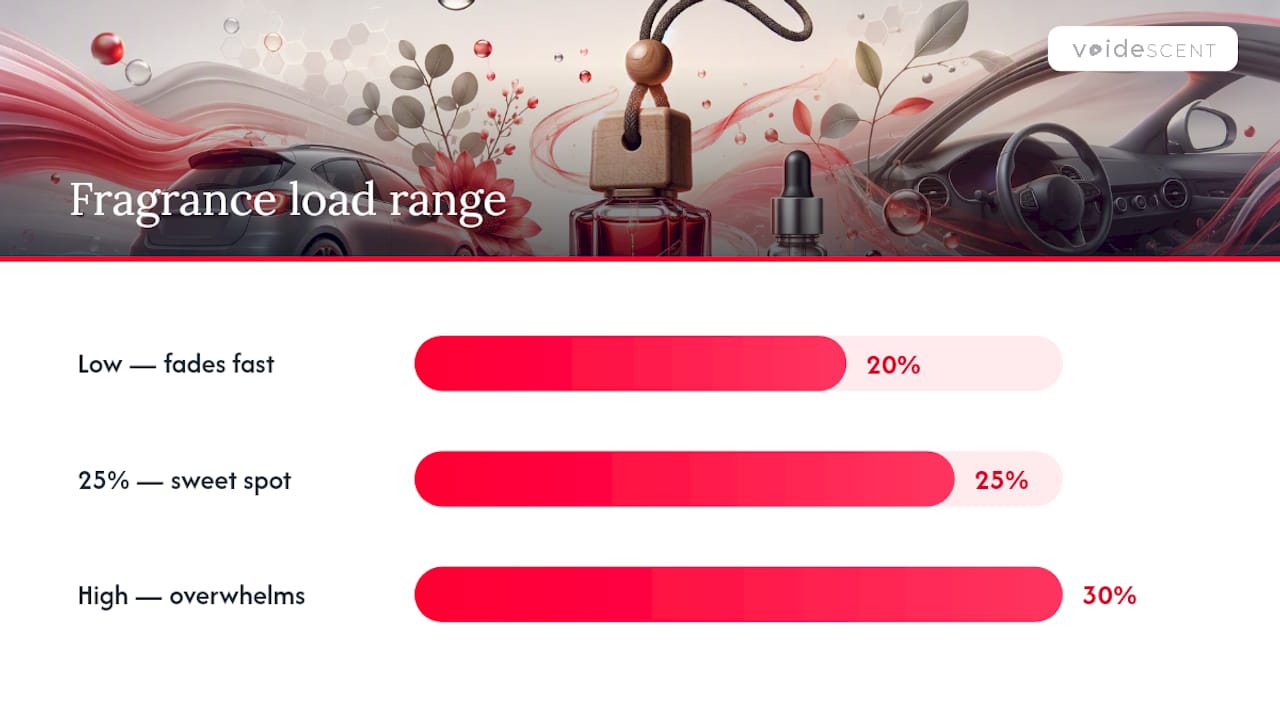
For the carrier base, professional diffuser makers lean on dipropylene glycol (DPG) because it slows evaporation and maximizes scent throw, particularly in hot environments like a parked car in summer, according to CarXplorer’s breakdown of DIY fragrance ratios. Fractionated coconut oil is the natural alternative. It smells cleaner and skips synthetic glycols, but it typically fades faster than DPG in heat.
Here’s the basic process:
- Calculate your ratio: for a 30ml batch, that’s roughly 7.5ml fragrance oil to 22.5ml carrier (DPG or fractionated coconut oil) at the 25 percent target
- Choose your absorbent: unfinished wood, thick felt, or porous lava stone all hold oil well and release it evenly
- Saturate the absorbent slowly, letting it soak rather than pooling on the surface
- Seal the finished piece and let it cure for 24 to 48 hours, a step that improves how well the scent binds to the material and extends lifespan
- Test in the car for a few days before adjusting strength on your next batch
Pro Tip: If your homemade freshener smells too faint after a week, it’s almost always an absorbent problem, not a fragrance problem. Switch to a denser material like lava stone before you add more oil.
Handle fragrance oil and DPG with gloves, keep it off skin, and store any leftover mix in a sealed, labeled container away from kids and pets.
How Long Does an Oil-Based Car Freshener Actually Last?
Most quality oil-based diffusers and scent oils keep a car smelling fresh for about 3 to 6 weeks, with premium products commonly advertising the 4 to 6 week range. That’s a wide gap between “cheap oil blend” and “well-formulated one,” and the difference usually comes down to carrier choice and where you hang the thing.
Heat is the main enemy. Direct sun through the windshield speeds up evaporation, and bright citrus top notes tend to burn off faster than deeper woody or musk notes. Position the diffuser away from direct sun, and if you’re mixing your own, lean toward a DPG-based carrier for staying power over a purely natural one.
Once the scent fades to nearly nothing rather than gradually softening, that’s your cue to refresh, not wait it out.
What Should You Check on the Label Before You Buy or Mix?
Ingredient transparency separates a freshener you can trust from one you’re guessing about. A few checks take thirty seconds and save you from a cabin full of synthetic haze:
- Look for IFRA-compliant formulations, since the International Fragrance Association sets the industry benchmark for safe fragrance concentration and use
- Scan the label for phthalates or parabens and skip products that don’t disclose their full ingredient list
- Cross-check unfamiliar ingredients against a resource like EWG Skin Deep, which flags common hazards in fragranced consumer goods
- If you’re mixing at home, wear gloves and avoid direct skin contact with concentrated fragrance oil or DPG
- Store any unused oil in a secure, upright container, since spills on upholstery or plastic trim can stain
If you want a deeper look at what “IFRA-compliant” actually means for daily driving, this breakdown of IFRA compliance covers the practical side. And if sensitivity to fragrance is a concern for you or a passenger, it’s worth reading up on air freshener health risks before you commit to a product.
How Do You Choose Between a Shop Product and a DIY Mix?
The right pick depends less on brand and more on how honestly a product answers a few direct questions.
- Match the diffuser type to your driving habit. A short commuter car doesn’t need the same intensity as a family SUV on long trips.
- Check the advertised lifespan against the 3 to 6 week benchmark, and be skeptical of anything that doesn’t state a timeframe at all.
- Confirm leak protection, especially for hanging or clip formats that swing near upholstery.
- Prioritize ingredient transparency and a return policy. A brand confident in its formula usually backs it with a guarantee.
- Think about how the scent behaves in heat. Citrus and light florals fade fast in a hot cabin; woody, amber, and musk profiles hold up longer.
If you’re deciding between essential oils and fragrance oils for your own blend, this comparison of fragrance oil versus essential oil walks through the trade-offs in scent strength and cost.
Why Slow-Release Botanical Blends Beat Everything Else on the Market
The car freshener category is full of products that smell strong for three days and nothing after that. What consistently gets underestimated is how much the carrier and the diffuser format matter compared to the fragrance itself. A brilliant scent poured into the wrong material fades just as fast as a mediocre one.
Some brands build around that principle: minimalist design paired with a slow-release formula meant to hold a consistent, evolving aroma for several weeks, sometimes backed by a money-back guarantee. That’s not a claim made lightly in a category where most competitors don’t state a lifespan at all.
— Azanone
Heavens, Descent, or Nebula: Which One Fits Your Car?
If you’ve read this far, you already know the two things that make an oil-based freshener worth buying: a real slow-release formula and a diffuser built for your driving habits, not a generic one-size-fits-all clip. That’s the gap some product catalogs aim to close directly.
Heavens suits drivers who want something quiet and refined, a subtle presence rather than a scent announcement, ideal for smaller cabins or daily commutes. Descent carries more presence for larger vehicles or anyone who prefers the fragrance to actually fill the space. Nebula is built for people who like to rotate scents seasonally or by mood, layering easily without clashing.
Match the product to your cabin size and how often you want to notice the scent versus just live with it. Many options carry a 4 to 6 week performance promise and some brands offer satisfaction guarantees, so testing one against your daily drive may cost you little beyond the time it takes to hang it. Browse the full scent hanger lineup or check Descent’s product page and Nebula’s details to find your fit.
Sources
- How to Make Car Air Freshener With Fragrance Oil That Lasts Weeks - CarXplorer
- IFRA UK
- EWG Skin Deep