

Can You Use Fragrance Oils in Your Car Safely?
Yes. IFRA-compliant fragrance oils, dispensed through slow-release systems like cupholder diffusers or wooden-cap hanging bottles, give the cleanest and most consistent car scent. The wrong move is dumping raw oil onto a pad or vent clip and hoping for the best. Stick to a conservative fragrance load and a delivery method built for a small, moving cabin, and the payoff is a scent that lasts weeks instead of days.
TL;DR:
- Using a 15% to 20% fragrance load in a 7 ml bottle generally provides a balance of lasting scent and safety within IFRA standards.
- Cold-air diffusers activated by motion or low intensity offer the best control and longevity for daily drivers seeking consistent fragrance.
- Essential oils vary in strength and can pose pet safety concerns, but formulated fragrance oils tend to be more predictable and safer for car environments.
- Scent profiles with fresh citrus, green herbs, or soft woods perform best in small, moving cabins and avoid overpowering or quickly fading effects.
- Proper storage, adjusting diffuser settings in heat, and monitoring scent intensity help maximize the fragrance lifespan and prevent leaks or overpowering scent issues.
Table of Contents
- Fragrance Oils in Car Diffusers: Main Delivery Methods
- How Much Fragrance Oil Should You Use in a Car Diffuser?
- Are Fragrance Oils Safer Than Essential Oils for Cars?
- Which Scents Work Best in a Small Car Cabin?
- How Long Do Car Fragrance Oils Actually Last?
- Fixing Weak, Overpowering, or Leaking Car Scents
- Why Voidescent Builds for Slow Release, Not Instant Blast
- Choosing Between Heavens, Descent, and Nebula
- Sources
Fragrance Oils in Car Diffusers: Main Delivery Methods
Three formats dominate for a reason: each solves a different problem, and picking the right one depends on how you actually drive.
- Cupholder cold-air diffusers. Fill the reservoir with your oil blend, seat the bottle securely, and set the intensity dial to its lowest position for the first few drives. Many run on motion activation, which only releases scent while the car is moving. That intermittent pattern is what preserves oil life instead of burning through a bottle in a week.
- Wooden-cap hanging bottles. These work like a miniature reed diffuser. Fill a 7 to 8 ml bottle, screw the wooden cap on tight, and hang it from a mirror or vent. Tip it upside down for a few seconds every week or two to re-saturate the cap and refresh the throw.
- Vent and felt pads. Cheap and passive, but they run hot near defrost vents and fade fast. They suit occasional drivers who want a light scent without any daily attention, not anyone chasing a lasting fragrance.
If you drive daily and want control over intensity, a cold-air diffuser earns its keep. If you want something you set once and forget, a hanging bottle is the simpler bet.
How Much Fragrance Oil Should You Use in a Car Diffuser?
Car diffusers behave like small-format reed diffusers, which fall under IFRA’s category 10A guidance for air-care products. That classification is why fragrance-load percentages matter more than “a few drops will do.”
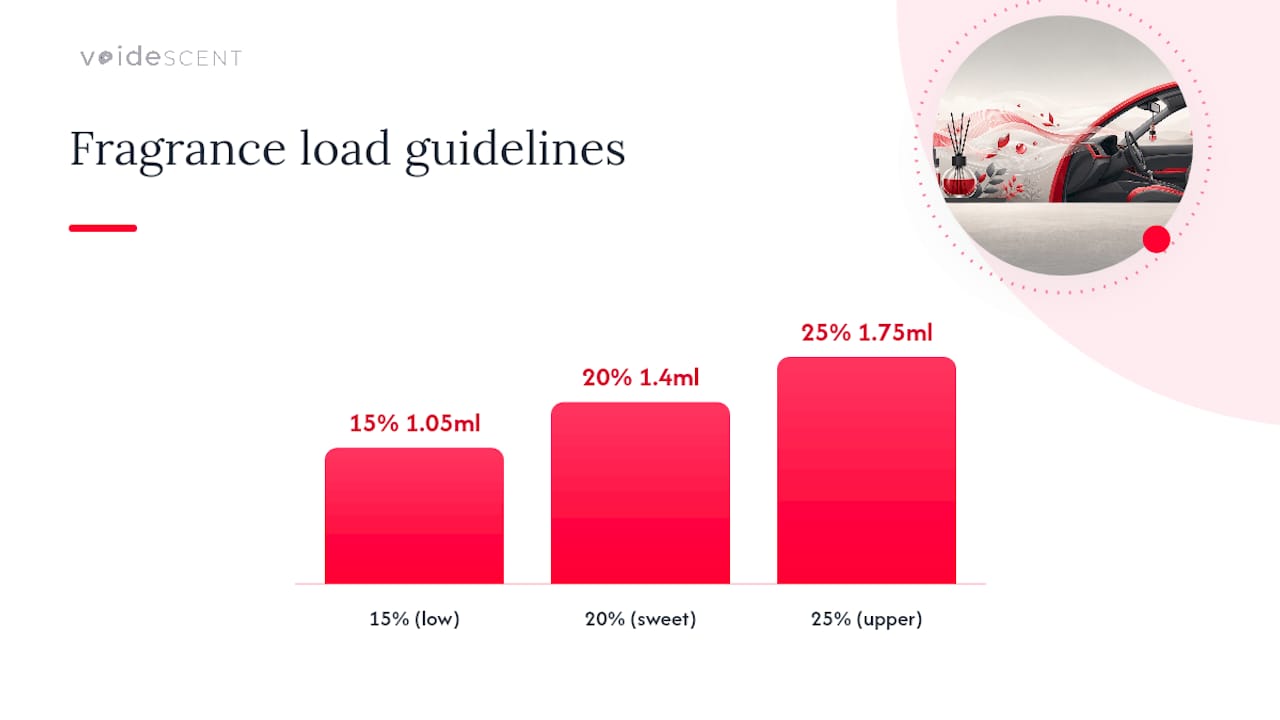
Most guides put the workable range between 10% and 25% fragrance oil to base, with a fragrance load between 18% and 22% often considered the sweet spot for most blends in small bottles. Above 25%, the oil is more than the cabin can absorb before it fades.
Here’s the math for a standard 7 ml bottle:
- 15% load: 1.05 ml fragrance oil, topped with base to 7 ml
- 20% load: 1.4 ml fragrance oil, topped with base to 7 ml
- 25% load: 1.75 ml fragrance oil, topped with base to 7 ml
Use a glass pipette for accuracy at these volumes, not a dropper cap eyeballed by feel. Wear gloves, and label each bottle with the percentage and fill date so you never mistake a stale batch for a fresh one.
Are Fragrance Oils Safer Than Essential Oils for Cars?
Formulated fragrance oils built to IFRA standards tend to outperform pure essential oils in a car for one practical reason: consistency. Essential oils vary batch to batch depending on harvest and distillation, which means the same “lavender” bottle can smell twice as strong from one purchase to the next. IFRA doesn’t hand out a stamp of approval so much as it sets molecule-level concentration limits for specific product categories, and blends formulated against those limits carry a more predictable, disclosed profile.
That matters more in a car than almost anywhere else, because the cabin is small, sealed, and shared with pets and passengers who can’t opt out of what’s in the air.
- Certain essential oils, including tea tree and several citrus oils, carry known cat sensitivities and are worth avoiding if pets ride along regularly.
- Keep any bottle sealed and stored upright when not diffusing, especially in a glovebox that heats up in summer.
- Point diffusers away from vents that blow straight onto a passenger’s face, and run a short test drive with a new blend before committing to daily use.
Pro Tip: Test a new scent on a 15-minute drive with a window cracked before you commit to a full week of exposure. Your nose adjusts fast, but a passenger’s won’t.
Which Scents Work Best in a Small Car Cabin?
A car cabin is nothing like a living room. It’s small, warm, and constantly cycling air through vents, which means heavy, single-note scents either vanish or turn cloying within minutes. Blends with volatile top notes give an immediate, pleasant hit and then settle into a balanced drydown instead of collapsing into one flat smell.
Scent families that tend to perform well in a moving vehicle:
- Clean citrus and green herbal blends, which read fresh without turning sharp in a warm cabin
- Soft woods and leather accords, which hold up over a long fill without becoming a single overpowering note
- Light florals with airy top notes, best paired with a lower fragrance load so they don’t tip into perfume territory
If you’re unsure what suits your driving habits, sampling a few scent profiles before committing to a full bottle beats guessing and starting over.
How Long Do Car Fragrance Oils Actually Last?
Expect a wide range depending on format. Wooden-cap hanging bottles typically last several weeks. Reed-style small bottles last a few weeks. Active cold-air diffusers last a variable time depending on usage and intensity, since makers report that heat and ventilation shorten every one of these timelines.
A few habits stretch a fill further:
- Store spare oils in a cool, dark spot, never in a hot glovebox or trunk
- Drop the intensity dial in summer, when heat alone accelerates evaporation
- Refresh a wooden cap by flipping the bottle rather than assuming it’s empty
- Keep windows up slightly more often if you’re chasing maximum longevity from a single fill
Fixing Weak, Overpowering, or Leaking Car Scents
Weak scent usually means one of three things: your fragrance load is too low, the wooden cap needs a flip to resaturate, or a passive pad has simply run its course. Bumping the load to the 20% range or switching to an active diffuser solves most of these cases.
Overpowering scent is the more common complaint, and the fix is almost always ventilation. Crack a window, pull the bottle out for a few hours, or dilute the remaining oil with more base rather than starting over. Experts note that strong concentrations in small spaces cause olfactory fatigue fast, so less is genuinely more here.
Leaks trace back to loose stoppers or bottles stored on their side. Keep bottles upright, use the stopper style rated for the oil’s viscosity, and pick a carrier base designed to catch drips rather than a bare cupholder.
Pro Tip: Keep a microsample of any new blend before filling a full bottle. A five-minute sniff test saves you from wasting an entire fill on a scent that reads differently once it’s actually diffusing.
Why Voidescent Builds for Slow Release, Not Instant Blast
Voidescent exists because most car scents fail in one of two ways: they fade in days or they hit you like a wall the moment you start the engine. Every formula is built around eco-friendly ingredients and a slow-release mechanism designed to hold a consistent, evolving aroma for four to six weeks. That’s the direct answer to the short lifespans and overpowering blasts covered above. A minimalist design isn’t just aesthetic preference here. It reflects a fragrance philosophy built on restraint over volume.
— Azanone
Choosing Between Heavens, Descent, and Nebula
If you want something quiet and long-wearing that never announces itself, Heavens is the pick. It’s built for drivers who want a subtle presence rather than a statement, best run at a low intensity so the slow-release formula stretches its full four to six weeks.
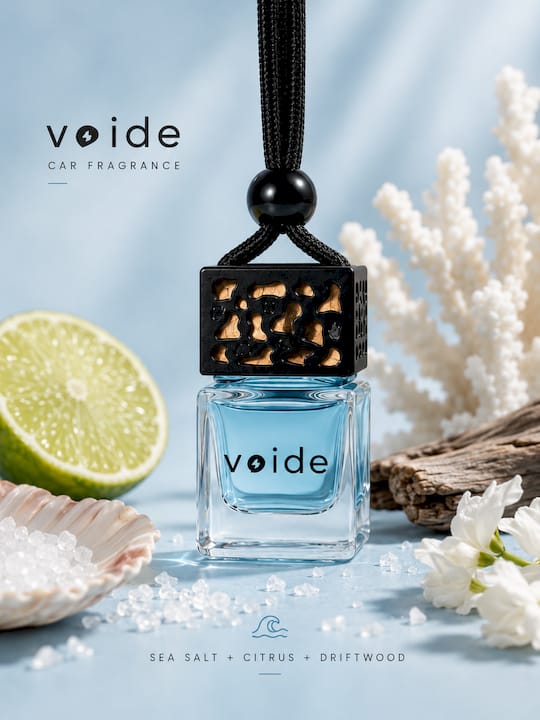
If you lean toward a leather-forward, refined woody profile, Descent fits a hanging-bottle setup particularly well. Let the wooden cap do the work rather than forcing a stronger fill. It rewards patience over a full drydown rather than an immediate hit.
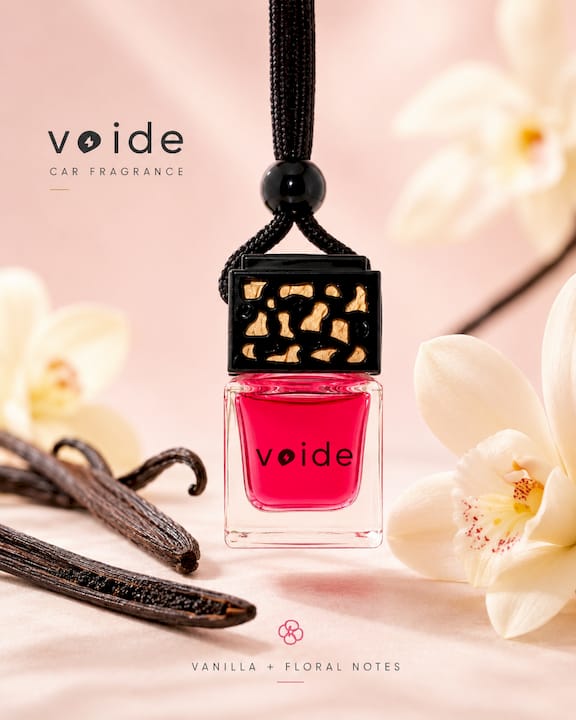
For readers who want something bolder and more botanical, Nebula brings a bigger personality without tipping into overpowering territory, especially when paired with a cold-air diffuser set to moderate intensity. First-time buyers uncertain which profile suits their car can start with a single bottle rather than a full scent collection and build from there once they know what performs best in their own cabin.
Sources
- How to Make a Car Diffuser with Fragrance Oil - Step by Step – NorthWood Candle & Craft
- Compound Interest — New car smell
- IFRA UK
- Car Diffuser – Scentiment