

The Best Christmas Car Scents for a Long-Lasting Festive Interior
If you want your car to smell like the holidays without the headache of a synthetic tree freshener fading by New Year’s, buy a botanical scent hanger built for slow release. Voidescent’s three festive picks, Heavens, Descent, and Nebula, use plant-based fragrance oils designed for long-lasting scent, and every order carries a money-back guarantee.
Fastest ways to buy:
- Pick one scent that matches your taste (bright and spiced, or warm and woody, or dark and gourmand).
- Grab a small bundle of two if you’re buying for a car and a gift at the same time.
- Choose the gift-ready packaging option if this is going under someone else’s tree.
Expect the scent to evolve slightly over its run, opening brighter, settling into something warmer as the oil works through the hanger.
Key Takeaways
A festive car scent only delivers value if it combines a genuine holiday scent profile with slow-release longevity backed by a real guarantee, not just an appealing scent name.
| Point | Details |
|---|---|
| Match scent family to taste | Evergreen, spice, citrus, and gourmand notes suit different preferences, so pick based on existing candle or perfume habits. |
| Format affects longevity | Hangers release scent slowly over weeks; vent clips fade faster due to constant airflow. |
| Rotate to avoid fatigue | Swap scents every few weeks rather than running two at once to keep your nose responsive to the fragrance. |
| Cost per week beats sticker price | A cheaper freshener that fades in ten days often costs more per week of scent than a longer-lasting option. |
| Voidescent as the seasonal pick | Heavens, Descent, and Nebula each run four to six weeks with botanical ingredients and a money-back guarantee. |
Sources that informed the scent-note descriptions and blended-scent examples in this article:
- NEST New York x Pura Holiday Car Fragrance, for the citrus-spice-evergreen holiday blend example.
- Christmas Tree Car Freshener from Cool Girl Candles, for the Frasier Fir-style evergreen note breakdown.
- Voidescent’s brand page, as the primary purchase destination for the products discussed throughout.
Table of Contents
- Christmas Car Scents: Heavens, Descent, and Nebula Compared
- How Do You Choose the Right Christmas Car Scent?
- What Do Pine, Cinnamon, and Vanilla Actually Smell Like Together?
- Making Your Christmas Car Scent Last: Placement and Care
- Why Voidescent’s Approach to Holiday Scents Holds Up
- What Does a Christmas Car Scent Cost, and Is It Worth It?
- Do Customer Reviews Back Up These Longevity Claims?
- How Do You Dispose of an Old Car Scent Safely?
- Frequently Asked Questions
- Sources
Christmas Car Scents: Heavens, Descent, and Nebula Compared
Each Voidescent scent hanger is built around a distinct mood, and matching the right one to your taste (or someone else’s) matters more than picking whatever is labeled “Christmas.”
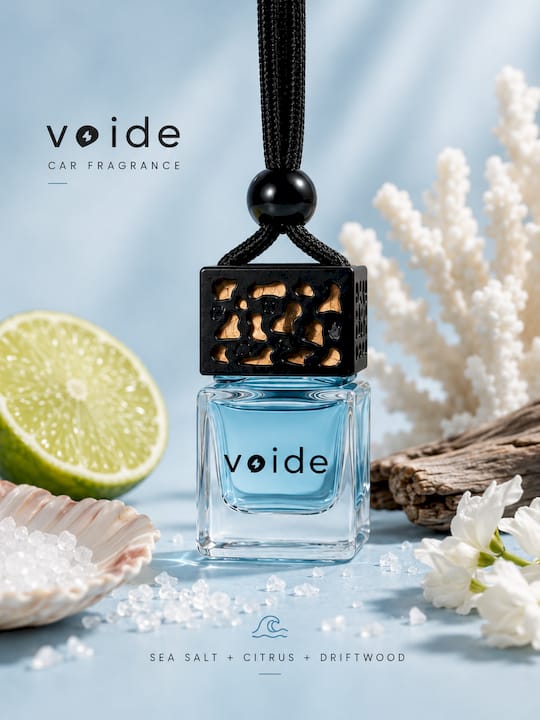
Heavens leans bright and citrus-forward, with spiced top notes that read as energetic rather than heavy. It suits drivers who want their car to feel awake in the morning commute, not drowsy with sweetness. Best for: anyone who finds traditional pine-heavy fresheners too dense.
Descent goes warm and woody, closer to a balsam-and-amber profile that feels like a cabin fireplace rather than a candy shop. It’s the pick for someone who wants “Christmas” without the season screaming from the dashboard. Best for: drivers who prefer subtlety over intensity.
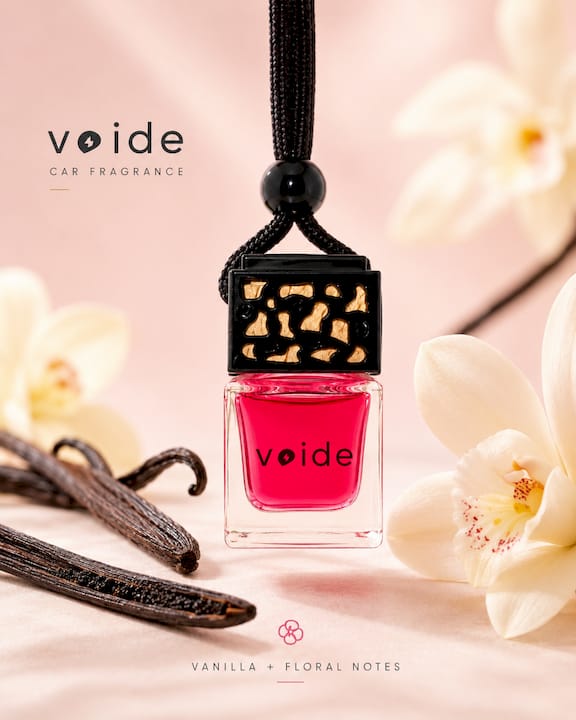
Nebula sits at the darker end, gourmand and vanilla-amber, the kind of scent that feels indulgent on a cold evening drive. Best for: gift recipients who already love warm, dessert-adjacent fragrances.
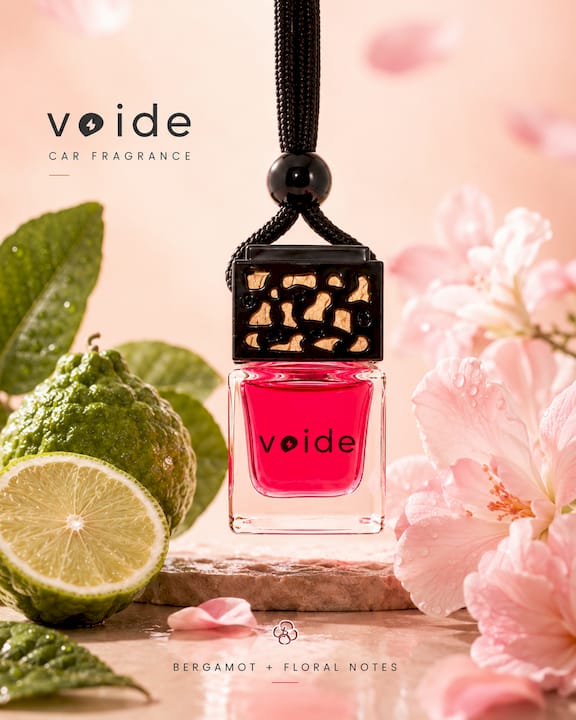
All three ship as minimalist hangers, easy to loop over a mirror or vent without cluttering the cabin, which matters if you’re buying this as a gift rather than a personal treat. The full scent lineup shows how each profile compares side by side before you commit.
Pro Tip: If you’re torn between two, buy the one that suits the gift recipient’s home candle preferences. People who already burn amber or vanilla candles tend to love Nebula; pine-and-citrus candle fans usually gravitate to Heavens.
Gift-wise, the appeal isn’t just the smell. Handmade and small-batch sellers on marketplaces like Etsy have shown that design and customization drive a lot of holiday car freshener purchases, and a clean hanger silhouette photographs well next to wrapping paper, which is exactly why simplicity works better than a cartoon Christmas tree cutout.
How Do You Choose the Right Christmas Car Scent?
Picking a festive car scent comes down to three decisions, in this order:
- Scent family first. Evergreen (pine, fir, cedar) suits traditionalists; spice (clove, cinnamon) suits people who want warmth; citrus (mandarin, orange) suits anyone who finds heavy scents cloying; gourmand (vanilla, amber) suits those who want something closer to dessert than forest.
- Delivery format second. A hanger gives a slow, ambient release that fills the cabin gradually. A vent clip pushes scent faster but tends to fade sooner because airflow burns through the oil quicker. A bottle or reed-style diffuser sits between the two, depending on how many reeds you expose.
- Ingredient check third. Look for phthalate-free fragrance oils if you’re sensitive to synthetic air fresheners. Some marketplace listings mention phthalate-free formulas specifically because buyers now ask for cleaner ingredient lists, not just a pleasant smell.
Before you check out anywhere, ask yourself: does this scent match the recipient’s existing candle or perfume preferences, does the format suit how often I want to swap fragrances, and does the brand back its longevity claim with any kind of guarantee?
What Do Pine, Cinnamon, and Vanilla Actually Smell Like Together?
Festive scents work in layers, and understanding those layers helps you predict what you’re actually buying before it arrives.
- Pine and Fraser fir read as sharp, green, and slightly resinous, the classic “just cut a tree” note.
- Clove and cinnamon bring warmth and a faint bite, the smell of mulled drinks more than dessert.
- Mandarin and orange add brightness up top, cutting through heavier spice or wood notes.
- Balsam and cedar sit underneath everything else, giving a scent its backbone and staying power.
- Vanilla and amber add sweetness at the base, the note that lingers longest in a warm car.
A well-built holiday blend uses citrus and spice as opening notes, with evergreen or amber settling in as the base once the top notes fade. NEST New York’s Pura holiday car fragrance is a clear example of this structure, blending pomegranate, mandarin orange, clove, pine, and cinnamon into one profile rather than picking a single note.
Evergreen blends specifically often reach for a Frasier Fir style profile, layering lemon peel, cypress, cedarwood, fir balsam, amber, and moss using phthalate-free fragrance oil to keep the ingredient list clean. In a car, heat from the dashboard pushes top notes out fast and lets base notes linger, which is why a scent that smells sharp on day one often smells warmer and softer by week three.
Making Your Christmas Car Scent Last: Placement and Care
Getting six weeks out of a scent hanger instead of two comes down to where you hang it and how often you touch it.
- Placement matters more than people think. Hang it from the rearview mirror mount or a lower vent slat, never anywhere it can swing into your line of sight or block visibility while driving.
- Rotate, don’t stack. If you own more than one scent, swap them every few weeks rather than running two at once. Layering two strong festive scents at the same time usually causes scent fatigue, where your nose stops registering either one.
- Watch the climate. Heat accelerates evaporation, so a car parked in direct sun burns through fragrance oil faster than one kept in a garage or shade.
- Keep spare oils sealed. If you buy a refill oil, store the cap tightly closed between uses to stop it from evaporating before you’ve even opened the bottle.
If your car already carries pet or smoke odors, pairing a decorative scent with a neutralizing spray, rather than expecting the festive scent alone to mask everything, tends to work better; odor-neutralizing sprays target the smell chemically instead of just layering fragrance on top of it.
Pro Tip: If a scent feels too strong after the first week, that’s normal. Most oils are more concentrated early on and mellow out as the release slows, so resist swapping it out too soon.
Why Voidescent’s Approach to Holiday Scents Holds Up
Voidescent built its reputation on one specific promise: a scent hanger that performs consistently for four to six weeks, not four to six days. That claim is central to the brand and shapes every product decision, from the botanical fragrance oils to the minimalist hanger design.
- Specializes in automotive scent hangers and fragrance oils, not general home fresheners repackaged for cars.
- Longevity claim of four to six weeks per hanger, well beyond typical synthetic tree fresheners.
- Eco-friendly, botanical ingredients instead of harsh synthetic sprays.
- Money-back guarantee on every order.
A scent that fades in a week isn’t a festive car scent, it’s a one-time spray you paid too much for. The whole point of a slow-release hanger is that it should still smell intentional in week four, not just week one.
Editorial oversight on this piece comes from Azanone, who focuses on how fragrance longevity and ingredient choices affect real-world car use. Full details on the Voidescent brand page cover the sourcing and design philosophy behind each scent.
What Does a Christmas Car Scent Cost, and Is It Worth It?
Price ranges widely across the festive car freshener market, and that range tells you a lot about what you’re actually paying for. Budget marketplace listings on sites like eBay often sell cardboard-and-oil fresheners cheaply, but those tend to fade within one to two weeks and rely on synthetic fragrance load rather than a slow-release design.
Premium botanical hangers, including Voidescent’s lineup, sit at a higher price point per unit, but the math changes once you account for longevity. A £3 supermarket freshener that lasts ten days costs more per week of scent than a hanger built to run six weeks at a slightly higher upfront price. That’s the actual value comparison worth making, cost per week of usable fragrance, not just shelf price.
Handmade and small-batch sellers on marketplaces tend to sit in the middle of that range, often charging more for design and customization than for fragrance performance itself. If gifting is the priority, that markup buys presentation. If longevity is the priority, it’s worth checking whether the seller makes any duration claim at all, since many don’t.
The clearest signal of value isn’t the price tag alone, it’s whether the brand backs its scent with a specific longevity number and a guarantee. A vague “long-lasting” claim with no timeframe is a red flag; a stated four-to-six-week window that comes with a money-back guarantee gives you something concrete to hold the product to.
Do Customer Reviews Back Up These Longevity Claims?
Reviews are where longevity claims get tested against reality, and they’re worth reading with a specific question in mind: did the scent actually last as long as advertised, or did it fade fast and get buried under five-star ratings for the packaging alone?
Look specifically for mentions of week three or week four performance, not just first-impression comments about how the product smelled on arrival. A freshener that gets glowing reviews purely for its unboxing but no mention of how it smelled a month later hasn’t actually proven its longevity claim.
Gift buyers should pay particular attention to reviews from people who bought a product as a present, since those often mention whether the recipient kept using it past the first week or swapped it out early. That’s a more honest signal than a review written the day the package arrived.
Consistency across reviews matters more than any single five-star comment. A handful of glowing reviews next to a cluster of complaints about fast fading tells you the experience varies a lot by unit or by car environment, heat, humidity, ventilation, all of which affect how fast an oil evaporates. A guarantee that lets you get a refund if the scent underperforms is a stronger trust signal than review volume alone, because it puts the financial risk on the seller instead of the buyer.
How Do You Dispose of an Old Car Scent Safely?
Swapping out a faded festive scent is straightforward, but doing it right protects both your car’s air quality and the environment.
Once a hanger’s oil is fully spent, most cardboard or fabric-based versions can go in general household waste, though it’s worth checking if the specific material is recyclable first since some blends use laminated or coated card that isn’t. Liquid fragrance oil bottles are different: never pour leftover oil down a drain, since concentrated fragrance oils aren’t designed to break down in wastewater systems the way household cleaners are. Cap the bottle and dispose of it with household chemical waste if your local council collects it separately.
If you’re swapping scents rather than fully retiring one, give your car’s vents a quick wipe-down first. Residue from a strong holiday scent, especially heavier vanilla or amber notes, can linger on plastic trim and mix with whatever you hang next, muddying both fragrances. A scent-maintenance product designed to reset cabin air between fragrances handles this better than just airing the car out for a day.
Timing your swap around the four-to-six-week mark, rather than waiting until a scent has fully disappeared, also keeps your car’s air consistently fresh instead of cycling through a stretch of no scent at all before you notice and replace it.
A Personal Note on Gifting Festive Car Scents
A car scent makes a better small gift than most stocking-stuffers precisely because it’s used daily, not shelved. Match the scent to how someone already decorates: warm gold and amber tones pair naturally with Nebula, while a cleaner, minimalist wrap suits Heavens’ brighter profile.
Where to Buy Heavens, Descent, and Nebula This Season
Between the marketplace options covered above and a dedicated botanical hanger, the difference comes down to what you’re actually optimizing for: a low upfront price with fast fade, or a scent built to run the full season. If longevity is the point of buying a Christmas car scent at all, Voidescent’s lineup solves the problem the cheap versions don’t.
Each scent has its own page: Heavens for bright citrus and spice, Descent for warm balsam and wood, and Nebula for dark gourmand and amber-vanilla. Every hanger runs four to six weeks and carries a money-back guarantee, so there’s no real risk in trying one.
If you’re buying for more than one car or splitting a gift between two people, a two-scent bundle covers both a bright and a warm profile without committing to just one mood for the whole season. Browse the full holiday collection and pick your pairing before the season’s halfway through.
Frequently Asked Questions
How long do Christmas car scents typically last? Cheap synthetic fresheners often fade quickly. Botanical scent hangers built for slow release, like Voidescent’s lineup, are designed for extended longevity.
What scent notes are most common in Christmas car air fresheners? Pine and fir, cinnamon and clove, mandarin and orange, and vanilla or amber show up most often, usually blended together rather than used alone.
Can Christmas car scents trigger allergies or sensitivities? Some people react to synthetic fragrance loads more than to natural botanical oils. Checking for phthalate-free formulas is a reasonable first step if you or a passenger has sensitivities.
Is a scent hanger or a vent clip better for longevity? A hanger tends to last longer because it isn’t sitting directly in constant airflow the way a vent clip is, which speeds up evaporation.
How do I dispose of an old car air freshener? Solid hangers usually go in general waste unless the packaging specifies otherwise. Liquid fragrance oils should never go down a drain; dispose of the sealed bottle with household chemical waste if your council collects it.