

Calming Car Scents That Work: 4–6 Week Hangers and Safer Ingredients
Lavender and sandalwood are the two most reliable calming scent families for a car, with mild citrus or peppermint as an alertness-friendly alternative for foggy afternoon drives. A slow-release botanical hanger or a low-flow vent diffuser delivers these scents without the harsh chemical hit of a synthetic tree freshener. Start light. A single minimalist slow-release botanical hanger dosed sparingly is the simplest way to test whether a calming scent actually changes how your commute feels.
TL;DR:
- Lavender is the most reliable calming scent, but a concentration that’s too strong can feel medicinal, so start with a light dose.
- Wooden or felt hangers release scent slowly over four to six weeks, making them more eco-friendly and long-lasting than paper trees.
- Vent clips allow adjustable scent intensity based on fan speed, but must be securely attached to avoid spills or dislodging during drives.
- Full ingredient disclosure and selecting plant-based oils are essential for safety, especially around pets, children, and pregnant passengers.
- Charcoal bags absorb odors without fragrance and can be reused for months, making them a chemical-free alternative to scented fresheners.
Table of Contents
- Which Calming Car Scents Actually Reduce Stress?
- Hangers, Vent Clips, Diffusers, or Charcoal: Which Format Fits Your Car?
- How Do You Use a Calming Car Scent Safely?
- Quick Checklist: Choosing the Right Calming Scent for You
- Why Voidescent’s Slow-Release Botanical Hangers Suit Calming Car-Scent Needs
- Natural vs. Synthetic: What’s Actually in Your Air Freshener?
- Eco-Friendly Packaging and Refill Options
- Why We Favor Gentle Scents Over Anything That Announces Itself
- Try a Calming Scent the Low-Risk Way
- Sources
- FAQ
Which Calming Car Scents Actually Reduce Stress?
Lavender has the strongest track record among calming scents. Fragrances act on the limbic system, the part of the brain tied to mood and memory, which is why lavender and chamomile are commonly used to lower stress while citrus and mint raise alertness when a driver needs a mental nudge instead of a wind-down. That single mechanism explains why some scents relax you and others snap you awake, and it’s worth picking your scent family based on which effect you actually need that day.
Here’s how the main calming families break down for driving:
- Lavender: the default calming choice, good for daily commutes and stop-and-go traffic.
- Chamomile: soft and slightly sweet, works well layered with lavender for a longer wind-down effect.
- Sandalwood: warm and woody, holds up better than floral notes on long motorway stretches.
- Vanilla: grounding and familiar, a good pick for anyone who finds florals too sharp.
- Eucalyptus: clears the head without the jittery edge of peppermint, useful for stuffy cabins.
- Peppermint and citrus: less “calming” and more “clarifying,” best for early starts or long-haul fatigue.
Pro Tip: If you split your driving between short errands and long trips, keep two scent profiles on hand: something bright like citrus for daytime hops, and something warmer like sandalwood or vanilla for motorway stretches where a strong top note gets tiring fast.
Intensity matters as much as the scent family itself. A lavender oil that’s too concentrated can read as medicinal rather than calming, and personal history plays a role too. Someone who associates lavender with a dentist’s waiting room won’t find it relaxing no matter what the research says. Pregnant passengers, anyone with asthma, and pets are worth a specific mention here. Certain essential oils aren’t recommended around cats in particular, and the NHS advises caution with concentrated oils during pregnancy and around people with respiratory conditions, so check before you commit to a strong daily dose.
Hangers, Vent Clips, Diffusers, or Charcoal: Which Format Fits Your Car?
The delivery method changes the experience as much as the scent itself. A wooden or felt hanger releases fragrance slowly as oil evaporates from the fibers, and a well-made one holds a noticeable but gentle scent for four to six weeks before it needs a refresh. Vent clips work differently: they use the airflow from your fan to push scent around the cabin, which means you can dial intensity up or down just by adjusting the fan speed.
- Wooden/felt hangers: subtle, slow-release, minimal upkeep, ideal for daily calm rather than an instant blast.
- Vent clips: adjustable strength tied to fan speed, though liquid refills carry some spill risk on bumpy roads.
- Portable atomizing diffusers: stronger, more consistent scent, but higher upfront cost and battery or USB maintenance.
- Charcoal bags: no fragrance at all, just odor absorption, useful for smokers’ cars or anyone dealing with a musty cabin.
Cost and cadence matter more than most buyers expect going in. Testing shows gel and oil-based fresheners typically outlast paper-based ones, which is part of why paper trees feel like they need replacing every other week while a hanger can go over a month.
How Do You Use a Calming Car Scent Safely?
Placement is the most overlooked variable. A hanger too close to leather or fabric upholstery can leave an oil stain, so keep it clipped to a vent louver or mirror rather than resting against a seat. Vent clips need to sit securely enough that hard braking doesn’t send them flying into the footwell.
- Start with 2 to 3 drops on a wooden or felt hanger, not a full soak. You can always add more.
- Point vent clips slightly away from direct airflow on your face if the scent feels sharp at first use.
- Refresh felt or wood by gently crushing or flexing it every couple of weeks to expose oil-saturated fibers underneath, which restores scent without adding more product.
- Cycle your fan on low intermittently rather than blasting it constantly, since natural oil-based diffusers are more sensitive to airflow and need some circulation to be noticeable without overwhelming a small cabin.
- Check your cabin air filter if a musty smell persists. Consumer testing consistently points to cabin cleaning as the necessary first step before any air freshener can do its job properly.
Skip clove, wintergreen, and concentrated tea tree if you carry pets regularly, and dilute anything new before running it on a long trip with kids in the back.
Quick Checklist: Choosing the Right Calming Scent for You
Match the scent family to what your drive actually demands before you look at price or packaging.
- Pick calming (lavender, chamomile, sandalwood) for daily stress relief, or alerting (citrus, peppermint) for long hauls and early starts.
- Look for full ingredient disclosure and a 100% plant-based blend rather than a vague “fragrance” listing on the label.
- Match format to your cabin: hangers for subtle daily use, diffusers for stronger and more consistent output.
- Factor in anyone who rides with you regularly, kids, pets, or anyone with a fragrance sensitivity.
- Run a one-week test with light dosing before committing to a full bottle or a bundle purchase.
| Priority | Best fit | Watch out for |
|---|---|---|
| Daily calm | Lavender hanger, light dose | Overpowering scent in a small cabin |
| Long drives | Sandalwood or vanilla, base notes | Olfactory fatigue on repeat exposure |
| Alertness | Citrus or peppermint | Can feel too sharp for sensitive noses |
| Pets/kids onboard | Mild, diluted blends | Avoid concentrated clove, tea tree, wintergreen |
Why Voidescent’s Slow-Release Botanical Hangers Suit Calming Car-Scent Needs
The hanger lineup is built around the calming families that actually hold up in a moving car, not just in a sample jar. Options include a lavender-forward scent for daily commutes, a softer, more subtle profile for scent-sensitive passengers, a woody, vanilla-adjacent warmth suited to longer drives, and a stronger, longer-lasting option for bigger cabins or stronger preference.
Each hanger is designed as a minimalist, slow-release format meant to last several weeks, built around eco-friendly botanical ingredients rather than synthetic fragrance blends.
Options include scents that are lavender-forward for daily stress relief, subtle and mild for scent-sensitive passengers, woody and warm for long trips, and a higher-strength option for bigger cabins or stronger preferences.
For more on how oil-based scents behave in a car versus synthetic fragrance blends, Voidescent’s own breakdown of fragrance oil versus essential oil covers the practical differences. Purchases may include a money-back guarantee, which matters more here than with a cheap air freshener because a genuinely natural scent takes a week or two to reveal whether it actually suits your car and your nose.
Natural vs. Synthetic: What’s Actually in Your Air Freshener?
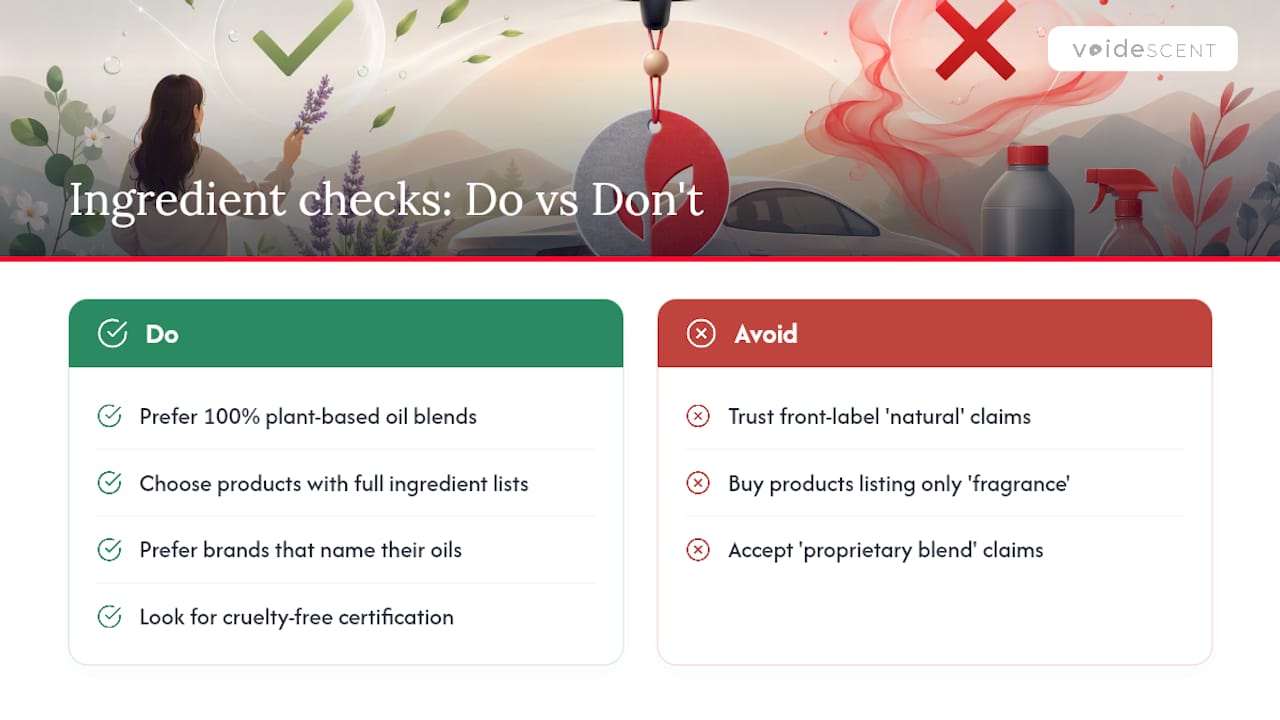
Most mass-market car air fresheners rely on synthetic fragrance compounds that aren’t required to list individual ingredients on the packaging, just the word “fragrance.” That opacity is the real issue, not synthetic scent on its own. Written evidence submitted to a UK parliamentary committee on chemicals in consumer products flags phthalates, chemicals used to stabilize and extend synthetic fragrances, as endocrine disruptors worth avoiding, and recommends products that disclose full ingredient lists and favor 100% plant-based essential oil blends instead.
That’s a meaningfully different standard than “natural sounding.” A product can call itself natural on the front label while still using a synthetic fragrance oil cut with phthalate stabilizers. The only way to actually check is to look for a full ingredient list, not just a marketing claim, and to prefer brands that name their oils rather than hiding behind “proprietary blend.” Third-party cruelty-free certification from a resource like Leaping Bunny is another useful signal, since brands seeking that certification tend to be more transparent about formulation generally.
Voidescent’s own guide on phthalates in air fresheners walks through what to check on a label before buying, which is worth a read if you’ve never scrutinized an ingredients panel on a car freshener before. Most people haven’t, because most car fresheners don’t make it easy.
Eco-Friendly Packaging and Refill Options
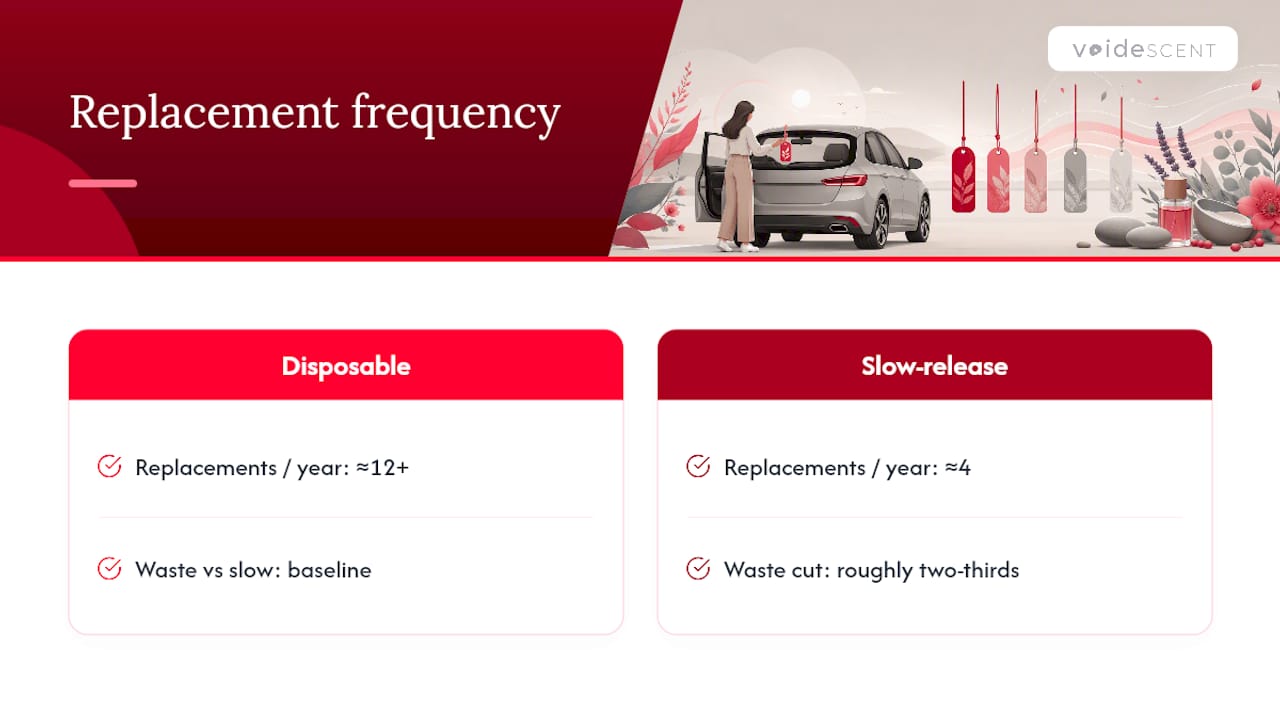
Packaging waste is the quiet cost of the disposable air freshener habit. A paper tree gets replaced every couple of weeks and tossed, and that adds up to a dozen or more discarded fresheners a year per car. A slow-release hanger designed to last four to six weeks cuts that waste by roughly two-thirds just through longevity alone, before you even factor in packaging material.
Refillable formats matter here too. A reusable wooden or felt hanger paired with a small bottle of fragrance oil means you’re replacing a few milliliters of liquid rather than an entire plastic-backed unit every month. Look for brands that ship in minimal, recyclable packaging rather than blister packs, and that offer standalone oil refills instead of forcing a full hanger replacement every time the scent fades. Voidescent’s natural car air freshener overview covers how the refill and hanger system fits together for drivers trying to cut down on car-care waste without giving up a consistent scent.
Charcoal bags deserve a mention here too, since they’re reusable for months at a time and typically just need a few hours in direct sunlight every so often to “recharge” their odor-absorbing capacity, no fragrance oil or packaging waste involved at all.
Why We Favor Gentle Scents Over Anything That Announces Itself
The instinct with car scents is to go strong, because strong feels like value. But an overpowering fragrance in a small, enclosed cabin is closer to a headache generator than a stress reliever, especially on a forty-minute commute where you’re breathing the same air the whole time. We’d rather build a hanger that fades into the background and shows up as a subtle lift than one that hits you the second you close the door.
Layering two milder scents, a lavender hanger with a faint vanilla vent clip, tends to age better across a week than one strong single note. Test gently, and think about whoever rides with you before you commit to a full dose.
— Azanone
Try a Calming Scent the Low-Risk Way
There are cheaper routes to a nicer-smelling car, a paper tree, a baking soda jar, a DIY felt square with a few drops of oil. They work, for a week or two, until the scent fades fast and you’re back at the shop. Voidescent’s approach skips that cycle: a slow-release hanger built to hold its scent for four to six weeks, with a full ingredient list you can actually read.
Start with Heavens if you want lavender-forward calm, or Nebula if you prefer something milder. Dose light for the first week, especially if you carry passengers or pets regularly, and judge from there. Every order carries a money-back guarantee, so testing it against your actual commute costs nothing but a week’s patience. Browse the full scent collection to compare profiles before you decide.
Sources
- Written evidence: chemicals in consumer products (Parliamentary committee)
- Best car air fresheners — Better Homes & Gardens
FAQ
What Are the Most Calming Scents for a Car?
Lavender and chamomile top the list for reducing stress, while sandalwood and vanilla offer a warmer, grounding option for longer drives. Citrus and peppermint lean more alerting than calming, better suited to fatigue than anxiety.
What Is the Best-Smelling Car Scent Overall?
There’s no single best scent since it depends on the effect you want. For most drivers seeking calm rather than a jolt of alertness, a lavender-forward blend like Voidescent’s Heavens hanger covers the widest range of daily needs.
How Can I Make My Car Smell Nice Naturally?
A wooden or felt hanger with a few drops of essential oil, or a small charcoal bag paired with regular cabin cleaning, both work well without synthetic fragrance. Vacuuming and checking your cabin air filter first matters more than most people expect, since odor sources often need removing before any freshener can do its job.
What Is the Best Air Freshener for a Car?
For calming effects with ingredient transparency, a slow-release botanical hanger beats a synthetic paper tree or spray on both longevity and chemical exposure. Vent clips are a solid middle ground if you want adjustable strength tied to your fan speed.
Are Essential Oils Safe to Use in a Car With Pets?
Some oils, including certain concentrated blends with clove or tea tree, aren’t recommended around cats specifically, so diluted, pet-aware formulations are the safer choice. When in doubt, start with a lighter dose than you’d use at home and watch how your pet responds over a few drives.