

How to Cut Air Freshener Waste: A Practical U.S. Guide
The fastest way to reduce air freshener waste is to act on three priorities in order: stop buying disposables you don’t need, switch to refillable or reusable formats, and send what’s left to a mail-back or HHW program. That’s the whole framework. Everything else is execution.
- Reduce: Swap single-use aerosol sprays for concentrated refill formulas or solid formats that produce far less packaging per use.
- Reuse: Replace disposable plug-in cartridges with a refillable scent hanger or diffuser you reload rather than throw away.
- Recycle: Ship eligible cartridges, plugs, and plastic packaging to the Febreze Air Care Free Recycling Program via TerraCycle, or drop aerosols and partially used products at a municipal HHW facility. RecycleSpot’s HHW guidance confirms that air fresheners qualify for HHW drop-off, and UPS drop-off locations are available nationwide for prepaid mail-back shipments.
Key Takeaways
Switching to refillable air-care products eliminates most packaging waste before recycling programs are even needed, making the purchase decision the single highest-impact step for air freshener waste reduction.
| Point | Details |
|---|---|
| Prioritize reuse first | Swap one disposable product for a refillable device before relying on recycling programs. |
| Aerosol cans: empty means curbside | Completely empty aerosols (no hiss, cap removed) can go in curbside recycling in most U.S. municipalities. |
| Mail-back via TerraCycle | The Febreze Air Care Free Recycling Program accepts all brands; ship a full, dry box via UPS or FedEx. |
| HHW for partially full items | Partially used aerosols and liquid-containing containers belong at a municipal HHW facility, not the trash. |
| Voidescent reduces repeat waste | Voidescent’s botanical scent hangers last four to six weeks per refill, cutting cartridge waste at the source. |
Table of Contents
- How to recycle each air freshener format
- Where to recycle air freshener waste in the U.S.
- How to prepare and ship items for recycling or HHW
- Low-waste alternatives that prevent the problem
- What to expect from mail-back programs
- What to do when no recycling option is available
- The part most guides skip
- Voidescent: a reusable alternative to disposable car scents
- Sources
How to recycle each air freshener format
Not every air freshener recycles the same way. The format determines whether you’re headed to the curbside bin, the HHW facility, or a mail-back program.
Plug-in cartridges and housing units
Most plug-in cartridges are not accepted in curbside recycling because of residual fragrance oil. The plastic housing and cartridge body are eligible for the TerraCycle Febreze Air Care program, which accepts all brands. Before shipping, let the cartridge drain completely and wipe the exterior dry. Check whether your specific plug unit is refillable before discarding it.
Aerosol cans
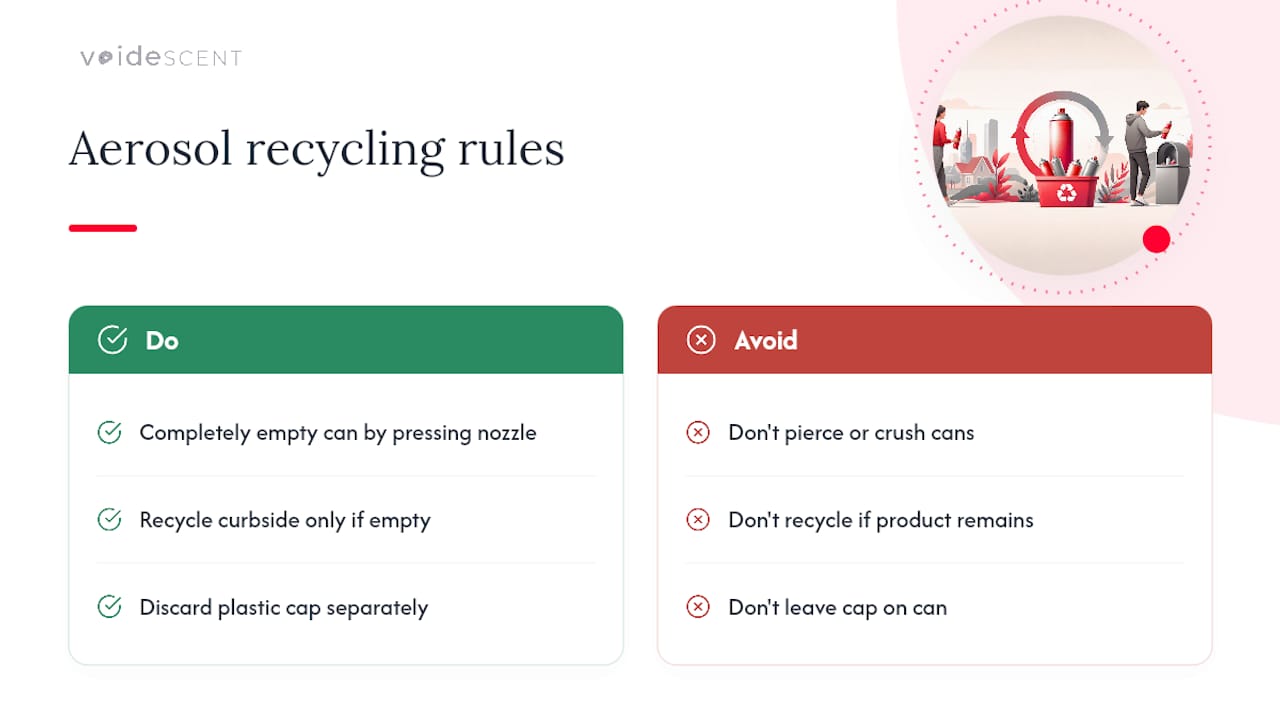
An aerosol can is curbside-recyclable only when it is completely empty. Press the nozzle until there is no hiss and no product releases. According to RecycleSpot’s HHW guidance, removable plastic caps should be discarded separately rather than left on the can. Never pierce or crush an aerosol before recycling. If any product remains, treat the can as HHW.
Refill bottles and trigger heads
Plastic refill bottles are often accepted curbside if rinsed, but trigger heads with metal springs typically are not. Some mail-back programs accept both. Rinse the bottle, remove the trigger assembly, and check your local recycling guidelines before placing either in the bin.
Passive clips, gels, and beads
Paper or cardboard packaging from clip-style fresheners can go in curbside paper recycling. The plastic clip itself and gel or bead containers usually cannot. Separate materials before disposal: card to paper recycling, plastic to mail-back or trash, and any remaining gel product to HHW if the volume is significant.
Where to recycle air freshener waste in the U.S.
Three routes cover most situations: national mail-back programs, municipal HHW drop-off, and retailer take-back where available. Local HHW is always worth checking first since it eliminates shipping emissions entirely.
| Program / Route | What it accepts | Key notes |
|---|---|---|
| TerraCycle Febreze Air Care (national) | Cartridges, plugs, trigger heads, plastic and film packaging from all brands | Box must be dry; ship when full to reduce transport footprint |
| Municipal HHW drop-off | Air fresheners, cleaners, partially full aerosols | Free in most counties; find your location at earth911.com |
| Curbside recycling | Completely empty aerosol cans (no hiss); rinsed plastic bottles where accepted | Caps off; check local program rules |
| Retailer take-back | Varies by retailer and brand | Not universally available; confirm before visiting |
Program eligibility note: TerraCycle’s Febreze Air Care brigade accepts items from any brand, not just Febreze products. Boxes should not drip or leak, and the program recommends shipping a full box to offset the carbon cost of transport. Weight and size limits apply; most standard shipping boxes under 50 lbs and 18×18×18 inches are within range.
Tip: If you live near a county HHW facility, that route produces less transport carbon than a national mail-back shipment. Save mail-back for items your local program won’t accept.
How to prepare and ship items for recycling or HHW
The core rule: everything going into a mail-back box or an HHW bin should be dry, capped, and free of active leaks. A dripping package will be refused by carriers.
- Collect all eligible items in one place: plug-in cartridges, empty or near-empty aerosols, refill bottles, trigger heads, and plastic film packaging.
- Drain and dry each item. Let cartridges sit upright on a paper towel overnight to drain residual oil. Wipe exteriors clean.
- Cap or seal open containers. If a cap is missing, wrap the opening with a small piece of plastic wrap secured with tape.
- Remove old shipping labels from any reused box to avoid carrier confusion.
- Pack the box as full as practical. Partially full boxes still ship, but a full box reduces the per-item carbon cost of transport.
- Request your shipping label through your TerraCycle account (FedEx QR code or UPS label) and print or save it to your phone.
- Drop off at a UPS location or schedule a pickup if you can’t reach a drop-off point.
Pro Tip: Combine air freshener waste with other eligible household items in the same box. TerraCycle runs separate brigades for many product categories, so check whether your laundry pods packaging or cleaning product bottles qualify before sealing the box. One full shipment beats three half-empty ones.
For HHW drop-off, skip steps 6 and 7. Transport items in a sealed bag or bin in your trunk, upright, and away from heat. CDC hazardous materials guidance covers chemical exposure precautions relevant to handling concentrated fragrance residues.
Low-waste alternatives that prevent the problem
Recycling is the last line of defense. The better move is choosing products that generate less waste in the first place.
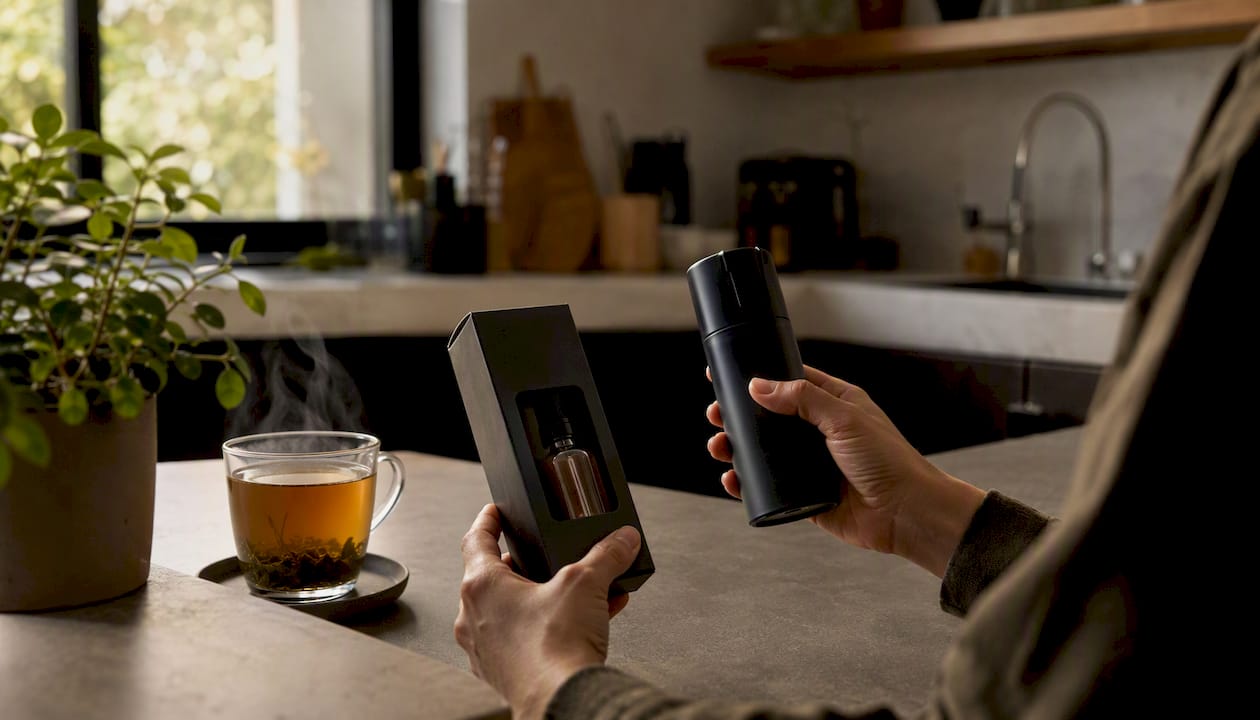
Refillable scent hangers and long-life fragrance oils are the most practical swap for car and home use. Instead of discarding a plastic cartridge every two to three weeks, you reload the same device with a concentrated oil. Editorial testing by Better Homes & Gardens found that refillable and long-life formats reduce replacement frequency and packaging waste compared with disposable cartridges or frequent aerosol use. Some charcoal-based purifying bags have a long lifespan, potentially lasting for years.
Other categories worth considering:
- Concentrates and solids: A single bottle of concentrated fragrance oil replaces dozens of aerosol cans. Solid formats (wax melts, pressed botanicals) produce minimal packaging.
- Activated charcoal absorbers: No fragrance added, no chemicals, and the bags can often be recharged by leaving them in sunlight. Useful for odor control rather than scent addition.
- Essential-oil diffusers: Reusable hardware with refillable oil bottles. Look for aromatherapy products made with plant-based ingredients to keep the ingredient footprint low.
- Subscription refill programs: Some brands ship concentrated refills in minimal packaging on a schedule, cutting both waste and per-use cost.
When evaluating any refillable option, calculate the refill cost per month and compare it against your current monthly spend on disposables. A device that costs more upfront but lasts 18 months with $5 refills beats a $3 cartridge you replace every three weeks.
Pro Tip: Industry trends show some manufacturers are moving toward recyclable materials and lower-impact formulations. Look for products with eco-friendly production credentials and minimal plastic packaging when comparing brands.
What to expect from mail-back programs
Mail-back programs are not magic bins. They work within specific rules, and knowing those rules prevents wasted effort.
The standard workflow for a program like TerraCycle’s Febreze Air Care brigade is: create a free account, collect items in any sturdy box, request a prepaid carrier label (FedEx QR or UPS), seal the box, and ship. At the processing facility, items are cleaned and separated by material type, then converted into raw feedstock that manufacturers can reuse.
What programs typically require:
- Dry packages only. Carriers refuse dripping or leaking shipments, and processing facilities reject contaminated loads.
- All brands accepted (for the Febreze Air Care brigade specifically). You don’t need to sort by brand.
- Residual product: Small amounts of residue are generally acceptable. Excessive liquid is not.
- Box size and weight: Standard guidance points to boxes under approximately 50 lbs and 18×18×18 inches. Check the specific program page for current limits.
- Shipping full boxes is strongly recommended to reduce per-item transport emissions.
One practical note: these programs are free to use, but the environmental benefit depends on participation volume. The more households that ship full boxes, the lower the per-item carbon cost of the whole system.
What to do when no recycling option is available
If no mail-back program or HHW facility is accessible, follow municipal solid waste rules and minimize chemical exposure.
For completely empty aerosol cans (confirmed by pressing the nozzle until no hiss), curbside recycling is usually permitted. Remove the plastic cap first. For partially full aerosols or liquid-containing containers, HHW is the right path. Never pour fragrance product down a drain or into a storm drain.
When a small amount of product remains and HHW is not immediately available:
- Use up the remaining product if it’s safe to do so.
- For very small residues, allow them to evaporate in a well-ventilated outdoor area before disposing of the empty container.
- Absorb liquid residues onto paper or cat litter, seal in a bag, and dispose as solid waste if your local rules permit. Confirm with your municipality before doing this.
To find your local HHW program, visit earth911.com and search by material and ZIP code. HHW facilities handle partially full containers safely and keep concentrated chemicals out of landfill leachate.
The part most guides skip
Most air freshener recycling guides focus almost entirely on end-of-life disposal. That framing gets the priority order backwards.
The most effective lever for air freshener waste reduction is the purchase decision, not the disposal method. A household that switches from monthly disposable cartridges to a single refillable device with periodic oil refills can eliminate most of its air-care packaging waste before a recycling program is involved. Mail-back programs are genuinely useful, but they’re a fallback for the waste that purchasing decisions didn’t prevent.
The practical priority order for a busy consumer: first, swap one disposable product for a refillable equivalent this week. Second, collect existing disposables in a box for mail-back rather than trashing them. Third, change your default purchasing habit so the next replacement is a refill, not a new unit.
Voidescent’s scent hangers are built around exactly this logic: a single reusable hanger loaded with botanical fragrance oil that lasts four to six weeks, with no cartridge to discard. The design is intentional. When the scent fades, you refill the oil, not the hardware.
Voidescent: a reusable alternative to disposable car scents
Disposable car fresheners are a repeat-purchase trap. You buy, hang, discard, and buy again, generating plastic and cardboard waste every few weeks. Voidescent’s automotive scent hangers break that cycle.
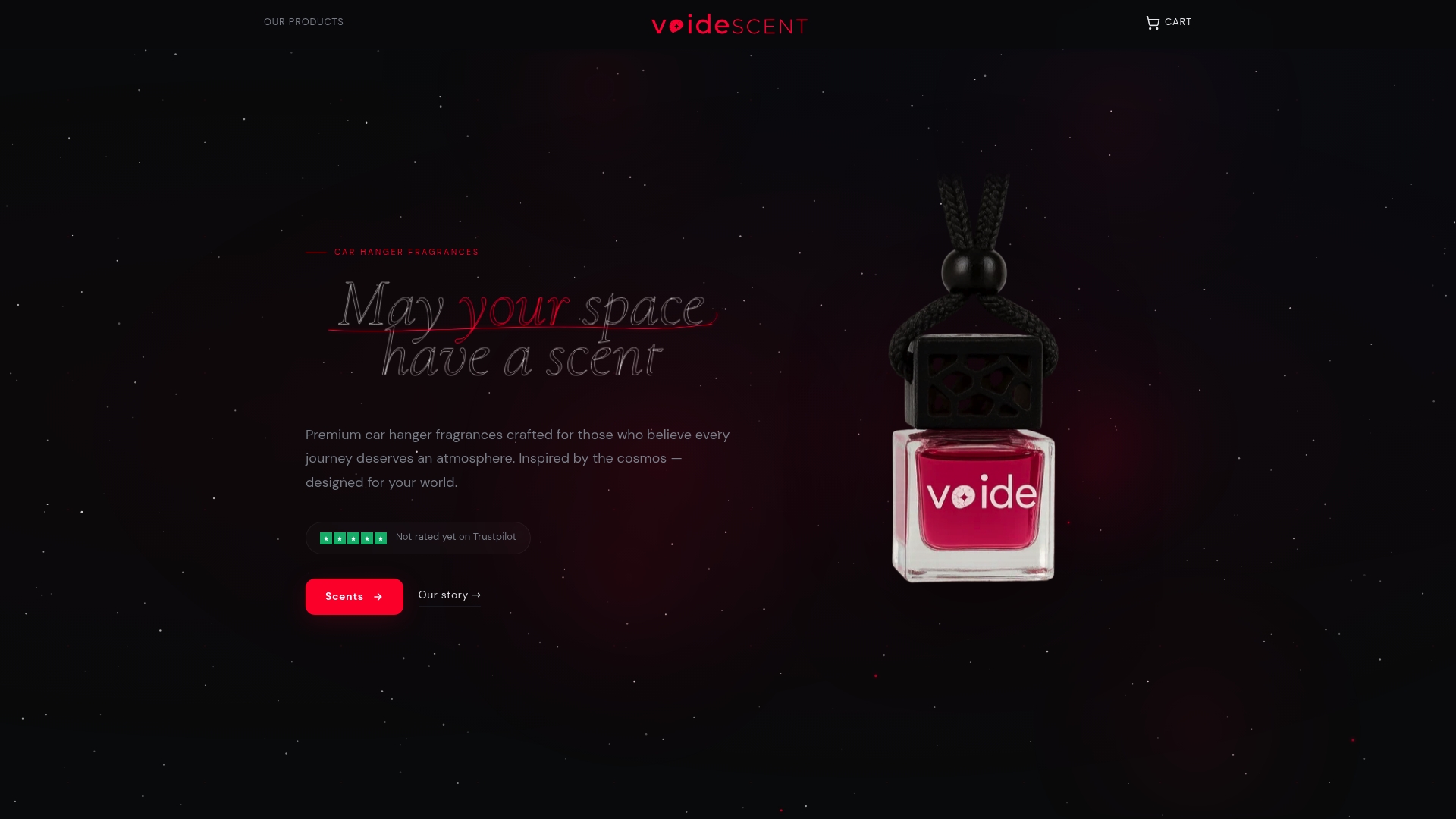
Each Heavens or Descent hanger uses botanical fragrance oils that release slowly over four to six weeks, with no synthetic propellants and no single-use plastic cartridge. When the scent fades, you reload with a refill oil, not a new unit. The minimalist design fits any interior without looking like a gas-station impulse buy.
For eco-conscious drivers who want a scent that lasts and a product that doesn’t generate a new piece of trash every month, browse the full Voidescent scent collection and find the fragrance that fits your car.
Sources
These are the primary pages to visit for program rules, municipal HHW guidance, and carrier details.
- Febreze Air Care Free Recycling Program | TerraCycle
- UPS dropoff information
- The 5 Best Car Air Fresheners, Tested by BHG