

The Best Spicy Car Scent Options for a Warmer, Bolder Drive
Warm spice balanced with bright citrus is the most versatile spicy car scent profile you can buy, cutting through stale cabin air without the harsh chemical bite of typical air fresheners. Cinnamon and clove bring the warmth, citrus brings the lift, and together they hold up across seasons better than a one-note fragrance ever could. If you want a premium, slow-release version of that combination, Voidescent’s catalog offers four distinct options:
- Heavens — citrus-forward with a soft spice undertone, best for daily commuters who want brightness first.
- Descent — deep cinnamon and clove with a woody base, suited to drivers who prefer a warmer, moodier cabin scent.
- Nebula — a balanced middle ground of spice and citrus, good for shared or family vehicles.
- Voidegrail — the strongest intensity of the range, built for larger cabins or anyone who wants scent that carries.
Pro Tip: If you’re not sure where to start, Descent and Heavens together cover both ends of the spicy-citrus spectrum, so you can decide which direction you prefer before committing to a full bundle.
Every Voidescent hanger uses a slow-release botanical oil formula rated for several weeks of consistent fragrance, a noticeably longer window than most drugstore alternatives.
Key Takeaways
A balanced spicy-citrus profile outperforms single-note spice or citrus scents in a car cabin, and Voidescent’s slow-release botanical formula holds that balance for four to six weeks.
| Point | Details |
|---|---|
| Best all-around profile | Pair cinnamon or clove with orange or bergamot for warmth without overwhelming a small cabin. |
| Match format to cabin size | Diffuser oils and hangers suit smaller cars; vent clips and higher-intensity formulas suit SUVs and vans. |
| Test before committing | Run a short vent test with windows cracked to check tolerance before daily use. |
| Avoid overlayering | Stick to one dominant scent source at a time rather than combining multiple spicy products. |
| Voidescent recommendation | Heavens and Nebula suit citrus-leaning and balanced preferences; Descent and Voidegrail suit stronger spice and larger cabins, each backed by a four to six week slow-release claim and money-back guarantee. |
Table of Contents
- Which Voidescent Spicy Car Scents Should You Try?
- How Do You Choose the Right Spicy Car Scent?
- What Makes a Scent ‘Spicy’ or ‘Citrus-Spicy’?
- Which Format Lasts Longest in a Car?
- Is a Spicy Car Scent Safe for Everyone in the Car?
- Why Botanical, Slow-Release Formulas Beat Synthetic Sprays
- How Do You Layer Spicy Scents With Other Car Fragrances?
- What Mistakes Ruin a Good Spicy Car Scent?
- Sources
Which Voidescent Spicy Car Scents Should You Try?
Each of these four scents targets a different kind of driver, so the right pick depends on how bold you want the cabin to feel and how big that cabin actually is.
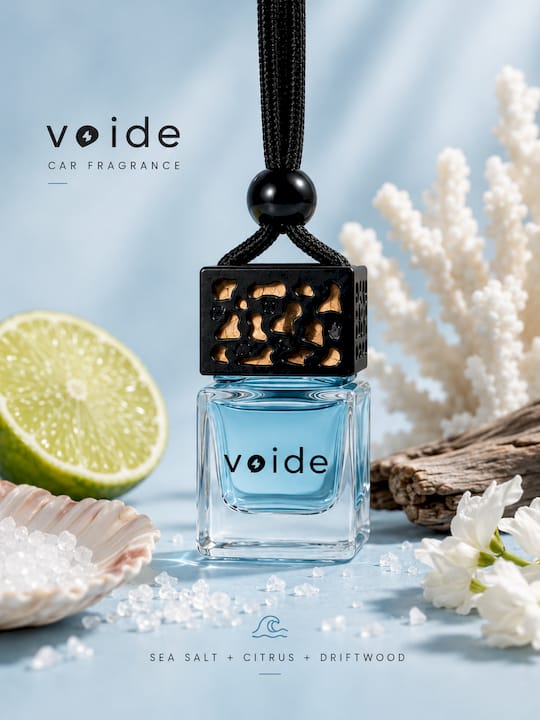
Heavens leans into citrus top notes with just enough clove underneath to keep it from feeling like a simple orange air freshener. It suits smaller cars and daily commutes where you want something that reads fresh rather than heavy. Hang it from the rearview mirror or a lower vent for a light, steady presence.
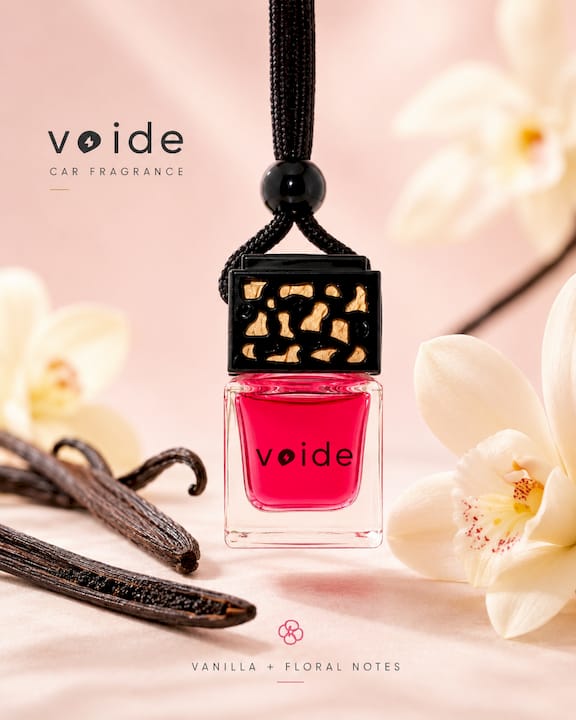
Descent is the spice-first option: cinnamon and clove sit over a woodier base, giving it a richer, almost autumnal character. It works best in mid-size to larger vehicles, or for anyone who associates a good car scent with warmth rather than brightness. This one rewards a slightly more concealed placement, since the throw is stronger than Heavens.
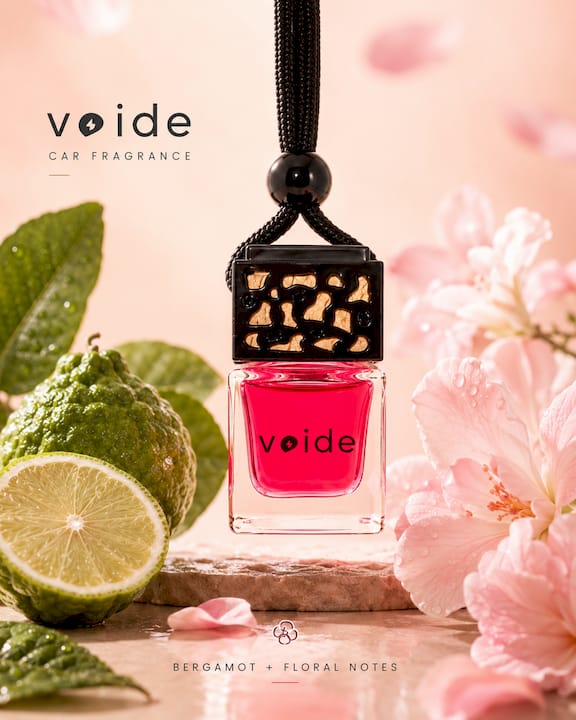
Nebula splits the difference. It reads as spicy-citrus in roughly equal measure, which makes it the safer pick for shared family cars where passengers might disagree on whether they want “fresh” or “warm.” It’s also the most forgiving option if you’re buying for someone else as a gift.
Voidegrail, sold under the Scent Maxxing name, is the intensity option. Built for SUVs, vans, and anyone whose commute involves stop-start traffic and a cabin that needs real olfactory presence, it’s the one to avoid in a small hatchback with the windows up.
A sensible starter approach: pick one citrus-leaning scent (Heavens) and one spice-leaning scent (Descent), then rotate between them by season. Cold months favor Descent’s warmth; the citrus lift in Heavens works better once the weather turns. If you’re outfitting more than one car, browse the full scents collection to bundle and save on shipping.
How Do You Choose the Right Spicy Car Scent?
Buying a spicy or citrus-spicy car air freshener isn’t just about picking a nice-sounding name on a label. A few practical factors decide whether you’ll actually enjoy the scent three weeks from now or end up tossing it out the window at the first red light.
- Scent family — decide whether you want spice-forward (cinnamon, clove) or citrus-forward (orange, bergamot) as the dominant note.
- Intensity level — a compact car needs less strength than an SUV or van with more air volume to fill.
- Delivery format — hangers, vent clips, diffuser oils, and sprays each release fragrance at a different rate.
- Longevity — check whether the product states a specific timeframe, and be skeptical of vague claims.
- Refillability — some formats let you top up oil rather than replacing the whole unit.
- Ingredient transparency — botanical and eco-friendly formulas tend to smell more natural and fade more gracefully than synthetic blends.
Before you buy, ask yourself:
- Does anyone who rides in this car regularly react to strong fragrances?
- Do you want a citrus note specifically to cut through food or gym-bag smells?
- Would you rather have a slow-release oil that evolves over weeks, or a quick spray you control moment to moment?
Answer those three questions honestly and you’ll usually land on the right format and strength before you even open a product page.
What Makes a Scent ‘Spicy’ or ‘Citrus-Spicy’?
Fragrance breaks down into top, middle, and base notes, and understanding that structure explains why some car scents feel sharp for a day then fade into something totally different. Top notes hit first and fade fastest, typically within the first hour or two. Citrus, think orange, bergamot, and lemon, almost always plays this role because citrus oils are volatile and evaporate quickly.
Spice tends to live in the middle and base. Cinnamon, clove, pepper, and nutmeg build the “warmth” that lingers after the initial citrus burst fades, and they’re the notes still detectable weeks into a product’s life. A cinnamon-forward air freshener will smell spicier and longer-lasting than one relying purely on citrus, because cinnamon compounds break down more slowly.
Good spicy-citrus pairings follow a logic: cinnamon plus orange gives you a classic warm-bright combination, while clove plus bergamot feels more sophisticated and slightly less sweet. Small perfumers have pushed this further with concentrated oriental-spice car blends built around cinnamon, clove, and amber, and niche Etsy sellers have gone bolder still with chocolate-orange-chilli combinations that read as a genuine spicy-citrus hybrid rather than either note alone.
Picture three quick scenarios: a citrus-clove blend on a cold morning feels bright but grounded, a straight cinnamon hanger in July can feel oddly heavy, and a balanced orange-cinnamon pairing tends to work regardless of season.
Which Format Lasts Longest in a Car?
Format decides how much control you actually get over strength and how long the scent survives. Hangers offer the mildest, steadiest release and suit drivers who want a background presence rather than a wall of fragrance. Vent clips use airflow to push scent actively through the cabin, giving stronger throw but faster depletion. Diffuser oils sit in a small vessel and release slowly through evaporation, which is why they tend to last longest. Sprays give you instant, strong scent but fade within hours, making them better for a quick refresh than daily use.
Longevity varies widely by format and brand. Some plant-based hanging fresheners are rated for seven to fourteen days, while a citrus-herb car jar from a major candle brand claims up to about 30 days. Voidescent’s slow-release botanical oil formula is built to run four to six weeks, noticeably longer than either benchmark.
Pro Tip: Keep any hanger or clip out of direct sunlight on the dashboard. Heat accelerates oil evaporation and can shorten a six-week scent to two or three.
Rotate the hanger’s position occasionally and avoid stacking two strong scents in the same cabin if you want the fragrance to stay recognizable through its full lifespan.
Is a Spicy Car Scent Safe for Everyone in the Car?
Spicy and citrus-spicy fragrances are generally well tolerated, but a car is an enclosed space and some passengers are more sensitive than others. Run a simple test before committing: hang the product and drive with the windows cracked for the first day, then judge whether the intensity feels right in a sealed cabin.
- Do a short “vent test”: clip or hang the scent for a few hours before a longer trip to gauge strength.
- If someone reacts, move the freshener further from air vents or swap to a milder scent family.
- Keep hangers out of the driver’s direct sightline and away from anything that could snag on the gear shift.
- Secure vent clips firmly. A loose clip that falls during a turn is a real, avoidable distraction.
- Use lighter, less concentrated options around young children, pets, or anyone with asthma or other respiratory sensitivity.
Why Botanical, Slow-Release Formulas Beat Synthetic Sprays
Voidescent builds every product around botanical fragrance oils rather than synthetic spray concentrates, and that choice shows up in how the scent actually behaves over time. A synthetic spray hits hard for an hour, then disappears. A botanical, slow-release hanger evolves instead, opening with a lighter top note and settling into something rounder over its four to six week life.
Voidescent’s formulas are built on eco-friendly botanical ingredients, minimalist design, and a slow-release structure engineered to hold a consistent, evolving fragrance for four to six weeks. Every product ships with a money-back guarantee, which is the brand’s way of putting its confidence where its claims are.
That combination, fewer synthetic solvents, no harsh initial spike, and a longevity window most competitors can’t match, is why this guide points repeatedly back to the Voidescent catalog rather than treating it as one option among many.
How Do You Layer Spicy Scents With Other Car Fragrances?
Layering works the same way it does in perfumery: you’re building a top, middle, and base rather than mixing two competing scents at full strength. The trick with spicy notes is that they’re assertive, so pairing them with something too similar in weight usually creates a muddy, overwhelming cabin rather than a richer one.
Citrus is the easiest layering partner for spice, since its top-note brightness naturally fades into the spice’s warmth rather than fighting it, which is exactly why so many commercial blends default to that pairing. Herbal or woody undertones, sage, cedar, vetiver, work as a third layer underneath spice and citrus, adding depth without adding more “loudness” to the scent.
Where people go wrong is combining two spicy products at once, say a cinnamon hanger and a clove-heavy vent clip, expecting the scents to blend cleanly. Instead you usually get a fragrance that reads as confused rather than complex. If you want to experiment, introduce one new element at a time and give it a few days before adding another.
A practical layering approach: keep a citrus-spice hanger as your base scent, and use a lighter, unscented cabin (or a quick spray) when you need to clear the air for passengers who aren’t fans of stronger fragrance. Avoid layering scented cleaning wipes or upholstery sprays with a strong spice hanger already running. The combination often reads as artificial rather than complementary, since cleaning products are rarely formulated to pair with fragrance oils.
What Mistakes Ruin a Good Spicy Car Scent?
The single most common mistake is overbuying strength. Drivers see “spicy” on a label and assume more intensity equals more satisfaction, then end up with a cabin that smells like a candle shop rather than a nicely scented car. Match the format’s strength to your cabin size, and when in doubt, choose the milder option.
Placement causes the second most common problem. A hanger dangling in the driver’s direct line of sight is a distraction and, on some dashboards, a genuine safety issue in tight parking maneuvers. Vent clips mounted too close to the AC intake can also overwhelm the cabin the moment you turn the fan up.
Ignoring longevity claims is another frequent error. If a product doesn’t state a timeframe, assume it’s shorter than you’d like, and budget for replacement accordingly rather than being surprised when the scent vanishes after a week.
Finally, people layer too aggressively, running a strong spice hanger, a scented spray, and a vent clip simultaneously, which almost always cancels out the nuance that made the fragrance appealing in the first place. One well-chosen slow-release product, given room to evolve over its full four to six week cycle, consistently outperforms three competing scents fighting for attention in the same small space.
A Personal Note on Picking a Daily Scent
For everyday driving that mixes commuting and errands, a citrus-spice pairing tends to earn its keep better than a pure spice or pure citrus option. It handles a coffee run in the morning and a supermarket trip in the evening without feeling out of place either time.
One habit worth building: rotate scents every four to six weeks rather than replacing the same one repeatedly. Your nose adjusts to a constant fragrance faster than you’d expect, and a fresh scent family resets that sensitivity.
Where to Buy These Spicy Car Scents
All four scents in this guide, Heavens, Descent, Nebula, and Voidegrail, are sold directly through Voidescent’s own site, and every order carries the brand’s money-back guarantee if the scent isn’t right for your car. That guarantee matters more than it might seem: it means you’re not stuck with a fragrance you don’t love for six weeks.
If you’re new to the catalog and unsure where to start, a starter approach works better than committing to one scent outright. Try Heavens for a citrus-forward option and Descent for something warmer and spicier, then see which one you reach for again once both are running low. Browse the full scent catalog to compare notes side by side, or head straight to the Voidescent homepage to see current bundle offers before you check out.
Sources
- Sage & Citrus | Yankee Candle
- Woodland Sage Car Freshener – Grow Fragrance
- Car Air Freshener In Spicy Chocolate Orange Chillies Scent