

How to Get Rid of Smoke Smell in Your Car Naturally
Ventilate, remove debris, deep-clean surfaces, then neutralize with baking soda and citrus-based oils. That four-step sequence handles most smoke odors without a single harsh chemical. Start with the windows down and the cabin fan running on fresh air for 15 minutes while you pull out any ash, cigarette butts, or trash. Then vacuum thoroughly, apply a baking soda treatment overnight, and set activated charcoal bags in the cabin. For most cars with mild to moderate smoke exposure, that sequence alone produces a noticeable difference within 24 hours.
Quick-start plan (10–15 minutes to begin):
- Open all doors and windows; run the HVAC fan on fresh-air mode for 10 minutes.
- Remove all trash, ash, and debris from cup holders, the ashtray, and under seats.
- Vacuum every surface: seats, carpets, floor mats, and crevices.
- Sprinkle baking soda generously over fabric seats and carpets; leave overnight, then vacuum.
Pro Tip: Avoid ozone generators, strong oxidizing sprays, and enzyme cleaners on leather or the headliner without a professional. Saturating the headliner can cause it to sag and separate from the roof.
Key takeaways
The most effective natural approach to car smoke odor combines physical source removal, deep surface cleaning, HVAC maintenance, and overnight absorption before any scent product is introduced.
| Point | Details |
|---|---|
| Diagnose the source first | Check upholstery, vents, and debris before cleaning to target the right area. |
| Order the steps correctly | Vacuum, then deep-clean surfaces, then apply baking soda and charcoal overnight. |
| Replace the cabin air filter | A smoke-saturated filter recontaminates the cabin every time the fan runs. |
| Know when DIY isn’t enough | Two full cycles with no lasting improvement means professional steam or ozone is needed. |
| Voidescent as a finishing step | After cleaning is complete, a botanical scent hanger provides four to six weeks of clean fragrance. |
Table of Contents
- Where is the smoke smell actually coming from?
- A step-by-step natural cleaning plan that actually works
- Fabric and carpet vs. leather and vinyl: treat them differently
- Why your HVAC system keeps bringing the smell back
- When to call a professional detailer
- Common mistakes that make smoke odor worse
- How long does this actually take?
- What I’ve learned from removing smoke odor the natural way
- Voidescent botanical scent hangers: the finishing step, not the fix
- Sources
Where is the smoke smell actually coming from?
Smoke odor most often originates in three places: upholstery, the ventilation system, or ash and debris left in the cabin. Knowing which one is driving the smell tells you where to spend your time.
Run through this quick check before you start cleaning:
- Upholstery and headliner: Press your nose close to the seat fabric, carpet, and headliner. A strong, immediate smell means the fibers have absorbed tar and nicotine residue.
- Cup holders, ashtray, and console: Ash and residue trapped in these areas off-gas continuously. Lift floor mats and check under the seats for forgotten debris.
- Vents and HVAC: Turn the fan to recirculate and hold your nose near the vents. If the smell intensifies when the fan runs, the HVAC system is a primary source, not just the fabric.
- Carpets and trunk: Smoke settles low. Pull back the trunk liner and check the spare-tire well if the smell seems to linger even after surface cleaning.
Pro Tip: When checking the headliner, use a flashlight and look for yellow-brown staining rather than pressing or rubbing the fabric. The headliner is glued to the roof and tears easily if you apply pressure while it’s damp.
A step-by-step natural cleaning plan that actually works
A systematic, ordered approach is what separates a car that smells clean from one that just smells like baking soda on top of smoke. Here’s what you need and how to use it.
Materials:
- Baking soda (odor absorption in fabric)
- Activated charcoal bags (ongoing neutralization)
- Distilled white vinegar (hard plastic and glass surfaces)
- Microfiber towels and a soft-bristle brush
- Citrus essential oil, preferably lemon or orange (high in d-limonene)
- Pine or eucalyptus essential oil (conifer/herbal pairing)
- Spray bottle and small bowl for mixing
- Steam cleaner or wet-vac if available
Why citrus and conifer oils? Citrus oils high in d-limonene help dissolve oily smoke residue at the molecular level; pairing them with a conifer or herbal oil like pine improves deodorizing rather than just masking the smell. That’s a meaningful distinction. A masking spray fades in hours; a citrus-pine treatment actively breaks down what’s causing the odor.
Cleaning sequence:
- Vacuum first. Hit every surface: seats, carpets, floor mats, crevices, and the trunk. Use a crevice tool for seat rails and console gaps.
- Wipe hard surfaces. Mix one part distilled white vinegar with two parts water in a spray bottle. Wipe dashboards, door panels, center console, and glass. Vinegar removes sticky residue from hard plastics and glass but does not penetrate oily films in porous fabric, so don’t rely on it for seats.
- Apply baking soda to fabric. Sprinkle a generous, even layer over all fabric seats and carpets. Leave it for at least 8 hours (overnight is better). Vacuum thoroughly.
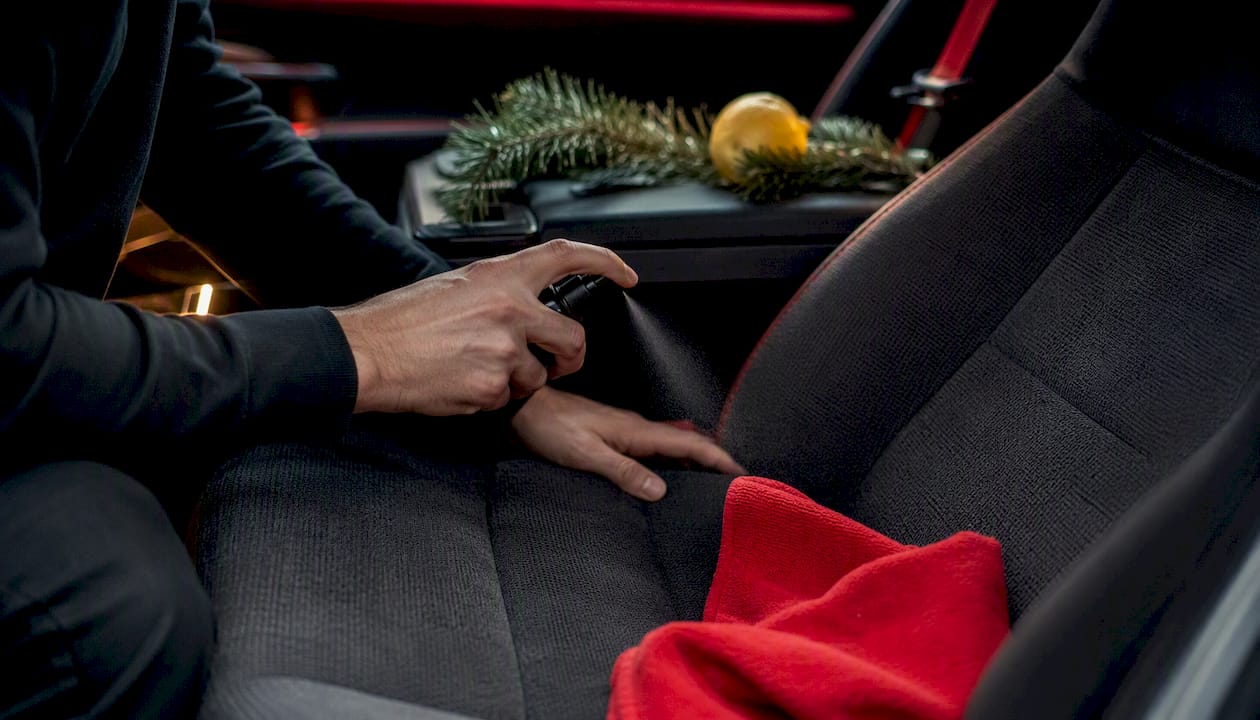
- Optional citrus oil spray for fabric. Add 10 drops of lemon essential oil and 5 drops of pine essential oil to 8 oz of water in a spray bottle. Mist lightly over fabric surfaces. Do not saturate. Let dry completely with windows open.
- Set activated charcoal bags. Place two or three bags in the cabin overnight. They pull residual odor molecules from the air passively.
- Repeat if needed. For moderate smoke exposure, one full cycle often isn’t enough. Repeat the baking soda treatment and charcoal step after 48 hours.
Pro Tip: Always spot-test any cleaner or oil blend on a hidden area of fabric or plastic first. Apply a small amount, wait 10 minutes, and check for discoloration or texture change before treating the full surface.
Baking soda and activated charcoal work well for mild odors and maintenance, but for heavy or long-term smoke exposure they need to be paired with deep extraction.
Fabric and carpet vs. leather and vinyl: treat them differently
Treating every surface the same is one of the fastest ways to damage your interior.
Fabric seats and carpet:
- Vacuum before any wet treatment to lift loose particles.
- Apply baking soda and leave it overnight; vacuum clean.
- For stubborn odor, use a steam cleaner or wet-vac with plain water. Work in sections and dry immediately with a fan or open windows. Damp fabric left to sit breeds mildew, which creates a second odor problem.
- A light mist of the citrus-pine blend described above works well on fabric after it’s fully dry.
Leather and vinyl:
- Wipe with a damp microfiber cloth and a small amount of mild soap. Do not use vinegar directly on leather. Vinegar’s acidity can strip the protective coating over time.
- Always do a test patch on an inconspicuous area before treating the full seat.
- After cleaning, apply a leather conditioner. Smoke residue dries out leather, and conditioning prevents cracking.
- Never saturate leather. A barely damp cloth is enough.
Headliner:
- Use the lightest possible contact. A microfiber cloth with a tiny amount of diluted mild soap, barely damp, pressed gently rather than rubbed.
- Dry immediately with a fan. Soaking the headliner causes the adhesive to fail.
Pro Tip: If your fabric seats still smell after two baking soda treatments, the odor is likely embedded in the foam padding underneath. At that point, steam extraction or professional upholstery cleaning is the next logical step.
| Surface | Safe cleaners | What to avoid |
|---|---|---|
| Fabric seats/carpet | Baking soda, citrus-pine mist, steam | Soaking, bleach, strong enzyme cleaners |
| Leather/vinyl | Mild soap, leather conditioner | Vinegar, citrus oils directly, saturation |
| Headliner | Barely damp microfiber, mild soap | Scrubbing, soaking, enzyme sprays |
| Hard plastics/glass | Diluted vinegar, microfiber | Abrasive cloths, undiluted solvents |
Why your HVAC system keeps bringing the smell back
The cabin HVAC is the most overlooked source of recurring smoke odor. A dirty cabin air filter continuously recirculates smoke odor back into the cabin every time the fan runs. You can clean every surface perfectly and still smell smoke the next morning because the filter is re-releasing it.
How to address the HVAC:
- Inspect the cabin air filter. Check your owner’s manual for its location (usually behind the glove box or under the dashboard). Pull it out and look for discoloration, tar staining, or a visible smoke smell. If it smells, replace it. A new cabin air filter typically costs a moderate amount and can be replaced in a short time.
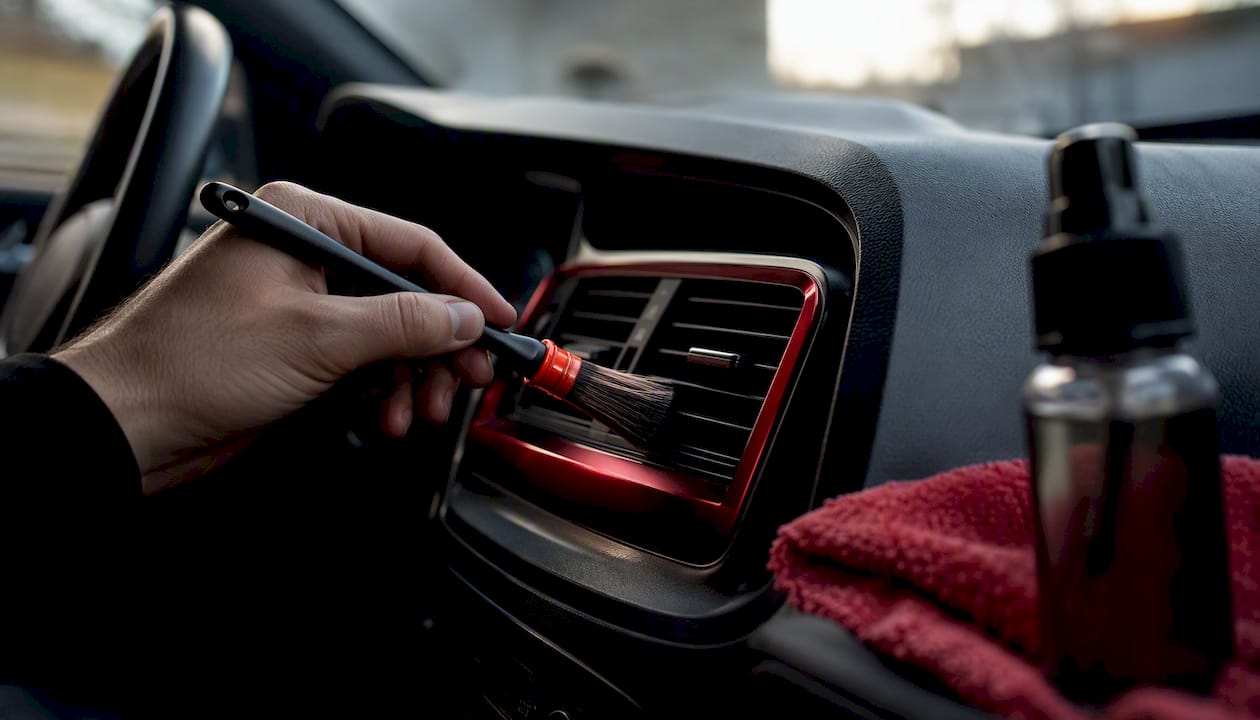
- Clean the vents. Use a soft brush or a can of compressed air to clear dust and residue from vent slats. For deeper duct cleaning, a vent-safe spray (look for enzyme-based or citrus-based duct sprays) applied at the fresh-air intake with the fan running on low can help.
- Run the fan on fresh air. After replacing the filter, run the HVAC on the fresh-air setting (not recirculate) with windows cracked for 15–20 minutes to flush the ducts.
Safety note: Do not use ozone generators yourself inside the car. Ozone at the concentrations needed to neutralize smoke is harmful to lungs and eyes. Leave ozone treatment to professionals who can control exposure time and ventilate properly.
When to call a professional detailer
DIY natural methods handle mild to moderate smoke odor reliably. Heavy, long-term smoke exposure, or a car where someone smoked daily for years, usually requires professional intervention.
Professional services worth knowing:
- Steam extraction: Hot steam penetrates fabric and foam, loosening embedded tar and nicotine. More thorough than a home steam cleaner.
- Ozone treatment: Ozone breaks apart odor molecules at the source but requires strict safety rules: no people or pets present, and thorough airing after treatment. A reputable detailer will run the ozone cycle, then air the car for several hours before returning it.
- Hydroxyl treatment: A safer alternative to ozone that can be run with people nearby, though it works more slowly.
- Professional upholstery extraction: Wet-vac extraction with commercial-grade cleaners reaches the foam padding that home tools can’t.
Before booking an ozone treatment, ask the detailer how long the ozone cycle runs, how long they air the car afterward, and whether they replace the cabin air filter as part of the service. A detailer who skips the filter step is leaving the most common recontamination source in place.
Pro Tip: If you’ve completed two full DIY cycles (clean, absorb, repeat) and the smell returns within a week, the odor source is almost certainly in the HVAC or the seat foam. That’s the threshold where a professional steam extraction or ozone treatment pays for itself.
Common mistakes that make smoke odor worse
A few errors account for most DIY failures.
What to avoid:
- Skipping the vacuum before any wet treatment (you’re just pushing ash into the fabric).
- Using air fresheners or masking sprays as a first step. They mix with the smoke smell and create something worse.
- Saturating the headliner or leather with any liquid.
- Forgetting to replace the cabin air filter after cleaning everything else.
- Relying on a single treatment and calling it done. Smoke odor in fabric usually requires two or three cycles.
What actually works:
- Remove all ash and debris before touching a cloth to any surface.
- Pair citrus and conifer essential oils rather than using a single fragrance.
- Allow full drying between treatments. Damp fabric traps new odors.
- Seal cleaned fabric with a fabric protector spray after the final treatment to slow re-absorption.
Pro Tip: Professional detailers sometimes apply a fabric sealant after deep cleaning to create a barrier against future odor absorption. For a car you plan to keep, one application after a thorough clean is worth the extra step.
How long does this actually take?
Set realistic expectations before you start.
| Stage | Time required | Notes |
|---|---|---|
| Ventilate and remove debris | 15 minutes | Immediate improvement in mild cases |
| Baking soda/charcoal treatment | Overnight to 48 hours | Noticeable reduction in mild to moderate odor |
| Full deep clean (all surfaces + HVAC) | Half a day to a full day | Most of the heavy lifting happens here |
| Professional ozone or steam | 3–8 hours (including airing) | Required for heavy, long-term exposure |
| Reassessment window | 3–5 days after final treatment | Wait before deciding if a pro is needed |
What to expect at each stage:
- After ventilating and removing debris, the sharpest edge of the smell usually softens within hours.
- Baking soda and charcoal show meaningful results after one overnight cycle for mild odors.
- A full deep clean with HVAC work is where most cars turn the corner. Budget a full Saturday.
- If the smell returns after three to five days, book a professional extraction or ozone treatment.
What I’ve learned from removing smoke odor the natural way
The sequence matters more than any single product. Every time someone tells me natural methods don’t work, it turns out they skipped the HVAC step or went straight to baking soda without vacuuming first. The sticky tar film on surfaces keeps releasing odor molecules for weeks if you don’t physically remove it before applying any absorber or scent.
The non-obvious tip most people miss: after your final cleaning cycle, leave two activated charcoal bags in the car for a full week with the windows cracked a half-inch. Charcoal keeps pulling residual molecules from the air long after the obvious smell is gone, and that slow, quiet absorption is what prevents the smell from creeping back on a hot afternoon.
Voidescent botanical scent hangers: the finishing step, not the fix
Once the cleaning sequence is complete and the cabin smells neutral, that’s the right moment for a botanical scent hanger. Not before.

Voidescent’s scent hangers use slow-release botanical oils that deliver a consistent, evolving fragrance for four to six weeks, far longer than any conventional car freshener. The formulas are eco-friendly and free of the harsh synthetic compounds that make most commercial fresheners headache-inducing in a closed cabin. After you’ve done the work of removing the smoke source, a Voidescent hanger gives the interior a clean, intentional scent rather than a chemical cover-up.
For the best result, hang it from the rearview mirror or place it near a vent after your final cleaning cycle is fully dry. The Scent Maxxing bundle is a strong choice if you want a higher-impact botanical finish after a thorough deep clean. Cleaning and HVAC work come first. The scent hanger is the finish.
Sources
- How to Remove the Smoke Smell Out of Your Car - AutoZone
- Remove Smoke Smell with Essential Oils: Full Guide - Organic Aromas
- How Do You Permanently Remove Cigarette, Vape, and Smoke Odors from Your Car? - AutoDetailPedia
- Get Smoke Smell Out of Car: Pro Detailer’s Guide - ApexAutoPros